
Best Time to Visit Maui
Maui Tips for When to Visit
Wondering when is the best time to visit Maui? If you've already narrowed down your choices of islands and Maui is the winner, you're probably wondering what time of year to visit the island.
The best time to visit Maui, taking into consideration the weather, demand for accommodations, and how crowded, or not, the island is, are the month(s) of April, May, August, September, and early October. Some call these Maui's 'off-season periods' or the 'shoulder months.' If you're coming specifically to see the whales, a popular attraction on Maui in particular, try to visit in January near their peak migration period.
There's more to cover on this topic before you make a final decision. Below we'll cover visitor arrivals, Maui's weather and climate, accommodations, rates, and what to expect on a visit during each season on Maui.
Maui — Quick Take: Best Times to Visit
Sweet spots: April–May and September–early October — lower crowds, shoulder prices, and Maui’s weather holds up well on both sides of the island.
Whale season: December–April (peak in January–February) — best whale watching in the Hawaiian Islands happens right off Maui’s coast. Worth timing a trip around if that’s on your list.
North Shore vs. South/West: Hana and Haiku get heavy winter rain November–March. Kihei, Wailea, and Lahaina stay drier year-round. Pick your base accordingly.
Avoid: Mid-December through early January (highest prices of the year) and the week around Presidents’ Day (February). July is peak crowds at a premium — fine if you book early.

Pipiwai Trail at Oheo Gulch in Kipahulu
Maui Visitors Arrivals


Get Your Free Maui Guide
Instant access — opens immediately
- Beaches, activities & top spots
- Restaurant & dining recommendations
- Maps, itineraries & insider tips
Want the full offline version? Get the Complete Maui Guidebook →

Garden of Eden along Hana Highway
What to Expect on Maui in 2026
Price increases will continue to impact flight costs, the costs associated with rental vehicles, and likely Maui accommodation rates. We've seen 30-40% increases in fares over pre-pandemic (2019) rates on Maui. The debate over banning short-term rentals on Maui also continues as of this update.
The Maui Wildfires that occurred in August 2023 have continued to have a devastating effect on local tourism in Maui; occupancy rates are hovering well below their average as of this update. If you're looking to avoid the crowds, now is the time to visit Maui!
Visiting Hawaii within the next few years, between 2026 - 2027, means you'll avoid the increased crowds projected to return by 2028 and beyond. So, if you're visiting Maui soon, you've selected a great time!
Please remember to be mindful and respectful of Maui residents as they continue to heal from the August 2023 wildfires.
We'll keep you posted... this article will be updated accordingly as things change.

Best Time to Visit Maui
Maui Weather & Climate
Weather-wise, you'll be happy to know that Maui's warm tropical climate is fairly consistent year-round with daytime highs from 75-85°F (23-29°C) during the summer and winter, respectively. At the many coastal resorts that dot the island at sea level, temperatures rarely dip below 60°F (15°C) during the coldest of winter. The weather on Maui is typically great for visitors year-round. The only time Maui's weather is unpleasant is if a winter storm blankets the island with clouds and rain, but those are infrequent and shouldn't be too much of a concern.
The majority of the rain that Maui receives falls in the winter months, from November through March. Rain showers are typically short and are quickly followed by more sunshine, and, if you're lucky, rainbows. Rainbows are always said to be a sign of good luck in the islands, meaning you'll return one day if you spot one.
Below we've included two graphics that should help you gauge what the weather will be like during your visit. Please note that weather conditions can vary significantly depending on the island's geography.
For more information about Maui's weather, be sure to also check out our in-depth article on Maui Weather.
Hurricane Season
Hurricanes and tropical storms are historically rare events on Maui. However, it’s still important to be prepared for storms if you visit during the Hawaii hurricane season, which runs from June through November. The last few years have seen increased activity around the islands, so it’s important to monitor accordingly when planning and taking your trip to Maui.
Average Maui Temperature and Precipitation Charts
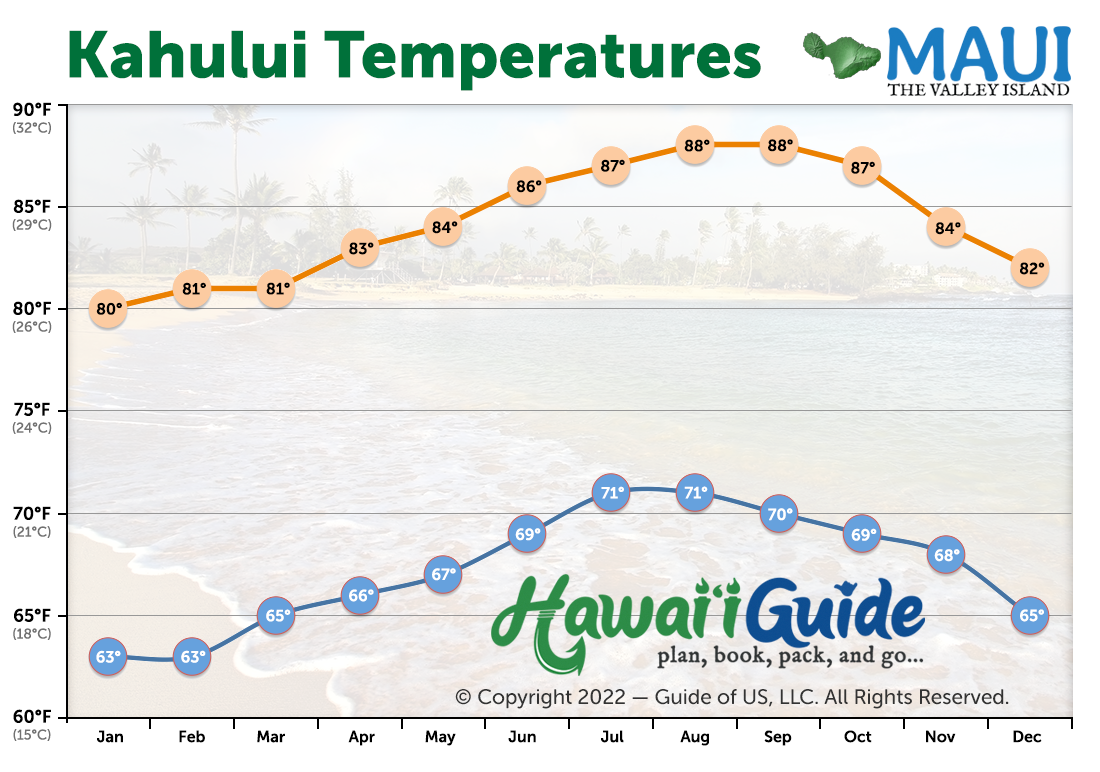
Kahului Average Temperature
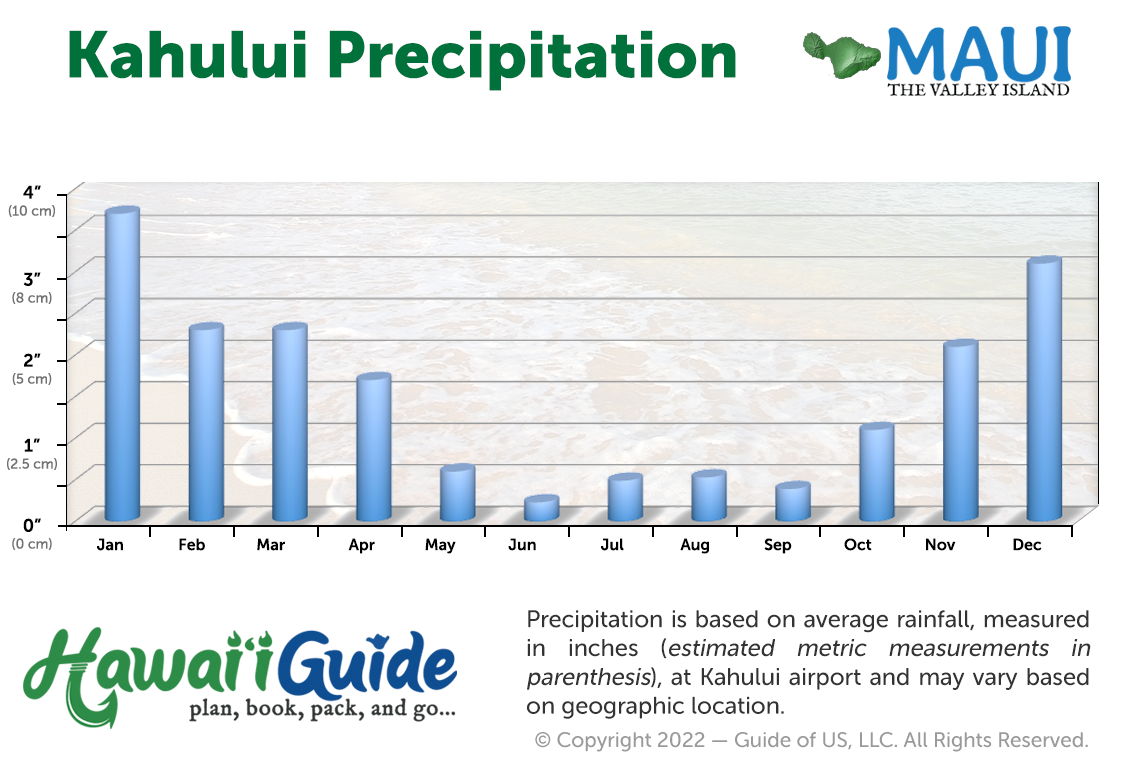
Kahului Average Precipitation
Maui Accommodations & Rates
If you're looking for the best deals on accommodations, spring and fall are the cheapest months to visit the island because demand is down. This means the island is less crowded as well, which is another benefit of visiting during these months. Our personal preference is April - May.
If you plan to come during the holidays, especially Christmas, you can typically expect large crowds of people - and prices will reflect the increased demand. Learn more on our Where to Stay on Maui article.
Below, we'll cover our Maui Seasonal Expectations on visiting during each season of the year.

Recommended Road to Hana Adventures
The Road to Hana works on the ground, but a few tour options give you a different angle. Helicopter and small-plane sightseeing tours fly the full length of the highway in an hour or two, including the waterfalls inland of Hana that drivers can't reach. Combo tours pair a morning helicopter flight with a guided van or private SUV down the road in the afternoon — useful if you want context from a guide and a lift back to your hotel without driving the return loop yourself.

Horseback tour inside Haleakala National Park
Maui Seasonal Expectations
Events Updated for 2026
We've included the dates and months that most Maui events are typically held below, but please be aware that currently, things are subject to change.
Visiting Maui in January, February, or March
These winter months run cooler on Maui, and rainstorms are common on the windward (northeast) side of the island — Hana, Haiku, and Upcountry. The upside is that the rain pushes the Road to Hana waterfalls to their fullest of the year. This is also peak whale watching: humpbacks migrate from Alaska between December and May to the shallow Auʻau Channel between Maui, Lānaʻi, Molokaʻi, and Kahoʻolawe — the warmest, calmest stretch of water in the islands and the largest humpback breeding ground in the North Pacific. Maui consistently delivers the highest whale-sighting counts in Hawaiʻi, with most boat tours out of Lahaina and Maʻalaea finding multiple pods within minutes of leaving the harbor.
Maui Winter Events:
- PGA Tour Sentry Tournament of Champions (January) - Each year, visitors will find some of the best golfers in the world taking part in the Sentry Tournament of Champions in Kapalua.
Be sure to also regularly check our Maui current event pages for:
Visiting Maui in April, May, or June
These Spring months are in our opinion, the best months to visit Maui. The weather is ideal, crowds are lower than during the summer months, and pricing on accommodations and flights are often the lowest you’ll find all year. Crowds and temperatures will both tick upwards toward the start of June.
Maui Spring Events:
- East Maui Taro Festival (April) - Celebrate taro, one of Hawaii’s most important crops, with a farmers market, poi pounding, music, food, art, and more.
- Maui Steel Guitar Festival (May/October) - This free, three-day festival includes a series of performances, presentations, instructional workshops, and more.
- Maui Onion Festival (May)
- Maui Film Festival (June) - Five-night open-air film festival at the Wailea Resort with screenings under the stars, indie premieres, and director Q&As. Celebrity guests are common.
- Kapalua Wine & Food Festival (June)- The Kapalua Wine & Food Festival features wine tastings, seminars, cooking demonstrations, and local entertainment.
Be sure to also regularly check our Maui current event pages for:
Visiting Maui in July, August, or September
The summer months of July and early August will be the warmest and some of the busiest on Maui. Families often visit during this portion of the year because school is out on most of the mainland. September, by contrast, is a great time to visit if you want to avoid crowds.
Maui Summer Events:
- Aloha Festivals (September) - Honors Native Hawaiian culture and traditions.
- Maui Ukelele Festival (July/September) - The annual Maui Ukulele Festival is a full afternoon of ukulele music at the Maui Arts & Cultural Center.
Be sure also regularly to check our Maui current event pages for:
Visiting Maui in October, November, or December
The months leading into fall, specifically October and early November, can be a good time to visit. Prices are lower than in peak periods, demand is down, and the weather is often cooperative until mid-November, when it can begin to get wetter again. Most of December also fits this slower trend, except for the weeks around Christmas and New Year; they can be exceptionally busy on Maui, and prices and rates will reflect the increased demand. Avoid the holidays if you're looking to save money and skip the crowds.
Maui Fall Events:
- Hawaii Food & Wine Festival (October-December) - Celebrated statewide, this three-week-long event is something not to miss while visiting Maui.
- Made in Maui Festival (November) - The Made in Maui Festival features over one hundred vendors selling locally made arts, crafts, food, and souvenirs.
- XTERRA World Championship (November/December) - The world championship of off-roading attracts 800 racers each year, both amateurs and professionals alike. This event is held on the northwestern coast of Maui
Be sure also regularly to check our Maui current event pages for:
Maui Transportation Options
Transportation on Maui is diverse, allowing visitors to choose based on their preferences and the nature of their itinerary.
- Car Rentals: Renting a car is a popular choice (we recommend Discount Hawaii Car Rental), allowing you to explore the island at your own pace. Maui's attractions are spread out, making a car a convenient choice.
- Public Buses: Maui Bus operates a public transit system that covers various parts of the island. It's an economical choice, though it may be less convenient due to its schedule and route limitations.
- Shuttle Services: Some resorts offer shuttle services to popular destinations, providing a hassle-free option for guests.
- Bicycling: Bike rentals are available in Pā'ia, Kahului, and Wailea — Pā'ia is the best base if you want to ride along the North Shore. Haleakalā downhill bike tours are a separate operator-run experience that takes you to the summit by van and back down on a bike.
- Taxis and Ride-Shares: Taxis and ride-share services like Uber and Lyft operate on Maui, offering a convenient option for short distances or if you prefer not to drive.
- Walking: Resort areas like Kāʻanapali and Wailea have continuous beach paths that connect properties — you can walk between hotels, restaurants, and shops without a car.
Considering the transportation options in advance can help visitors make the most of their Maui experience, whether they prefer the flexibility of a rental car, the eco-friendliness of biking, or the convenience of public transit.
Local Maui Customs and Visitor Etiquette
Understanding and adhering to local customs and etiquette is a crucial part of immersing oneself in the Hawaiian culture, which is deeply rooted in respect, tradition, and the spirit of 'ohana (family). When visiting Maui or any part of Hawaii, it's important to show respect for the land (‘āina) and local residents.
- Greetings: It's customary to greet others with a friendly "Aloha" which means hello, goodbye, and love.
- Shoes Off Indoors: It’s a common practice to remove one’s shoes before entering someone’s home.
- Respect the 'Aina: Show respect to the land by not littering, staying on marked trails, and not taking anything from natural sites.
- Don’t Rush: The pace of life is slower in Hawaii; embrace the relaxed pace and don’t rush.
- Respect Sacred Sites: Many areas in Hawaii are considered sacred; obey posted signs and keep a respectful distance.
- Driving Etiquette: Drive with aloha; let others merge, and wave a thank-you (or practice your best 'shaka' sign) if someone lets you in.
By adhering to these simple yet significant customs and practices, visitors can contribute to preserving the local culture and enjoy a more authentic and welcoming experience during their stay in Maui.
*Maui monthly Visitor Statistics are provided by the Department of Business, Economic Development & Tourism.