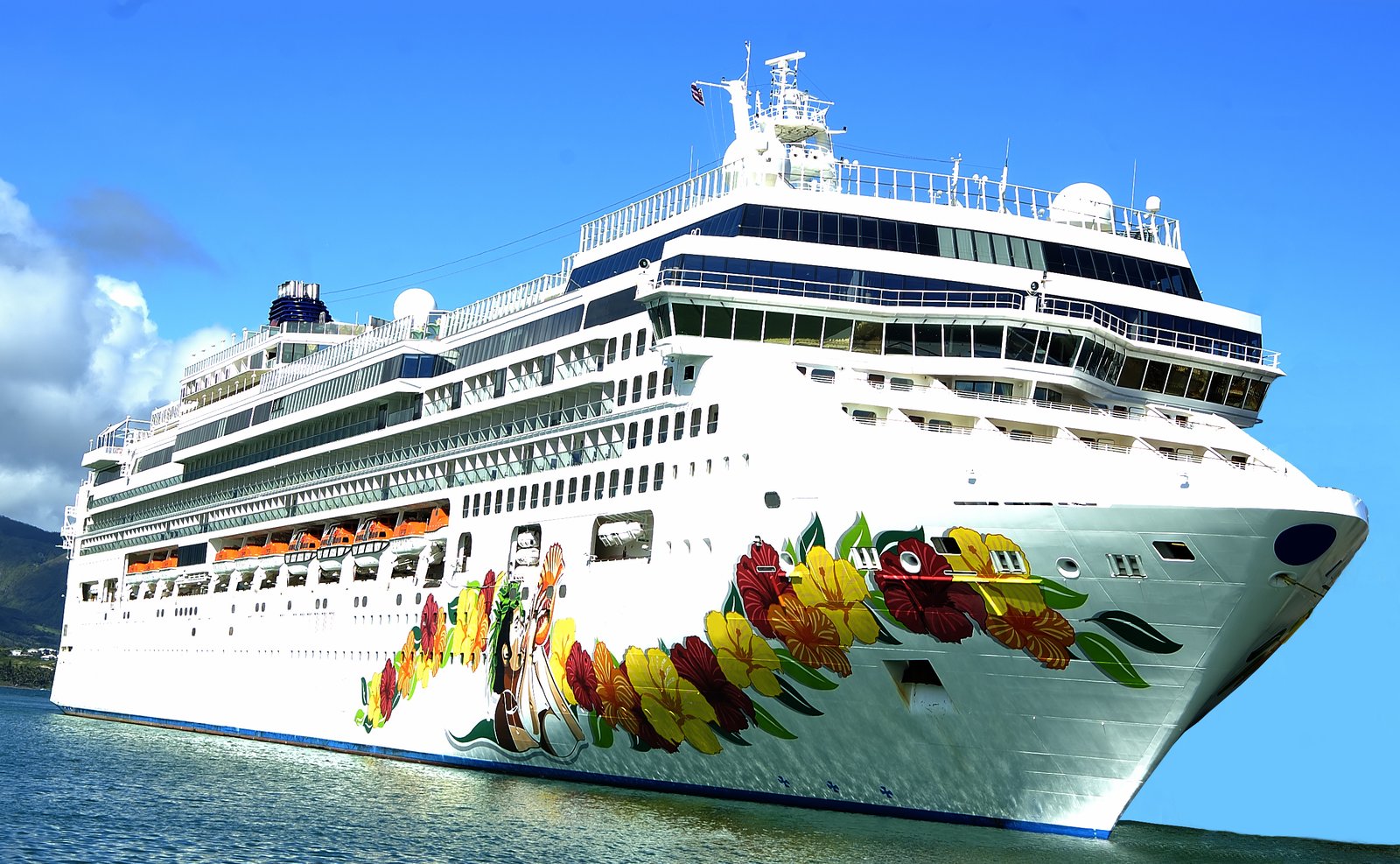

Should You Cruise Hawaii?
Yes, if any of these are true: you want to see three or four islands in one trip without packing/unpacking, you like the idea of waking up at a new island most mornings, this is your first time and you want a sampler before deciding which island to revisit, you have mobility limits that make hotel-and-rental-car logistics painful, or sea days actively appeal to you.
Probably not, if any of these are true: you want deep beach days, sunrise hikes, and unhurried dinner reservations on a single island; you have specific spots that need open-ended time (Hāna, Haleakalā summit, Nā Pali Coast hiking); you hate being on someone else's schedule; or you want to spend more than one night somewhere most cruises only call at for ten hours.
Hawaii has the strangest cruise market in the United States. There is exactly one large cruise ship that sails year-round between the Hawaiian Islands.
Every other big ship arriving here is foreign-flagged, and federal cabotage law forces those ships to include a foreign port call on any sailing between U.S. ports. Per U.S. Customs and Border Protection, that's the Passenger Vessel Services Act of 1886. In practice, it means West Coast round-trips usually call at Ensenada, Mexico or Vancouver, Canada.
Two other 2026 wildcards matter. Lahaina Harbor remains closed to cruise tendering nearly three years after the 2023 wildfires per the DLNR Lahaina recovery page — it reopened for limited daytime commercial use on December 15, 2025, but cruise calls have not resumed. And as of April 2026, a federal appeals court has blocked Hawaii's new green fee on cruise passengers, so cruisers are not paying the 11% climate surcharge that now applies to hotels.
This guide explains all four ways to cruise Hawaii in 2026, what each port is actually like, what a sailing really costs once you add everything up, and where the cruise option makes sense versus flying island-to-island. The numbers and dates are good as of late April 2026 and are reviewed quarterly.
The Four Ways to Cruise Hawaii in 2026
Despite how it gets marketed, "a Hawaii cruise" is actually four very different products. Pricing, length, ports, and overall feel vary dramatically between them.
Pride of America
- Only U.S.-flagged cruise ship in Hawaii
- Sails every Saturday, ~50 sailings a year
- 4 islands, 5 ports, no sea days
- No passport needed for U.S. citizens
- ~2,180 passengers
Princess, Holland America & others
- Big-ship experience, mostly seasonal (fall–spring)
- 4–5 sea days each way crossing the Pacific
- 3–4 Hawaiian ports, plus a brief call at Ensenada or Vancouver
- Cheaper per-night, but half the trip is at sea
Sydney, Tahiti or Asia routes
- Cunard, Princess, Holland America, Oceania run a handful per year
- Most sail spring or fall when ships move between hemispheres
- Hawaii is usually 2–4 ports of a longer voyage
- Best value per-night for sea-day lovers
UnCruise & luxury yachts
- UnCruise's Safari Explorer — only small ship that sails Hawaii year-round
- Kona, Molokaʻi, Lānaʻi, Maui — including islands the big ships skip
- Hikes, snorkels, manta-ray night dives included
- All meals, drinks, gear and excursions in the fare
Pride of America: The One Year-Round Option
Norwegian Cruise Line's Pride of America is the only cruise ship home-ported in Hawaii. It sails the same 7-night round trip from Honolulu every Saturday, year-round. NCL's 2026 schedule runs roughly 50 sailings between April 2026 and March 2027.
The ship is U.S.-flagged with a special PVSA exemption Congress passed in the early 2000s. Its hull was begun in Mississippi under the failed "Project America" program, then towed to Lloyd Werft in Germany for completion after the original builder went bankrupt. The exemption is what allows it to move passengers between U.S. ports without the foreign-port stop the rest of the cruise industry has to make. That's the entire reason this cruise exists in the form it does.
Sample 7-Day Itinerary
Below is the standard Saturday-to-Saturday loop. The schedule has stayed essentially the same for years and is what you should plan around. Times shown are typical port calls; published schedules vary by a few minutes per sailing.
Saturday morning the ship returns to Honolulu around 7:00 am for debarkation. Day 7 includes an afternoon scenic cruise past the Nā Pali Coast, weather permitting — easily the visual highlight of the week.
Two things stand out about this schedule. The first is the overnights in Kahului and Nāwiliwili — both ports give you a real evening on the island, not just a daytime drive-by. That doubles the meaningful time you have on Maui and Kauai. The second is that there are no sea days. Every morning you wake up at a new island. For some people that is the entire appeal; for others, it is a week of being constantly under way.
The Ship Itself
The Pride of America launched in 2005 and was last refurbished in 2025. It carries about 2,180 passengers across 14 decks. There are two main dining rooms and a buffet at no extra charge, plus several specialty restaurants ($25–$60 per person) including a steakhouse, an Italian room, and a teppanyaki room. The pool deck has the standard cruise-line array — pool, hot tubs, water slide, jogging track. The ship has a small spa, a fitness center, and a Broadway-style theater that runs nightly shows. Notably absent: a casino. Hawaii prohibits gambling and the ship never enters international waters, so this is one of the only major cruise ships sailing without one.
An honest note: this is not a brand-new ship. It is older than most of NCL's fleet and shows it in places. The reason to pick this cruise is not the ship — it is the route. There is no competition, and the route is the only way to do four islands in seven nights without inter-island flights.
Why is there only one inter-island ship?
Federal law. The Passenger Vessel Services Act of 1886 requires that ships carrying passengers between two U.S. ports be U.S.-flagged and U.S.-crewed. Almost the entire global cruise fleet is foreign-flagged for tax and labor reasons. Pride of America is the rare exception — Congress passed a one-off statutory exemption in the early 2000s that lets it sail under the U.S. flag despite its German-completed hull.
That's also why round-trip cruises from California include a stop in Ensenada, Mexico, and why Alaska cruises from Seattle stop in Vancouver or Victoria. Foreign-flagged ships traveling between U.S. ports must call at a foreign port along the way. The fine for skipping it is $798 per passenger, paid by the cruise line.
The Lahaina Port Question
Lahaina Harbor: limited reopening, but no cruise tendering
Lahaina Harbor was severely damaged by the August 2023 wildfires. Per Maui Now, the harbor reopened to limited daytime (8 AM to 6 PM) commercial boat operations on December 15, 2025, with in-harbor mooring still prohibited. Cruise ship tendering has not resumed. The DLNR Lahaina recovery page has the latest on the phased rebuild.
What this means for your cruise: Maui port calls now go to Kahului Harbor on the north shore. It's an industrial port, not walkable, with no shops or restaurants nearby. Most of historic Front Street is still being rebuilt, so be thoughtful about where you go and what you spend — local businesses that have reopened genuinely benefit from visitor support, but sightseeing among the burn footprint is not appropriate.
The Green Fee in 2026: Where It Stands
Hawaii passed the country's first climate impact fee on tourism in 2025, raising the state Transient Accommodations Tax to 11% (counties can add up to 3% on top of that) and — for the first time — applying it to cruise ship passengers. Hotels and vacation rentals started paying the higher rate on January 1, 2026. Cruise passengers are not paying it. A federal appeals court blocked enforcement on cruise ships on December 31, 2025, one day before the new rate was supposed to take effect. The case is still being litigated.
The state legislature is moving on a backup plan: a flat $10-per-passenger port-call fee that would replace the percentage tax for cruise ships. If passed, it could take effect as early as late 2026 or January 2027. Bills are advancing through committee in both chambers. For a 7-day Pride of America cruise calling at five ports, that would mean roughly $50 per person added to the fare — a much smaller hit than the original 11%.
For the latest on the legal fight, the bills, and what cruise lines are saying, see our full breakdown of the green fee on cruise ships.
Hawaii Cruise Ports: What to Expect
Cruise ships call at five ports across four Hawaiian islands. Each is genuinely different — different infrastructure, different walkability, different best-uses for a port day. The cards below summarize what you'll actually find when you step off the ship.
Honolulu Harbor
OahuShips dock at Pier 2, right in downtown Honolulu next to Aloha Tower Marketplace. This is the most walkable cruise port in Hawaii — restaurants, shops, and the historic Aloha Tower observation deck are all within steps.
This is the embarkation port for Pride of America and the typical first/last call for round-trip Pacific sailings. With most cruises overnighting on the day of arrival, you have a full evening in Honolulu — perfect for a first dinner on Waikīkī or a sunset cocktail at the harbor itself. If you have a half-day before boarding, Pearl Harbor is doable but cuts close — most cruisers save it for a pre- or post-cruise stay.
Kahului Harbor
MauiAn industrial commercial port on the north shore of Maui, in the same harbor complex as the cargo terminal. There are no shops, restaurants, or attractions within walking distance of the cruise pier — you need a car or a tour to do anything meaningful.
The Pride of America overnight here, which is the right call — you have time for one full-day excursion (Road to Hāna, the Haleakalā summit, Iao Valley) and a relaxed dinner on the second day. A rental car is by far the best choice if you're comfortable driving — book in advance through Discount Hawaii Car Rental since port-day inventory at the airport (10 minutes from the dock) is tight.
Hilo Harbor
Big Island · East SideShips dock at Pier 1 in Hilo. Downtown Hilo — the farmers market, local cafés, the historic shop fronts on Kamehameha Avenue — is a short ride from the pier. There is a free shuttle to the Walmart store across town that locals also use to get into town.
The smart play in Hilo is the national park. With a 10-hour port day you can drive to Volcanoes National Park, do Kīlauea Iki or the Crater Rim drive, and be back at the ship with time to spare. If volcanoes don't appeal, the Hilo side has waterfalls (Akaka, Rainbow), lush gardens, and the legitimately excellent ʻImiloa Astronomy Center.
Kailua-Kona
Big Island · West SideKona is a tender port: the ship anchors offshore and small boats shuttle you to the pier in Kailua Village. The ride is 10–15 minutes each way, and there's typically a wait at peak hours. Plan for the tendering to eat 30–45 minutes off your day round-trip.
Once you're ashore, Kailua Village is right there — Hulihe'e Palace, Mokuaikaua Church (Hawaii's oldest), oceanfront restaurants, and shops along Aliʻi Drive. Kona is the side of the Big Island for snorkeling and ocean activities; manta ray night snorkels are not feasible because Kona is a daytime port. Coffee farm tours up Mauka in the Kona belt are an excellent option that most cruisers skip.
Nāwiliwili Harbor
KauaiThe cruise pier sits at the entrance to Nāwiliwili Harbor, just south of Lihue. Anchor Cove Shopping Center is a short walk; downtown Lihue is a short cab ride. Pride of America overnights here, which makes a real difference on Kauai — the island's highlights are spread out and a single-day visit feels rushed.
The two natural day plans on Kauai are (a) west side: Waimea Canyon, Kalalau Lookout, and ideally a helicopter or boat tour of the Nā Pali Coast; or (b) north shore: Hanalei Bay, Tunnels Beach, and the Princeville lookouts. With the overnight, do one each day. A rental car is essentially required to see Kauai properly. Viator's Kauai tours page lists most of the small-group operators if you'd rather skip driving.
What a Hawaii Cruise Actually Costs
The advertised "from" price is almost never what you actually pay. Below are realistic per-person totals for a 7-night Pride of America inter-island cruise across cabin types and seasons, based on NCL's published 2026–2027 starting prices and typical seasonal multipliers. Bars are scaled to the same axis so you can see the spread visually.
All prices are per person, double occupancy, cruise fare only — taxes, port fees ($300–$400/person), gratuities ($140/person/week at $20/day for non-suite cabins, more for suites), drink packages, specialty dining, shore excursions, and Wi-Fi all stack on top. Plan for the actual all-in cost to land 35–60% above the headline fare.
What's Actually Included vs. Extra
| Included in the fare | Extra |
|---|---|
| Cabin, all-day buffet, two main dining rooms, room service (continental), pool deck, fitness center, kid's club, nightly shows, water | Specialty restaurants ($25–$60/person), drink packages ($110+/day), shore excursions ($90–$300/person), Wi-Fi ($25–$30/day), spa, gratuities, port-day rental cars or transit |
Cruise vs. Island Hopping: Real Cost Comparison
For two people doing seven nights across four islands, here's how a balcony cabin on Pride of America compares to a typical mid-tier land trip with inter-island flights and a rental car at every stop. Both totals include taxes and fees; neither includes airfare to and from Honolulu.
Pride of America (7-night cruise, balcony)
~$6,450 total · 2 people
- Balcony cabin (shoulder season): $4,200
- Port fees and taxes: $700
- Gratuities ($20/day × 2 × 7): $280
- One specialty dinner: $80
- Drink packages (1 person): $700 (other adult drinks à la carte)
- Two shore excursions: $400
- Rental car at one port: $90
Land trip (4 islands, mid-tier hotels)
~$6,800 total · 2 people
- Hotels — 2 nights each on Oahu/Maui/Big Island/Kauai at ~$320/night: $2,560
- Three inter-island flights for 2 people: ~$540
- Rental cars (4 islands): ~$960
- Meals — ~$120/day × 7: $840
- Activities/admissions/gas: ~$1,200
- Three airport transfers/parking: ~$120
- Gratuities and incidentals: ~$580
The two come out within a few hundred dollars of each other in this comparison, but the cruise spends roughly 30 fewer hours on land than the four-island land trip — and the land trip lets you trade short hops for deeper time on the islands you actually want to see. Whether the convenience is worth the lost hours is the real decision.
Best Time to Cruise Hawaii
The Pride of America sails year-round and the weather across the islands is good in every month. What changes with the calendar is price and crowding. The chart below shows what's typical for fares and onboard demand.
September and early-to-mid October are the sweet spots — fares can be 30–40% cheaper than peak weeks, the weather is stellar, and ports feel less crowded. May is a near-equal second pick once spring break wraps. The two weeks between Thanksgiving and Christmas are sometimes the cheapest fares all year, but the trade-off is that some shore excursions and small operators take their winter break, so verify before you book.
Avoid Christmas–New Year week, MLK weekend, Presidents' Day week, spring break (mid-March to early April), and the second half of June through late July if you want to keep the bill down. Whale-watching enthusiasts should weight the calendar toward January–March; humpback whale season peaks then and Maui sightings from the ship are common.
Picking the Right Cabin
Cabin choice matters more on this itinerary than on most cruises. You're sailing past coastline almost every minute the ship is moving, and the Nā Pali scenic cruise on Day 7 is one of the best ocean views in the world.
| Type | Typical 7-night fare | Pros | Trade-offs |
|---|---|---|---|
| Inside | $1,066–$2,100 | Cheapest, dark for sleeping, fine for budget travelers | No window, no daylight, miss scenery from cabin |
| Ocean View | $1,400–$2,500 | Window, natural light, can see weather and ports | Window doesn't open, less common cabin type on this ship |
| Balcony | $2,100–$3,600 | Best value upgrade. Private outdoor space, watching ports come and go from your balcony, fresh air, the Nā Pali scenic cruise from your own deck | About $1,000+ more per person than inside cabins |
| Suite (Penthouse, Owner's, Haven) | $4,000–$10,000+ | Concierge, butler service for top suites, priority boarding/disembark, private restaurant access | Steep premium that doesn't change the port days much |
Side matters. On the standard counterclockwise loop, the port (left) side faces the Hawaiian Islands more often than the starboard side as the ship sails between them — including the leg from Kauai back to Honolulu past Oahu's leeward coast. For the Nā Pali scenic cruise on Day 7, the ship typically does an out-and-back so both sides see it, but port-side balconies generally win on this itinerary if you have the choice.
Shore Excursions: Ship-Booked vs. On Your Own
This is the single biggest place where cruise passengers either save or burn money. The math is straightforward.
Book through the ship when:
- You're on a tight time budget and the operator's pier-to-pier guarantee matters (the ship will not leave without you on a ship-booked excursion).
- The activity is a long drive from the port and you don't want to deal with logistics — Haleakalā summit from Kahului, helicopter tours from any port.
- You're at a tender port (Kona) with a tight return window.
- You're cruising with someone who has mobility limits and the ship's accessibility planning is worth it.
DIY when:
- You're on Maui or Kauai with overnight stays — book your own rental car and spread the day. Discount Hawaii Car Rental typically beats the cruise's "transportation" upcharge by half. Book early since port-day inventory tightens fast.
- You want to spend more than 60 minutes at a single beach.
- You want a specific operator the cruise line doesn't partner with — many of the best small-group Hawaii tours on Viator are independent and run smaller groups than the ship's bus excursions.
- You want to eat where locals eat. Ship excursions almost always hit tourist restaurants on the way back.
A reasonable mix on a 7-night itinerary: book one ship excursion in Kona (the tender logistics make it worth it) and DIY the other ports.
Real Budget Beyond the Fare
For two people on a balcony, plan for these on top of the cruise fare:
| Line item | Typical cost (2 people, 7 nights) |
|---|---|
| Port fees and taxes | $600–$800 |
| Service charge / gratuities ($20/person/day, non-suite) | $280 |
| Drink package (one adult, premium) | $770 |
| Specialty dining (2–3 dinners) | $200–$360 |
| Wi-Fi (basic, 2 devices) | $200–$280 |
| Shore excursions (3–4 ports) | $600–$1,400 |
| Rental cars at Kahului and Nāwiliwili | $180–$240 |
| Spa, photos, souvenirs | Highly variable |
The honest all-in for two people on a 7-night balcony: $6,000–$8,000 before flights to and from Honolulu. The fare is roughly 60% of the actual trip cost. That's normal across the cruise industry, but it surprises first-timers — go in with eyes open.
When and How to Book
Book 6 to 12 months ahead. Pride of America's balcony cabins, especially aft-facing ones (best views of the wake, often quieter), sell out a year in advance for school-break weeks. Inside cabins are usually still available 60–90 days out, but at higher prices than the early-bird fares. Holiday weeks fill 12+ months out.
Watch for NCL "Free at Sea" promotions. Norwegian runs ongoing promotions that can include the drink package, specialty dining, Wi-Fi, or shore-excursion credits. The fare is rarely cheaper, but the bundle can save $500–$800 per person if you'd have bought those add-ons anyway. They're not a real "free" — they're built into the fare — but they do tilt the math.
Use a cruise-specialist travel agent. Most agencies don't charge anything (they're paid by the cruise line) and the larger ones — CruisesOnly, Vacations to Go, AAA, Costco Travel — pass through onboard credits the cruise line's website doesn't advertise. $300–$500 in onboard credit on a 7-night booking is typical.
Refundable deposits matter. NCL's standard deposit on Pride of America is non-refundable beyond a window. If you're booking 12 months out, ask for the refundable rate even though it's $50–$100/person more — that protection has paid for itself for a lot of travelers when life intervenes.
First-Time Cruiser Tips
- Pre-cruise hotel night. Do not fly in to Honolulu the same morning you board. Flight delays out of the mainland are normal, and missing the ship is on you. Spend a night in Waikīkī or near the airport and arrive at the port relaxed.
- Check in online. NCL opens online check-in 21 days out. Doing it before you arrive at the pier saves you 30–60 minutes on boarding day.
- Pack like it's a Hawaii vacation, not a cruise. Pride of America has no formal nights — most people go to dinner in resort wear. Reef-safe sunscreen (Hawaii law requires it), good walking shoes, a light layer for the ship's air conditioning, and a daypack for port days.
- Reserve specialty dining and shore excursions early. The popular slots and tours sell out before sailing. Once you're aboard, the specialty restaurants on the second sea day (which doesn't exist on this itinerary, so really just busy port days) are tough to get into without a reservation.
- Bring cash for tendering and small operators in Kona. Some smaller shops and the occasional tour driver appreciate small-bill cash; not everyone takes cards.
- Consider a post-cruise hotel night, too. Disembarkation is early — you're typically off the ship by 9 a.m. If your flight isn't until afternoon or evening, a day room at a Waikīkī hotel for showers and a pool is worth it.
Frequently Asked Questions
Can children sail on Pride of America?
Yes. Per NCL's age policy, the minimum sailing age is six months on itineraries with fewer than three consecutive sea days, which covers Pride of America. Per NCL's youth programs page, Splash Academy is split into Turtles (3–5), Seals (6–9), and Dolphins (10–12), with Entourage for teens (13–17). The ship has a kids' splash area with a slide, but it's not as kid-themed as Disney or Royal Caribbean's newest builds.
What's the best ship for a Hawaii cruise — Pride of America, Princess, or Holland America?
Pride of America is the best route: four islands, no sea days, overnights on Maui and Kauai. Princess and Holland America are better ships — newer, more dining options, more onboard activities — but you spend half the trip crossing the Pacific. If your priority is time on the islands, Pride of America wins. If your priority is the cruise experience itself, the larger Princess and Holland America ships are nicer onboard.
Is Pride of America smoke-free?
The ship is smoke-free indoors. Because there's no casino, smoking is restricted to designated outdoor areas — typically the Waikiki Bar on deck 13 aft. See NCL's smoking policy for current details. The vape policy mirrors the smoking policy.
Does Pride of America stop in Molokaʻi or Lānaʻi?
No. Of the populated Hawaiian islands, Molokaʻi and Lānaʻi don't have cruise infrastructure that fits a 2,000-passenger ship. UnCruise Adventures' 36-passenger Safari Explorer does include both. If those islands are on your bucket list, the small-ship adventure cruise is the only way to do them with a ship — otherwise you'd ferry from Maui or fly.
Do I have to drink the drink package to make it worthwhile?
The math is roughly 5–6 cocktails per day to break even on a premium drink package. Wine drinkers who'd order a glass with lunch and dinner plus a sunset cocktail get there easily. Casual drinkers usually come out behind. NCL's package also covers premium coffees and bottled water, which closes the gap a little.
What if I get seasick?
This itinerary has zero open-ocean sea days, so motion is generally less than on a Pacific crossing. The longest legs run overnight in the islands' leeward waters, which are sheltered for much of the year but not always calm. If you're prone to motion sickness, talk to your doctor or pharmacist before sailing about whether an over-the-counter or prescription option is right for you, and consider a balcony cabin for fresh air.
Can I do a round-trip Hawaii cruise from the U.S. mainland without going through Mexico or Canada?
No. Round-trip cruises from California or Washington to Hawaii must call at a foreign port — typically Ensenada, Mexico or Vancouver, Canada — because of the Passenger Vessel Services Act. Only Pride of America (which is U.S.-flagged) can do a round-trip entirely within the United States.
Related Reading
Plan the rest of the trip:
- Best Time to Visit Hawaii — month-by-month weather and crowd guide
- Hawaii's Cruise Ship Green Fee — full breakdown
- Best Sunset Dinner Cruises in Hawaii — for a shorter cruise experience
- Honolulu Harbor visitor info
- Kahului Harbor visitor info
- Nāwiliwili Harbor visitor info
- Hawaii Trip Cost Calculator — budget a land-based comparison
- Which Hawaiian Island Should You Visit? quiz — for picking where to spend extra days