04-03-2026
Hawaii Island Names
All 8 main islands, their meanings, nicknames, and what sets each one apart

Founder & certified Hawaii travel expert with 20+ years of experience in Hawaii tourism.
Aloha! This article may link to trusted Hawaii resources at no extra cost to you. Mahalo for your support!
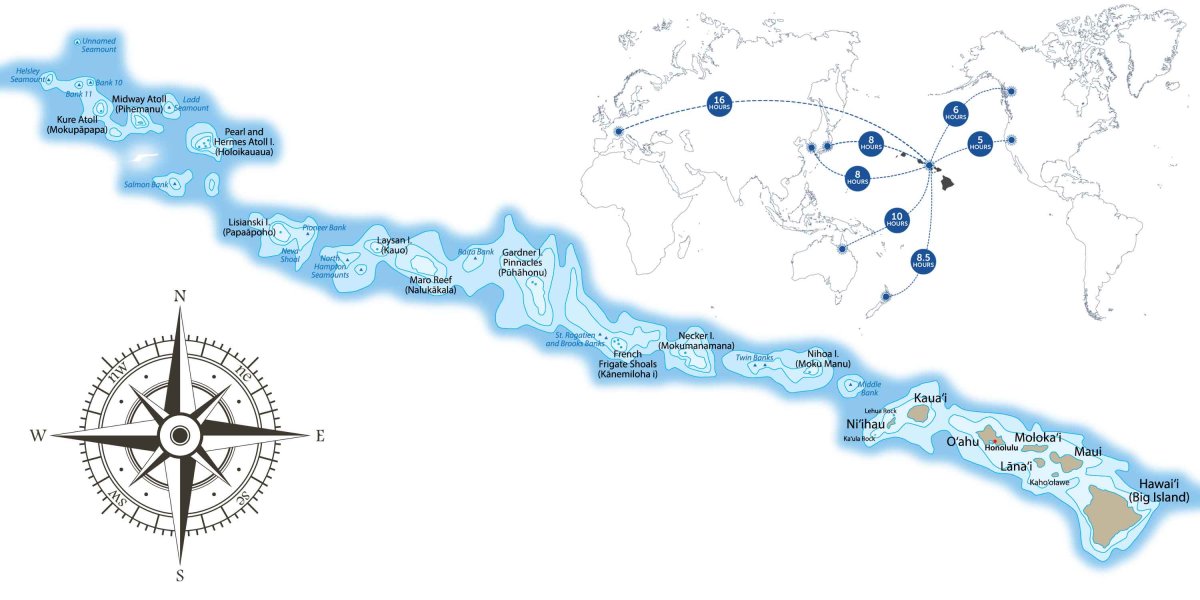
Hawaii has 137 islands, but only 8 are considered main islands. Six are open to visitors. Each has a Hawaiian name with roots in Polynesian language and mythology, plus a nickname that captures its character. Here is every main Hawaiian island, what its name means, and what you will find there.
The 8 Main Hawaiian Island Names
1. Hawaii (Big Island)
Nickname: The Big Island
Color: Red
Flower: Red lehua ohia
The island of Hawaii shares its name with the entire state, which is why locals call it the Big Island. The name may derive from Hawaiki, the legendary Polynesian homeland that early voyagers sailed from over a thousand years ago. Some scholars connect it to Hawaii Loa, the navigator credited with discovering the islands.
The Big Island is the youngest and largest Hawaiian island at 4,028 square miles — nearly twice the combined size of all other islands. It is still growing. Kilauea volcano has been adding land to the southeast coast since 1983. The island has Mauna Kea (the tallest mountain on Earth measured from its ocean-floor base), green sand beaches, world-class coffee, and 11 of the world's 13 climate zones packed into one island.
2. Maui
Nickname: The Valley Isle
Color: Pink
Flower: Pink lokelani (Damask rose)
Maui takes its name from the Polynesian demigod Maui, a trickster figure who appears throughout Pacific Island mythology. According to Hawaiian legend, Maui lassoed the sun from atop Haleakala to slow its journey across the sky so his mother's kapa cloth would have time to dry.
The nickname "Valley Isle" comes from the central isthmus between the West Maui Mountains and Haleakala, which creates a wide valley of sugarcane and agricultural land. Maui is the second-largest Hawaiian island at 727 square miles. It is known for the Road to Hana, the Haleakala sunrise, and some of the best whale watching in the world during winter months.
3. Oahu
Nickname: The Gathering Place
Color: Yellow
Flower: Yellow ilima
Oahu's name is often translated as "The Gathering Place," though the exact Hawaiian etymology is debated. Some linguists connect it to the word 'oahu meaning "gathering" or "assembly." The nickname fits: roughly 70% of Hawaii's 1.4 million residents live on Oahu, and it is the hub of government, commerce, and military activity in the state.
Oahu is the third-largest island at 596 square miles but the most visited. Waikiki Beach and Pearl Harbor draw millions annually. The North Shore is the epicenter of professional surfing. Honolulu, the state capital, is the only major metropolitan area in Hawaii.
4. Kauai
Nickname: The Garden Isle
Color: Purple
Flower: Purple mokihana berry
The origin of "Kauai" is uncertain. One theory connects it to kaua wai, meaning "season of plenty" or "food season." Another traces it to a legendary figure named Kauai, son of the chief Hawaii Loa. The island's nickname, the Garden Isle, is self-explanatory the moment you arrive. Kauai is the greenest, most lush island in the chain.
Kauai is the oldest of the main Hawaiian islands at roughly 5 million years old, and erosion has carved it into dramatic landscapes. The Na Pali Coast has 4,000-foot sea cliffs. Waimea Canyon drops 3,600 feet and stretches 14 miles. Mount Waialeale near the island's center averages 450 inches of rain per year, making it one of the wettest spots on Earth.
5. Molokai
Nickname: The Friendly Isle
Color: Green
Flower: White kukui blossom
Molokai's name likely derives from Molo, a chief in Hawaiian genealogy, combined with kai (sea). The island has long been associated with powerful spiritual practices. Molokai's south shore contains the longest continuous fringing reef in the US, and its north shore has the tallest sea cliffs in the world at over 3,000 feet.
Molokai is the fifth-largest island at 260 square miles with a population of around 7,400. It has no traffic lights, no buildings taller than a coconut tree, and no resort developments. The Kalaupapa Peninsula, a former Hansen's disease (leprosy) settlement accessible only by mule trail or small plane, is a National Historical Park.
6. Lanai
Nickname: The Pineapple Isle
Color: Orange
Flower: Orange kaunaoa (native dodder)
Lanai's name may come from la nai, meaning "day of conquest," referencing the legendary chief Kaululaau who was banished to the island and rid it of evil spirits. For most of the 20th century, Lanai was the world's largest pineapple plantation, owned by Dole. That era ended in the 1990s.
Today Lanai is the smallest inhabited Hawaiian island open to visitors, with about 3,200 residents. Oracle co-founder Larry Ellison purchased 98% of the island in 2012. It has two Four Seasons resorts, a rugged red-dirt landscape, and Hulopoe Bay, consistently rated among the best beaches in the US.
7. Niihau
Nickname: The Forbidden Isle
Color: White
Flower: White pupu shell
Niihau's name origin is unclear, though some scholars link it to the Proto-Polynesian word niwa. The "Forbidden Isle" nickname comes from its restricted access. The Robinson family, descendants of Elizabeth Sinclair who purchased the island from King Kamehameha V in 1864 for $10,000, has owned it ever since and limits visitors.
Niihau has roughly 70 permanent residents, all Native Hawaiian. It has no paved roads, no stores, and no running water from a municipal system. Residents speak Hawaiian as their first language — Niihau is the last place where Hawaiian remains the primary daily language. Limited helicopter tours offer brief visits to the island's beaches.
8. Kahoolawe
Nickname: The Target Isle
Color: Gray
Flower: Hinahina (beach heliotrope)
Kahoolawe (Kaho'olawe) takes its name from the Hawaiian word meaning "to carry away," possibly referring to the strong currents around the island. Its grim nickname — the Target Isle — comes from decades of US military use as a bombing range. The Navy used the 45-square-mile island for target practice from World War II through 1990.
After years of activism by the Protect Kaho'olawe Ohana movement, the military returned the island to the state in 2003. Cleanup of unexploded ordnance continues. Kahoolawe is uninhabited and off-limits to the general public. The Kaho'olawe Island Reserve Commission manages restoration efforts and cultural access for Native Hawaiians.
Quick Reference: All Hawaiian Island Names
| Island | Nickname | Size (sq mi) | Population | Visitors? |
|---|---|---|---|---|
| Hawaii (Big Island) | The Big Island | 4,028 | ~200,000 | Yes |
| Maui | The Valley Isle | 727 | ~164,000 | Yes |
| Oahu | The Gathering Place | 596 | ~1,000,000 | Yes |
| Kauai | The Garden Isle | 552 | ~73,000 | Yes |
| Molokai | The Friendly Isle | 260 | ~7,400 | Yes |
| Lanai | The Pineapple Isle | 140 | ~3,200 | Yes |
| Niihau | The Forbidden Isle | 69 | ~70 | Limited |
| Kahoolawe | The Target Isle | 45 | 0 | No |
Beyond the Main 8: The Northwestern Hawaiian Islands
The Hawaiian archipelago stretches far beyond the 8 main islands. The Northwestern Hawaiian Islands — a chain of small islands, atolls, and shoals extending 1,200 miles northwest of Kauai — are part of the Papahanaumokuakea Marine National Monument, one of the largest marine conservation areas on the planet.
These include Nihoa, Necker Island (Mokumanamana), French Frigate Shoals, Gardner Pinnacles, Laysan Island, Lisianski Island, Pearl and Hermes Atoll, Midway Atoll, and Kure Atoll. Midway is the only one with a small human presence (US Fish and Wildlife Service staff). The rest are uninhabited wildlife refuges home to endangered Hawaiian monk seals, green sea turtles, and millions of seabirds.
How to Pronounce Hawaiian Island Names
Hawaiian pronunciation follows consistent rules. Every vowel is sounded. Consonants are always followed by a vowel. The 'okina (') is a glottal stop — a brief pause, like the break in "uh-oh."
- Hawaii — hah-WAI-ee (3 syllables, not "huh-WHY-ee")
- Maui — MOW-ee (rhymes with "ow")
- Oahu — oh-AH-hoo (3 syllables)
- Kauai — kah-WAI-ee (3 syllables)
- Molokai — MOH-loh-kai (3 syllables)
- Lanai — lah-NAI (2 syllables, stress on second)
- Niihau — NEE-ee-how (3 syllables)
- Kahoolawe — kah-HOH-oh-LAH-veh (5 syllables)
Affiliate Disclosure: We may earn commissions from some travel partners (like Amazon or Expedia) which helps us maintain this site. These links are at no extra cost to you and don't impact our honest & unbiased recommendations. Remove all the ads →