04-03-2026
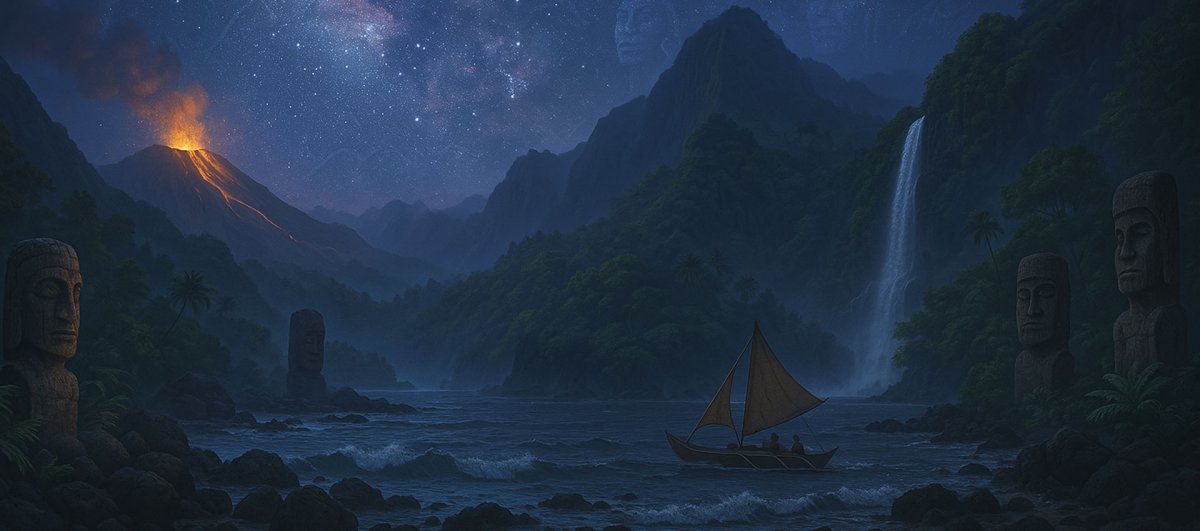
Night Marchers
The ghostly warriors of Hawaiian legend and what happens if you cross their path

Founder & certified Hawaii travel expert with 20+ years of experience in Hawaii tourism.
Aloha! This article may link to trusted Hawaii resources at no extra cost to you. Mahalo for your support!
Ask a local about Night Marchers and the conversation shifts. The humor drops out. People who do not believe in ghosts still will not camp at certain beaches. Construction crews have rerouted roads to avoid ancient paths. The Night Marchers — Huaka'i Po in Hawaiian — are the most enduring supernatural tradition in Hawaii, and one of the very few that locals talk about in lowered voices.
The Legend of the Night Marchers
Night Marchers are the spirits of ancient Hawaiian warriors, chiefs, and ali'i (nobility) who march in procession after dark. They follow the old trails that connected villages, heiau (temples), and battlefields across the islands — paths that existed centuries before modern roads were built.
According to the oral tradition, the procession appears on specific nights, often during the four Hawaiian moon phases associated with the gods: Ku, Lono, Kane, and Kanaloa. The signs are unmistakable. Torches appear in the distance, moving in formation. Drums beat in a rhythmic cadence. Chanting — deep, resonant, and ancient — fills the air. Conch shells blow. The ground shakes.
The marchers themselves are described as tall, muscular warriors wearing capes and helmets, carrying spears and kahili (feathered standards). Some processions include high chiefs or even gods. Their feet may not touch the ground. Their eyes glow. They move with purpose, following a route that may cut through houses, highways, or hotels built long after the path was first walked.
What to Do If You Encounter Night Marchers
Hawaiian tradition prescribes one response: lie face down on the ground, close your eyes, and do not move until they pass.
Do not look at them. Do not make noise. Do not run. Do not stand in their path. According to the legend, making eye contact with a Night Marcher means death. Standing in their path means death. The only escape for someone caught in the open is complete submission — prostrating yourself on the ground in a posture of humility and stillness.
There is one exception in the tradition. If a deceased ancestor is marching in the procession, they may recognize you and call out to spare your life. The ancestor claims you, and the procession passes over you without harm. This is why Hawaiian families maintain strong genealogical records and connections to their ancestors — you never know when an ancestor might intercede on your behalf.
Another practice involves stripping naked, which is said to show vulnerability and humility to the spirits. Some versions of the tradition say urinating on the ground can also ward them off, though this is considered a less respectful approach.
Where Night Marchers Are Said to Appear
Night Marcher activity has been reported on every Hawaiian island. The common thread is proximity to ancient Hawaiian sites — places where warriors actually walked, trained, worshipped, or died.
Oahu
- Ka'ena Point — The remote northwestern tip of Oahu. In Hawaiian mythology, Ka'ena Point is where the souls of the dead leap into the spirit world. Night Marcher sightings here are among the most frequently reported.
- Nu'uanu Pali Lookout — The site of the 1795 Battle of Nu'uanu, where Kamehameha I's warriors drove defending forces off the cliffs. Hundreds died. Processions of torches have been reported along the cliffs at night.
- Yokohama Bay / Makua Valley — Sacred valley on Oahu's west side. Military training areas overlap with ancient Hawaiian sites here.
Big Island
- Kohala Coast — The ancient Ala Kahakai trail along the Kohala Coast was a major pathway for Hawaiian warriors. Several resort properties have reported unexplained activity during construction near ancient trails.
- Waipi'o Valley — The "Valley of the Kings" was a seat of Hawaiian power. The valley floor has multiple heiau sites and burial grounds.
- Hawaii Volcanoes National Park — Night Marcher activity is reported near the crater rim, where ancient trails once connected villages.
Maui
- Iao Valley — The site of the Battle of Kepaniwai in 1790, one of the bloodiest battles in Hawaiian history. The stream reportedly ran red with blood. Night Marcher processions are said to follow the valley walls.
- Ka'anapali / Black Rock — Pu'u Keka'a (Black Rock) at Ka'anapali Beach is another leaping point for souls. Ancient Hawaiians believed spirits departed for the afterlife from this volcanic outcrop.
Kauai
- Polihale Beach — The remote western end of Kauai, near the cliffs of the Na Pali Coast. Like Ka'ena Point on Oahu, Polihale is considered a departure point for souls entering the spirit world.
Night Marchers in Modern Hawaii
Belief in Night Marchers is not a relic. It is a living tradition that shapes decisions in modern Hawaii.
Construction projects on all islands have been modified to avoid ancient trails. The H-3 freeway on Oahu, which cuts through Haiku Valley, was plagued by cost overruns, accidents, and controversies during its decades-long construction through sacred Hawaiian land. Workers reported hearing drums and seeing lights. Whether you attribute that to superstition or to genuine spiritual activity, the cultural weight is real.
Local families in rural areas still avoid certain beaches and trails on specific nights. Parents teach children the Night Marcher protocol from a young age. Many homes near known marching routes leave offerings of ti leaves (considered a protective plant) or food outside on nights associated with the tradition.
The stories are not told for entertainment. They are told to maintain respect for the ancestors, for the land, and for the sacred places that existed long before tourism. For visitors, the appropriate response is the same as it is for any Hawaiian cultural tradition: listen, respect, and understand that Hawaii has layers of history and belief that go far deeper than the beach.
Night Marchers and Hawaiian Spirituality
Night Marchers are part of a broader spiritual framework in Hawaiian culture. The Hawaiian world is populated by 'aumakua (ancestral guardian spirits), akua (gods), and the spirits of the deceased who have not yet found rest. The Hawaiian concept of mana — spiritual power — flows through the land, through sacred sites, and through the bones of ancestors.
Disturbing iwi kupuna (ancestral bones) is one of the most serious offenses in Hawaiian culture. When construction projects uncover burials, state law requires work to stop while the Burial Council determines the appropriate course of action. Night Marcher legends reinforce this: the ancestors are not gone. They walk the same paths they always walked. And they notice what happens to the land.
Affiliate Disclosure: We may earn commissions from some travel partners (like Amazon or Expedia) which helps us maintain this site. These links are at no extra cost to you and don't impact our honest & unbiased recommendations. Remove all the ads →