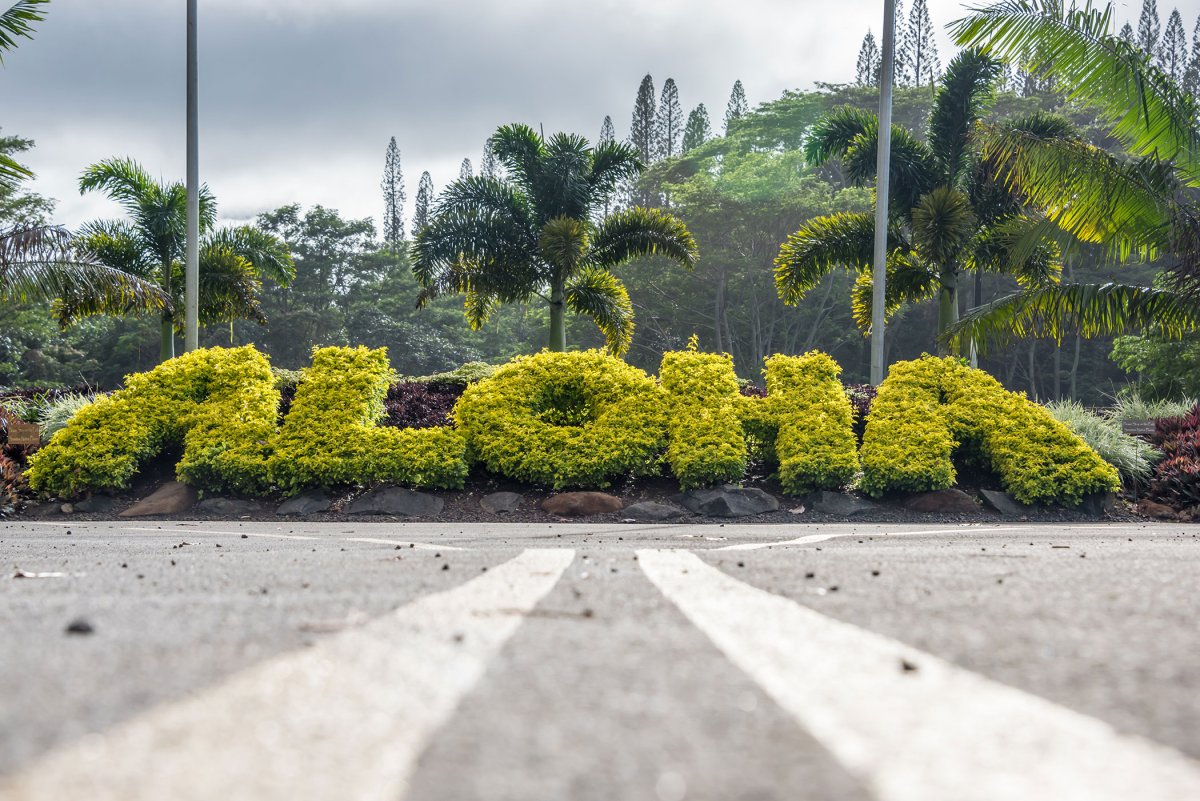

Hawaiian Pronunciation: The Five-Minute Version
Hawaiian uses 13 letters: five vowels (A, E, I, O, U) and eight consonants (H, K, L, M, N, P, W, ʻ). Every vowel is pronounced. There are no silent letters. Once you learn the five vowel sounds, you can pronounce almost any Hawaiian word.
- A = "ah" (like father)
- E = "eh" (like bed)
- I = "ee" (like see)
- O = "oh" (like go)
- U = "oo" (like moon)
The ʻokina (ʻ) is a glottal stop, like the pause in "uh-oh." The kahakō (macron over a vowel) lengthens the sound. Both change meaning: pau (finished) vs. paʻu (skirt), Kona vs. Kōnane (a board game).
Essential Greetings
- Aloha (ah-LOH-hah) — Hello, goodbye, love, compassion. The most important word in Hawaiian.
- Aloha kakahiaka (ah-LOH-hah kah-kah-hee-AH-kah) — Good morning
- Aloha awakea (ah-LOH-hah ah-wah-KEH-ah) — Good afternoon
- Aloha ahiahi (ah-LOH-hah ah-hee-AH-hee) — Good evening
- Mahalo (mah-HAH-loh) — Thank you
- Mahalo nui loa (mah-HAH-loh NOO-ee LOH-ah) — Thank you very much
- A hui hou (ah HOO-ee HOH) — Until we meet again (goodbye)
- E komo mai (eh KOH-moh my) — Welcome, come in
Everyday Phrases You Will Hear
- ʻAe (ah-eh) — Yes
- ʻAʻole (ah-OH-leh) — No
- E kala mai (eh KAH-lah my) — Excuse me, sorry
- Kōkua (koh-KOO-ah) — Help, assistance. You will see "Please kōkua" on signs asking for cooperation.
- Pau (pow) — Finished, done. "Pau hana" means done with work (happy hour).
- Wiki wiki (WEE-kee WEE-kee) — Quick, fast. The Wiki Wiki shuttle at Honolulu Airport is named for this.
- Hana hou (HAH-nah HOH) — One more time, encore. Shout it at concerts and luaus.
- No ka ʻoi (noh kah OY) — The best. "Maui no ka ʻoi" means "Maui is the best."
- Da kine (dah kyne) — Pidgin (not Hawaiian) for "the thing" or "whatchamacallit." Used as a universal placeholder noun.
Direction & Navigation Terms
Hawaiians give directions using landmarks and natural features, not compass points. You will hear these constantly:
- Mauka (MOW-kah) — Toward the mountain, inland
- Makai (mah-KAI) — Toward the ocean, seaward
- Ewa (EH-vah) — Toward Ewa (west side on Oahu); used for "that way" on Oahu
- Diamond Head — Toward Diamond Head (east); used for "that way" on Oahu
- Hana — Toward Hana (east on Maui)
- Windward — The side facing the trade winds (east/northeast)
- Leeward — The sheltered side (west/southwest), drier and sunnier
Example: "The restaurant is on the makai side of the highway, Diamond Head of the gas station." That means: ocean side of the road, east of the gas station.
Food & Dining Phrases
- ʻOno (OH-noh) — Delicious. Also a type of fish (wahoo).
- Grinds — Pidgin for food, especially good food. "Broke da mouth" means incredibly delicious.
- Poke (POH-keh) — Cubed raw fish, typically ahi tuna. Pronounced with two syllables, not like the English word "poke."
- Pupu (POO-poo) — Appetizers, snacks
- Laulau (LOW-low) — Pork and fish wrapped in taro and ti leaves, steamed
- Poi (poy) — Pounded taro root, a staple starch in Hawaiian cuisine
- Lilikoi (LEE-lee-koy) — Passion fruit. Used in drinks, desserts, and sauces everywhere.
- Loco moco (LOH-koh MOH-koh) — Rice, hamburger patty, fried egg, and brown gravy. A Hawaiian comfort food staple.
- Plate lunch — Two scoops rice, one scoop macaroni salad, and an entree. The Hawaiian working lunch.
- Pau hana (pow HAH-nah) — Done with work. Happy hour. "Where's pau hana today?"
- Shave ice — Not "shaved ice." Finely shaved ice with flavored syrups, often over ice cream and azuki beans.
Beach & Ocean Terms
- Kai (kye) — Ocean, sea
- Nalu (NAH-loo) — Wave, surf
- Honu (HOH-noo) — Green sea turtle. You will see them on beaches and while snorkeling.
- Heʻe nalu (HEH-eh NAH-loo) — Surfing (literally "wave sliding")
- Kahakai (kah-hah-KAI) — Beach, seashore
- Limu (LEE-moo) — Seaweed, algae
- Reef — Use reef-safe sunscreen (zinc oxide or titanium dioxide) to protect the coral. Non-reef-safe sunscreen is banned in Hawaii.
Nature & Land Terms
- ʻĀina (AH-ee-nah) — Land, earth. "Mālama ʻāina" means care for the land.
- Mauna (MOW-nah) — Mountain (Mauna Kea = white mountain, Mauna Loa = long mountain)
- Wai (why) — Fresh water. Double it: Waikiki = "spouting water"
- Pali (PAH-lee) — Cliff. The Pali Lookout on Oahu overlooks sheer cliffs.
- Lani (LAH-nee) — Sky, heaven. Mauna Lani = "mountain reaching heaven"
- Heiau (heh-ee-OW) — Hawaiian temple. Sacred sites, do not climb on or disturb stones.
- Pele (PEH-leh) — The volcano goddess. Do not take lava rocks (respect for Pele aside, it is also illegal).
Cultural & Social Terms
- ʻOhana (oh-HAH-nah) — Family, including close friends and community
- Pono (POH-noh) — Righteous, balanced, morally correct
- Aloha spirit — The philosophy of living with mutual respect and compassion (it is actual Hawaii state law)
- Keiki (KAY-kee) — Child, children
- Kūpuna (koo-POO-nah) — Elder, grandparent. Deeply respected in Hawaiian culture.
- Kamaʻāina (kah-mah-AH-ee-nah) — Local person, long-time resident. "Kamaʻāina discount" means local resident discount.
- Haole (HOW-leh) — Foreigner, Caucasian. Not inherently negative, but context matters.
- Kuleana (koo-leh-AH-nah) — Responsibility, privilege. Your kuleana is your duty and right.
- Mana (MAH-nah) — Spiritual power, authority. Places and people can have mana.
- Kapu (KAH-poo) — Sacred, forbidden. "Kapu" signs mean stay out.
- Hula (HOO-lah) — Traditional Hawaiian dance that tells stories through movement
- Lei (lay) — Garland of flowers, shells, or leaves given as a symbol of affection
- Luau (loo-OW) — Traditional Hawaiian feast with food, music, and hula
Pidgin Phrases You Will Hear
Hawaii Creole English (Pidgin) is not Hawaiian, but you will hear it everywhere. A few common phrases:
- Howzit — How is it going? (standard greeting)
- Brah/braddah — Brother, friend, dude
- Shoots — OK, sounds good, let's do it
- Talk story — To chat, to catch up casually
- Broke da mouth — Incredibly delicious
- Chicken skin — Goosebumps (from excitement or emotion)
- Slippers — Flip flops (never call them sandals in Hawaii)
- Ono grinds — Delicious food
Pronunciation Tips for Place Names
Place names trip up visitors the most. Break them into syllables and pronounce each vowel:
- Waikiki — why-kee-KEE
- Kaʻanapali — kah-AH-nah-PAH-lee (the ʻokina creates a glottal stop)
- Haleakalā — hah-leh-AH-kah-LAH (house of the sun)
- Kīlauea — kee-low-AY-ah (not "kill-ah-WAY-ah")
- Lihuʻe — lee-HOO-eh
- Waimea — why-MEH-ah
- Hanauma — hah-NOW-mah
- Kailua — kye-LOO-ah
Frequently Asked Questions
What are the most common Hawaiian phrases?
Aloha (hello/goodbye), mahalo (thank you), mahalo nui loa (thank you very much), a hui hou (until we meet again), e komo mai (welcome), and pau (finished). You will encounter these daily.
How do you say thank you in Hawaiian?
Mahalo (mah-HAH-loh). For deeper gratitude, say mahalo nui loa (thank you very much).
Is Hawaiian a real language?
Yes. Hawaiian (ʻōlelo Hawaiʻi) is an official state language, a Polynesian language with 13 letters, and is taught in immersion schools across the islands. It is experiencing a cultural revival after decades of decline.
What is the difference between Hawaiian and Pidgin?
Hawaiian is the indigenous Polynesian language. Pidgin (Hawaii Creole English) is a creole language that developed on sugar plantations when workers from Hawaii, Japan, China, Portugal, and the Philippines needed to communicate. Pidgin mixes English with Hawaiian, Japanese, and other languages. Both are widely spoken.