
A week in Hawaii for two people runs $5,000 to $8,000 once you add up flights, hotels, car rental, food, and activities. That’s a meaningful amount of money to lose if something goes wrong — a medical emergency, a canceled flight, a hurricane threat that reshuffles your plans.
Travel insurance typically costs 4-8% of your total trip cost, according to the Insurance Information Institute. For a $6,000 Hawaii trip, that’s $240-$480. Whether it’s worth it depends entirely on what you’re booking, how you’re paying, and how much financial risk you’re comfortable absorbing.
Here’s the breakdown — no fluff, just what you need to decide.
What Travel Insurance Actually Covers
Standard travel insurance policies bundle several types of coverage. Not all of them matter equally for a Hawaii trip.
Trip Cancellation: Reimburses prepaid, nonrefundable trip costs if you cancel for a “covered reason” before departure. Covered reasons typically include illness or injury, death of a family member, airline cancellation, jury duty, and natural disasters that make your destination uninhabitable. Standard policies do NOT cover canceling because you changed your mind, got nervous about weather forecasts, or had a work conflict come up.
Trip Interruption: Similar to cancellation, but kicks in after your trip has started. If a family emergency forces you home mid-vacation, this covers the unused portion of your trip plus additional transportation costs to get home.
Travel Medical: Covers emergency medical treatment while you’re traveling. This is more relevant for international trips where your health insurance may not apply, but it matters in Hawaii for reasons I’ll explain below.
Baggage Loss/Delay: Reimburses you if the airline loses your luggage or delays it beyond a set number of hours. Useful but rarely the reason people buy a policy.
Travel Delay: Covers additional hotel nights and meals if your flight is delayed beyond a threshold (usually 6-12 hours). This one gets used more often than people expect — weather delays during hurricane season, mechanical issues, crew shortages.
CFAR vs. Standard: The Key Decision
“Cancel For Any Reason” (CFAR) is an upgrade to standard trip cancellation coverage, and it’s the dividing line in travel insurance.
Standard policies only pay out for specific named perils — the list above. If you cancel because your boss denied your vacation request, or you’re worried about a tropical storm that hasn’t actually canceled your flight, standard coverage pays nothing.
CFAR policies let you cancel for literally any reason and get reimbursed — typically 75% of your nonrefundable trip costs. The tradeoff: CFAR adds roughly 40-60% to the base policy price, and you must purchase it within 14-21 days of your first trip deposit to be eligible. (Forbes — CFAR Travel Insurance Explained)
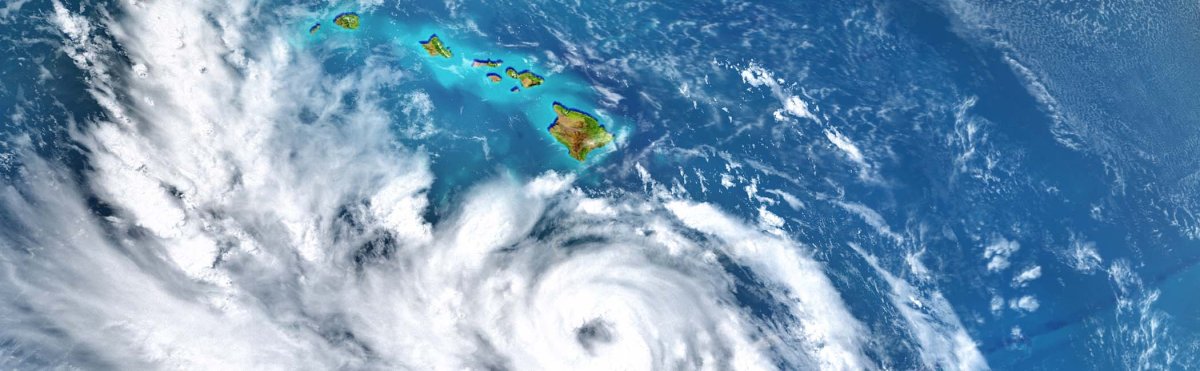
For Hawaii summer trips specifically, CFAR is worth considering. Hurricane season runs June through November, and while direct hits are extremely rare, a tropical storm in the Central Pacific can create uncertainty that standard policies won’t cover unless flights are actually canceled.
The math: if your trip costs $6,000 and a standard policy runs $350, CFAR might bump that to $500-$550. That extra $150-$200 buys you the freedom to cancel for any reason and recover 75% of your costs — roughly $4,500 back on a $6,000 trip.
What Your Credit Card Already Covers
Before buying a separate policy, check what your credit card includes. Premium travel cards carry surprisingly robust coverage — but with critical gaps.
What premium travel cards commonly cover:
-
Trip delay protection: $300-$500 per person for meals and hotels when flights are delayed 6+ hours. This alone can cover a night at an airport hotel during a storm delay.
-
Baggage delay/loss: Reimbursement for essentials if bags are delayed 6+ hours.
-
Car rental collision damage waiver (CDW): Most premium cards cover damage to your rental car if you decline the rental company’s insurance and charge the full rental to the card. This can save you $15-$30/day on your Hawaii rental.
-
Purchase protection and extended warranty on items bought with the card.
What credit cards almost never cover:
-
Trip cancellation — the most expensive risk. If your $2,000 flight is nonrefundable and you get sick, your credit card won’t help.
-
Medical expenses — credit cards don’t include travel medical coverage.
-
Trip interruption — if you need to fly home early, you’re on your own.
The takeaway: credit card travel benefits handle the small stuff (delays, baggage, rental car CDW). They don’t cover the catastrophic stuff (canceling a $6,000 trip, emergency surgery, being airlifted off a hiking trail). That’s what a dedicated travel insurance policy is for.
Medical Coverage: Why It Matters in Hawaiʻi
Most mainland visitors assume their regular health insurance works in Hawaii. Technically it does — Hawaii is a U.S. state, and most domestic plans provide coverage here. But there’s a catch that most people don’t think about until they’re in the back of an ambulance.
Hawaii has one Level I trauma center: The Queen’s Medical Center on Oʻahu. If you’re on Maui, the Big Island, or Kauaʻi and suffer a serious injury — a bad hiking fall, a spinal injury from a wave, a severe allergic reaction — you may need to be airlifted to Honolulu. Helicopter medevacs in Hawaii can cost $30,000-$70,000 or more, and your standard health insurance may cover only a fraction of that, or fight you on “out-of-network” charges for months.
This isn’t hypothetical. Hiking rescues happen regularly on the islands. The steep, wet terrain — especially on trails like Kalalau on Kauaʻi, Olomana on Oʻahu, or the Kīlauea Iki trail on the Big Island — sends visitors to the ER every week. Ocean injuries add to the count.
Travel medical coverage in a standard travel insurance policy typically runs $50,000-$100,000 in emergency medical benefits and includes emergency evacuation. If you’re planning any hiking, snorkeling, or backcountry activities (and most Hawaii visitors are), this coverage alone can justify the cost of a policy.
Hawaiʻi-Specific Scenarios

Not every travel disruption triggers insurance. Here’s how common Hawaii scenarios play out:
Hurricane watch issued for your travel dates: A watch is NOT a covered reason under standard policies. Your flights haven’t been canceled, your hotel is still open — you’re just nervous. Only CFAR covers this. If the watch escalates to a warning and your airline cancels flights, standard coverage kicks in.
Interisland flight canceled: Covered under trip interruption and travel delay benefits. Hawaiian Airlines and Southwest are the main interisland carriers, and mechanical/weather cancellations happen often enough that delay coverage earns its keep on multi-island itineraries.
Volcano eruption closes national park: If you booked a volcano tour and Kīlauea erupts in a way that closes the park, tour operators typically reschedule or refund. Travel insurance generally does NOT cover this because it’s not preventing you from reaching your destination — it’s closing one attraction.
Rental car damage on unpaved roads: Most standard rental agreements exclude damage on unpaved roads (like some sections near Pololu Valley or South Point on the Big Island). Rental company CDW add-ons may or may not cover it — read the fine print. Credit card CDW policies vary. If your itinerary includes off-the-beaten-path driving, verify your coverage before you go. Get the best rates through Discount Hawaii Car Rental and make sure to review the damage policy before signing.
Medical emergency on a neighbor island: Covered under travel medical benefits. Emergency evacuation coverage handles the helicopter transfer to Oʻahu if needed. This is the scenario where travel insurance pays for itself many times over.
How to Buy Smart
A few rules that will save you money and headaches:
Buy within 14-21 days of your first trip deposit. This is the CFAR eligibility window. Even if you’re not sure you want CFAR, buying early keeps the option open. Most policies also include pre-existing condition waivers if you buy within this window.
Don’t buy from the airline. Airline-sold trip protection is typically overpriced and under-featured compared to standalone policies. Use a comparison site like InsureMyTrip or SquareMouth to compare quotes from multiple providers side by side.
Skip the rental car company’s CDW if your credit card covers it. Call your card issuer and confirm Hawaii is covered before your trip. Declining rental CDW saves $15-$30/day — that’s $100-$200 over a week-long rental. Book through Discount Hawaii Car Rental for the best rates regardless.
Read the policy, not just the summary. “Trip cancellation” means different things in different policies. Some include “fear of travel” as a covered reason; most don’t. Some cover cancellation due to a named storm within a certain radius; others require an actual government-issued evacuation order. The details matter when you’re filing a claim.
Keep all receipts. If you file a delay or interruption claim, you’ll need documentation: hotel receipts, meal receipts, airline communication confirming the cancellation or delay, and proof of your original booking costs.
The Verdict
For a Hawaii trip under $2,000 with fully refundable bookings, skip the insurance. Your credit card benefits and refundable reservations already protect you.
For a trip over $3,000 with nonrefundable components — which describes most Hawaii vacations — a standard travel insurance policy is a smart buy. The medical evacuation coverage alone justifies it if you’re doing anything more adventurous than sitting at the resort pool.
For summer trips during hurricane season, or for anyone who wants maximum flexibility, CFAR is worth the premium. It turns a nonrefundable trip into a 75%-refundable one for roughly $150-$200 extra.
Buy early, compare quotes, check your credit card benefits first, and read the fine print. That’s the whole strategy.
More Trip Planning Resources
Prepare for your Hawaii trip with these guides.