
Updated 03-25-2026
A visit to Hawaii without trying poi is like going to Paris and skipping the bread. It’s the single most important food in Hawaiian culture. Made from taro root, poi has been a dietary foundation for Native Hawaiians for centuries. If you’re coming to the islands, you should eat it.
Taro is a root vegetable that thrives in tropical climates. University of Hawaii agricultural research documents taro as one of humanity’s earliest cultivated crops, with evidence of farming stretching back roughly 10,000 years. It looks similar to sweet potatoes or yams, but the flavor is different. Taro has a subtle earthiness with notes of vanilla and nuttiness. It also packs significantly more fiber than most comparable root vegetables.
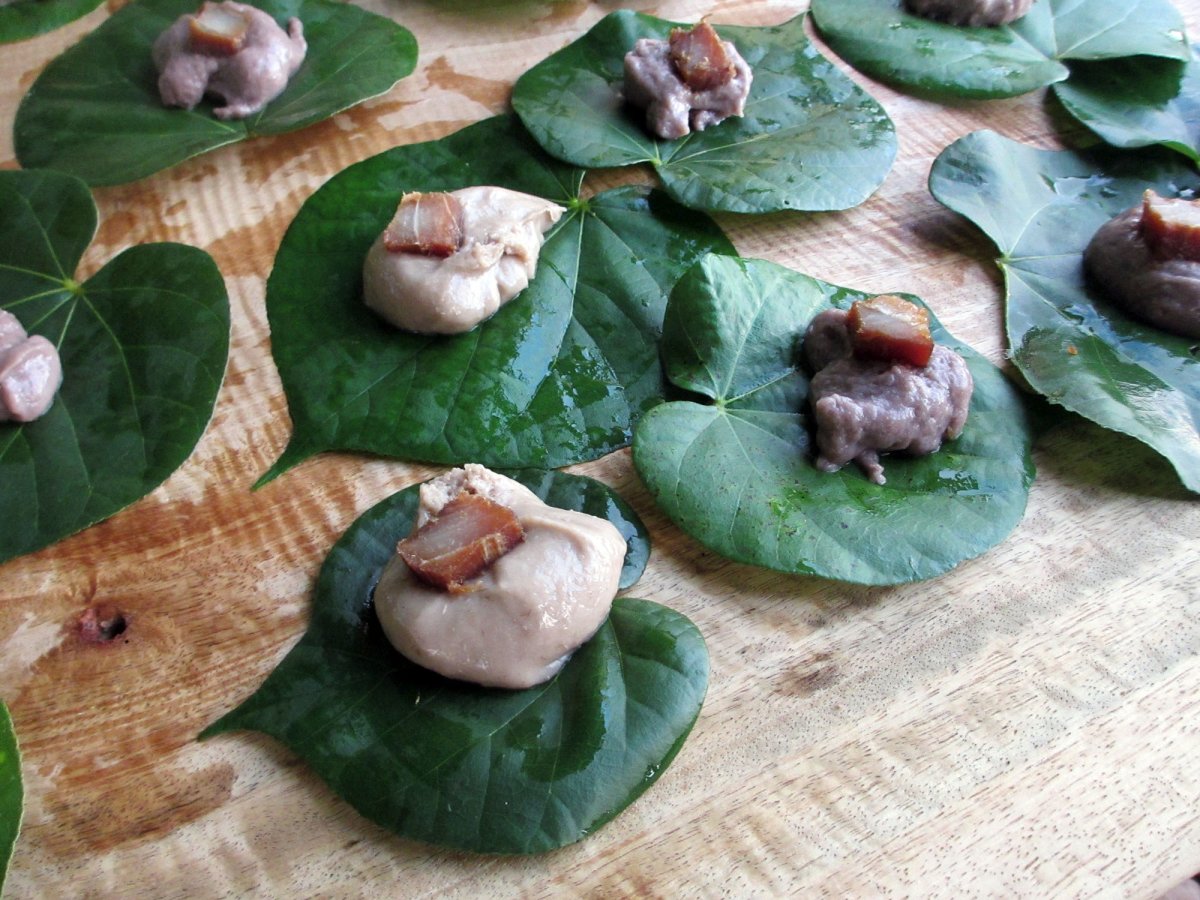
Poi is simple. You cook the taro root, mash it, and mix it with water. The consistency ranges from thick and syrupy to thin and soup-like depending on how much water goes in. There’s even a classic way to measure it: by how many fingers you need to scoop it from the bowl. Thick poi is “one-finger poi.” The thinner it gets, the more fingers you need.
Some people call it an acquired taste. I disagree. Poi is about as pure and approachable as food gets. It’s also remarkably nutritious. High in fiber, vitamin B, and calcium. Low in sodium. Zero gluten, zero fat. It’s a legitimate superfood that existed long before anyone coined the term.
You should try it. Here’s where to find the best poi on every island.