The Valley Island
Maui Visitor Guide
Maui is the island people picture when they close their eyes and think “Hawaii.” And it earns that image. But what the postcards don’t show is the range — a 10,000-foot volcano summit where you can watch sunrise above the clouds, a winding cliff road through bamboo forests to Hana, and some of the best beaches in the Pacific, all on an island you can drive across in under two hours.
Maui leans outdoor and romantic. It draws couples, honeymooners, and families who want beaches during the day and a quiet dinner in a small town at night — not a Waikiki-style strip. The food scene punches well above its weight, the Haleakalā sunrise is a once-in-a-lifetime experience, and whale season (January through March) puts 10,000 humpbacks right offshore. If you only visit one Hawaiian island, most people pick this one. There’s a reason for that.
By John C. Derrick · Hawaiʻi travel expert since 2005 · Updated 04-09-2026
Maui at a Glance
Lush, romantic, and outdoorsy — the island most people picture when they think Hawaii.
| Known for | Road to Hana, Ka'anapali and Big Beach, Haleakala sunrise, whale watching (Jan–Mar). |
| Days needed | 5–7 days. Road to Hana alone is a full day; give Haleakala its own morning. |
| Best time | April–May and September–October. January–March for whale season. |
| Where to stay | Ka'anapali or Wailea for resorts and beach access; Paia for a surf-town feel. |
Things to Know • Best Beaches • Road to Hana • Best Time to Visit
Maui's Ongoing Recovery
Maui is still healing from the devastating Lahaina wildfires of August 2023, and while the island remains a place of immense beauty and aloha, we encourage visitors to travel with mindfulness and respect. Many residents are still rebuilding their lives, and your visit can make a meaningful difference when approached with care. Supporting local businesses, choosing responsible tour operators, and being sensitive to the ongoing recovery efforts are all ways to give back while experiencing Maui’s incredible landscapes and culture. As the island continues to heal, we ask that you travel with kindness, patience, and an open heart.
Get Your Free Maui Guide
Instant access — opens immediately
- Beaches, activities & top spots
- Restaurant & dining recommendations
- Maps, itineraries & insider tips
Want the full offline version? Get the Complete Maui Guidebook →
Latest Maui Tips
Fresh from the Blog
Haleakala at Dawn - Sunrise above the clouds
Maui has six distinct regions, each with its own character — from the resort coast of Ka‘anapali to the wild eastern shore along the Road to Hana. Whether you’re splurging on a Wailea resort or booking a condo in Kihei, you’ll find the essentials below to plan every piece of your trip.
Maui Visitor Information
Our Top Valley Isle Travel Tips
Maui is Hawaii’s second-most-visited island, and for good reason. The six distinct regions range from the resort-lined west coast to the untouched rainforests of East Maui. Two volcanic mountains — the dormant Haleakalā and the older West Maui Mountains — create the central valley that gives the island its nickname.
For the full island breakdown — geography, history, regional guides, and the legend of the demigod Māui — see our complete All About Maui guide.
Maui Attractions
Maui vs. Other Islands

Maui Nui (Credit: Wikipedia)
Geologic History of 'Maui Nui'
Maui Nui or 'Greater Maui' is the geologic name given to a prehistoric Hawaiian Island built from seven shield volcanoes. Nui means "great/large" in the Hawaiian language.
A little over a million years ago, the island was significantly large than the island we think of as Maui today. They didn't separate until around 200,000 years ago, partially due to sea levels rising due to glacial melting. Once encompassing the islands of modern-day Maui, Moloka'i, Lana'i, Kaho'olawe the ancient shield volcanoes slowly settled into the Pacific Ocean seafloor by subsidence, and the volcanoes were additionally weathered by erosion to slowly separate into the distinctly different islands as they appear today.
At their largest, the islands of Maui Nui were a combined 5,600 square miles in size (14,600 sq km) - giving them a land area over 40% larger than the Big Island today.
On the corresponding graphic, 'Ma' is an abbreviation for mega-anna, millions of years ago. The light and dark shading show the extent of land during low and high sea stands of glacial cycles.
Maui Transportation
Transportation on Maui is diverse, allowing visitors to choose based on their preferences and the nature of their itinerary.
- Car Rentals: Renting a car is a popular choice (we recommend Discount Hawaii Car Rental), allowing you to explore the island at your own pace. Maui's attractions are spread out, making a car a convenient choice.
- Public Buses: Maui Bus operates a public transit system that covers various parts of the island. It's an economical choice, though it may be less convenient due to its schedule and route limitations.
- Shuttle Services: Some resorts offer shuttle services to popular destinations, providing a hassle-free option for guests.
- Bicycling: Maui's picturesque landscapes make biking a delightful experience, and bike rentals are available in several areas.
- Taxis and Ride-Shares: Taxis and ride-share services like Uber and Lyft operate on Maui, offering a convenient option for short distances or if you prefer not to drive.
- Walking: In more compact areas like Ka'anapali and Wailea, walking is a feasible way to get around, enjoy the scenery, and immerse yourself in the local atmosphere.
Considering the transportation options in advance can help visitors make the most of their Maui experience, whether they prefer the flexibility of a rental car, the eco-friendliness of biking, or the convenience of public transit.
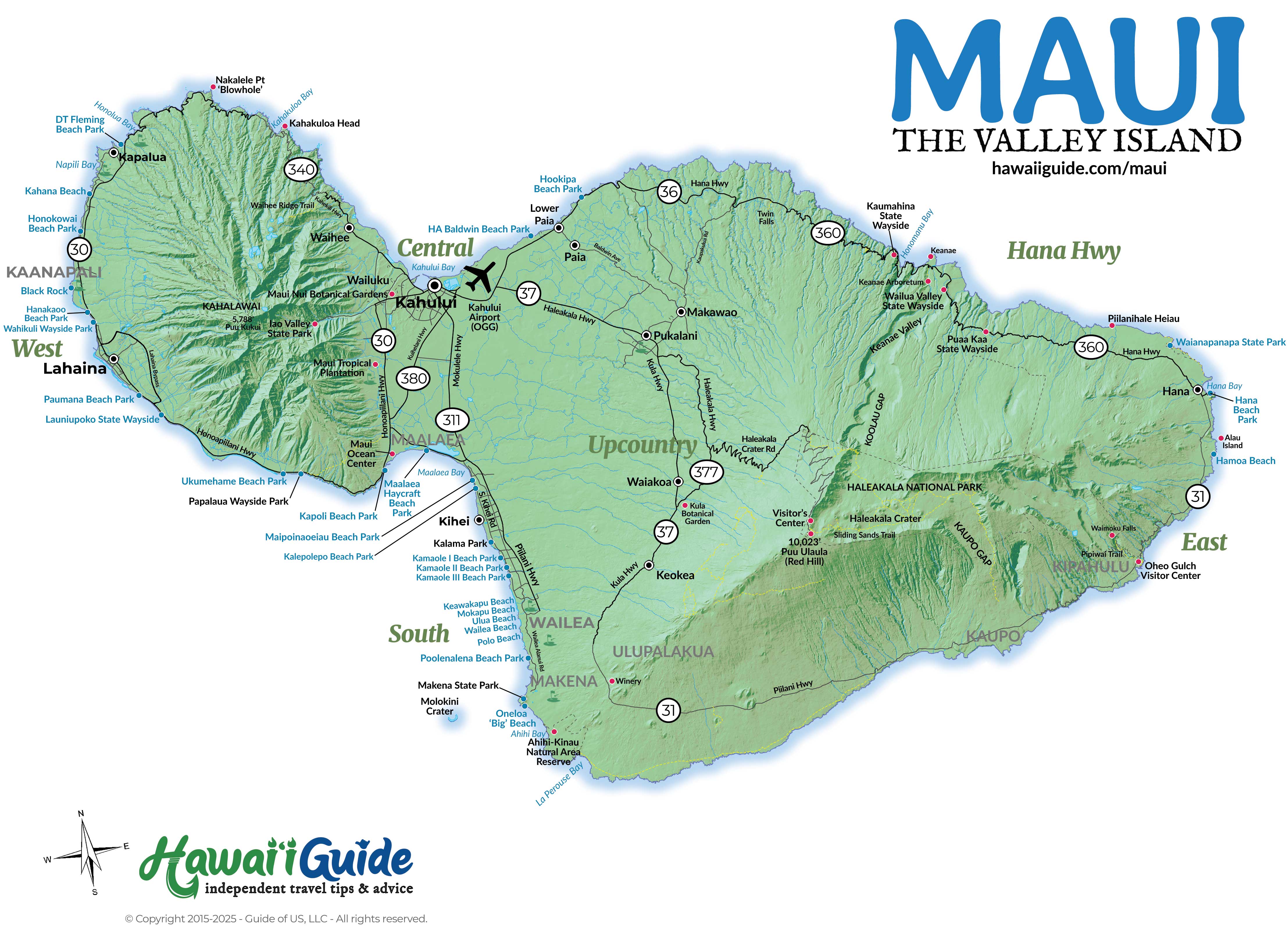
HawaiiGuide: Maui Map
Maui Visitor Data

Maui 2024 vs 2019 Visitor Numbers

Maui 2024 Hotel vs Vacation Rental Rates
Frequently Asked Questions About Maui
When is the best time to visit Maui?
Spring (April–May) and fall (September–October) give you warm weather, smaller crowds, and lower hotel rates. January through March is peak season but also prime whale watching — 10,000+ humpbacks migrate to the Maui Nui basin each winter. Full Maui timing guide »
How many days do I need on Maui?
Plan for 5–7 days minimum. The Road to Hana is a full day, Haleakala sunrise deserves its own morning, and you will want at least two beach days. Couples often stay 7–10 days comfortably. See our Maui itineraries »
Do I need to rent a car on Maui?
Yes — Maui has limited public transit and most attractions are spread across the island. A rental car is essential for the Road to Hana, Haleakala, and exploring beyond your resort area. Transportation options »
What is the weather like on Maui?
Warm year-round: highs in the mid-80s°F, lows in the mid-60s°F, ocean temps 75–79°F. West Maui is dry and sunny; East Maui gets more rain. The summit of Haleakala can be 30°F colder — bring layers. Full Maui weather guide »
Where are the best beaches on Maui?
Makena Beach (Big Beach) for size and beauty, Ka'anapali for resort access and snorkeling, Wailea Beach for calm water, and Wai'anapanapa for a black sand experience on the Road to Hana. Explore all Maui beaches »
Is the Road to Hana worth it?
Yes. It is 64 miles of waterfalls, bamboo forests, black sand beaches, and coastal cliffs — one of the most scenic drives on Earth. Budget a full day, start early, and bring snacks. Our complete Road to Hana guide »