04-04-2026
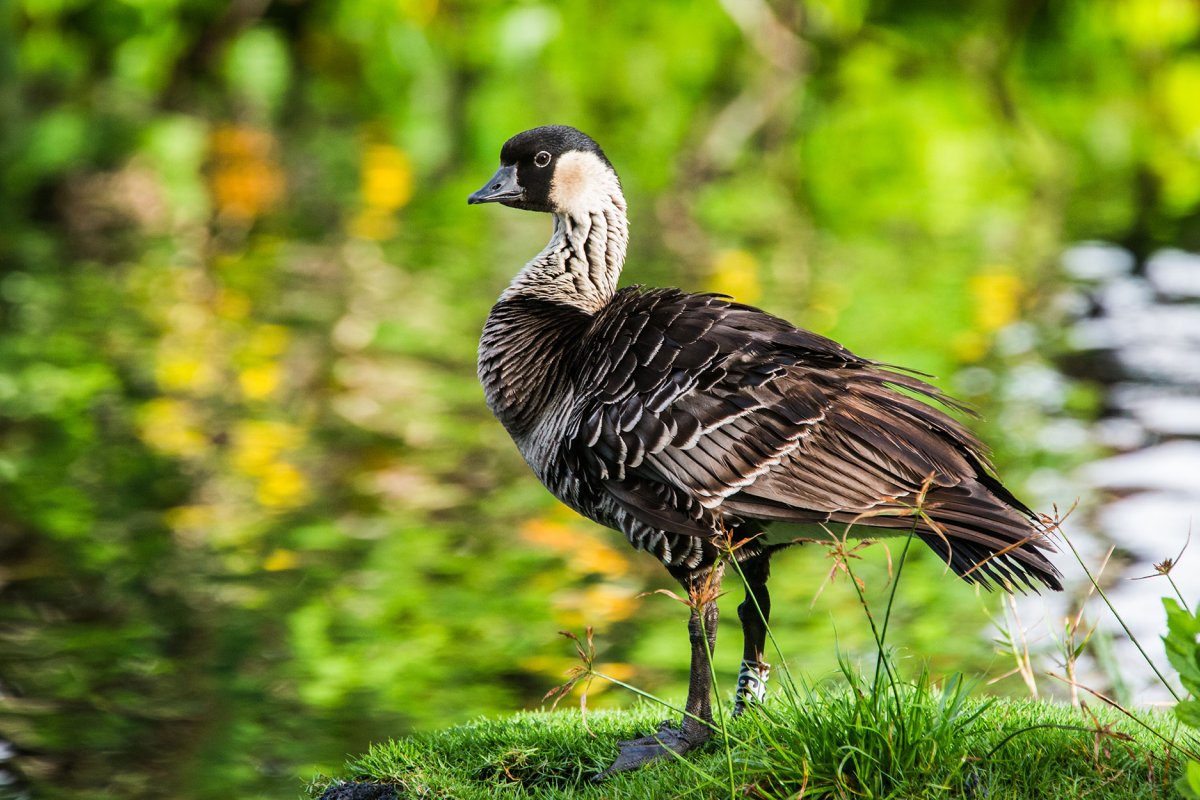
Hawaii State Bird: The Nene (Hawaiian Goose)
Where to see nene, conservation status, and visitor facts

Founder & certified Hawaii travel expert with 20+ years of experience in Hawaii tourism.
Aloha! This article may link to trusted Hawaii resources at no extra cost to you. Mahalo for your support!
What Is Hawaii's State Bird?
The Hawaii state bird is the nene (Branta sandvicensis), a medium-sized goose found only in the Hawaiian Islands. The Hawaii Territorial Legislature designated the nene as the official state bird on May 7, 1957, two years before Hawaii became a state.
The name "nene" comes from the bird's soft, low-pitched call. It is the world's rarest goose and one of the most endangered waterfowl species on the planet. Seeing one in the wild is a genuine privilege -- these birds nearly vanished from Earth entirely.
About the Nene
The nene descended from the Canada goose. Scientists believe a small flock of Canadian geese landed in Hawaii roughly 500,000 years ago. Over thousands of generations, those birds adapted to volcanic island life in ways that made them a distinct species.
The most obvious adaptation is their feet. Unlike their Canadian ancestors, nene have reduced webbing between their toes and longer, stronger toe pads. This lets them walk confidently across rough a'a lava rock, a terrain that would shred the fully webbed feet of a mainland goose.
Nene stand about 16 inches tall and weigh 4 to 5 pounds. Their plumage is gray-brown with a black face, cream-colored cheeks, and distinctive black furrows running down the neck. The overall look is sleeker and more upright than a Canada goose, built for walking rather than long-distance flight.
They can fly, but they are far less aerial than their mainland relatives. Nene spend most of their time on the ground, foraging on grassy slopes, lava fields, and scrublands at elevations between 5,000 and 8,000 feet.
Where to See Nene in Hawaii
Nene live on four of the main Hawaiian Islands. Some locations are far better for sightings than others.
Big Island
Hawaii Volcanoes National Park is the single best place to see nene. The park supports the largest wild population on any island. Look for them along the Crater Rim Drive, on the grass near the Kilauea Visitor Center, and around the Devastation Trail parking area. Early morning visits give you the best odds.
Nene also frequent the grasslands on the slopes of Mauna Kea, particularly around the Hakalau Forest National Wildlife Refuge. These birds tend to be shyer and harder to spot than the ones in the national park.
Maui
Haleakala National Park hosts a healthy nene population. You will often see them near the park entrance station, along the road to the summit, and grazing on the scrubby vegetation around the crater rim. The summit trails area is a reliable spot during nesting season.
Kauai
Kauai has the fastest-growing nene population in the state. The birds thrive in the lowland habitat here, unlike the high-elevation terrain they prefer on the Big Island and Maui. Kilauea Point National Wildlife Refuge is a good bet for sightings. Nene also wander onto golf courses, parks, and residential areas across the island's north shore.
Oahu
Nene are rare on Oahu. A small reintroduced population lives at James Campbell National Wildlife Refuge on the North Shore, and occasional sightings happen near Turtle Bay. Do not plan an Oahu trip around nene sightings -- your chances are much better on the other islands.
The Nene Conservation Story
Before humans arrived in Hawaii, an estimated 25,000 nene lived across the islands. Polynesian settlers hunted them for food. European colonizers brought mongooses, rats, feral cats, and dogs -- all of which prey on nene eggs and chicks. By 1952, only about 30 nene remained in the wild. The species was on the edge of extinction.
The recovery effort started at the Wildfowl Trust in Slimbridge, England, where conservationist Sir Peter Scott began a captive breeding program in 1950 using birds from Hawaii. The program worked. Captive-bred nene were gradually reintroduced to Hawaii Volcanoes National Park, Haleakala, and later to Kauai.
The nene was among the first species listed under the Endangered Species Act in 1967. Federal protection made it illegal to hunt, harass, or harm them.
As of 2024, the wild population stands at roughly 3,800 birds, according to the U.S. Fish and Wildlife Service. In 2019, the nene was downlisted from "endangered" to "threatened" -- still protected, but a sign that decades of conservation work are paying off. Predator control, habitat restoration, and ongoing captive breeding continue to drive the population upward.
Nene Facts
- Scientific name: Branta sandvicensis (named after the Sandwich Islands, the old European name for Hawaii)
- Lifespan: Up to 42 years in captivity; wild birds typically live 20 to 25 years
- Diet: Grasses, leaves, seeds, and berries -- particularly the berries of native Hawaiian plants like ohelo and pukiawe
- Nesting season: October through March, with peak activity in November and December
- Clutch size: 3 to 5 eggs per nest; incubation lasts about 30 days
- Mating: Nene are monogamous and typically mate for life
- Flight: Capable of short flights but spend most of their time on the ground; they lack the long-distance migration instinct of their Canada goose ancestors
- Preferred elevation: 5,000 to 8,000 feet on the Big Island and Maui, but lowland areas on Kauai
How to Protect Nene When You Visit
You will likely encounter nene if you visit Hawaii Volcanoes National Park or Haleakala. They are curious birds and sometimes approach people. Here is what the National Park Service asks visitors to do:
Do not feed them. Feeding nene is a federal offense. Human food damages their health, and hand-feeding makes them lose their fear of people. Habituated nene wander into roads and parking lots, where they get hit by cars. Vehicle strikes are one of the leading causes of nene death.
Drive slowly. Nene walk across park roads constantly. In Hawaii Volcanoes National Park and Haleakala, watch for them especially near parking areas and along Crater Rim Drive. The speed limits exist partly to protect these birds.
Keep your distance. Stay at least 20 feet away. Do not chase or corner a nene for a photo. If a nene approaches you on its own, stand still and let it pass.
Report injured birds. If you find an injured or dead nene, report it to a park ranger immediately or call the Hawaii DLNR Division of Forestry and Wildlife at (808) 587-0166.
Other Hawaiian State Symbols
The nene is one of several official state symbols that reflect Hawaii's natural heritage:
- State flower: The yellow hibiscus (ma'o hau hele, Hibiscus brackenridgei), a rare native species also found only in Hawaii
- State fish: The humuhumunukunukuapua'a (reef triggerfish, Rhinecanthus rectangulus), one of Hawaii's most recognizable reef fish
- State tree: The kukui (candlenut tree, Aleurites moluccanus), used by ancient Hawaiians for light, medicine, and canoe building
- State marine mammal: The Hawaiian monk seal (Neomonachus schauinslandi), one of the most endangered marine mammals in the world
For more on Hawaii's native wildlife, see our guide to Hawaii plants and animals and the full Hawaii birds page.
Explore Hawaii's Nature and Wildlife
Plan your trip to see the nene and other endemic Hawaiian species.
Get Your Free Hawai'i Guide
Instant access — opens immediately
- Beaches, activities & top spots
- Restaurant & dining recommendations
- Maps, itineraries & insider tips
Want the full offline version? Get the Complete Hawai'i Guidebook →
Affiliate Disclosure: We may earn commissions from some travel partners (like Amazon or Expedia) which helps us maintain this site. These links are at no extra cost to you and don't impact our honest & unbiased recommendations. Remove all the ads →
×
![]()

Try out our AI Powered
Search & Chatbot →
Get Your Free Hawaii Visitor Guide
Enter your email and we'll send you instant access to our free 2026 Hawaii Starter Guide + Summary Guidesheets.