
Hawaii photographs well. That’s obvious. But not every viral photo spot is a good one to visit. Some are on private property. Some are sacred cultural sites that shouldn’t be treated as backdrops. Some dump crowds into residential neighborhoods where people are just trying to live their lives.
Every spot on this list is publicly accessible, properly managed, and won’t earn you dirty looks from residents. You’ll get photos that look incredible and a clean conscience to go with them.
Kalalau Lookout, Kauai
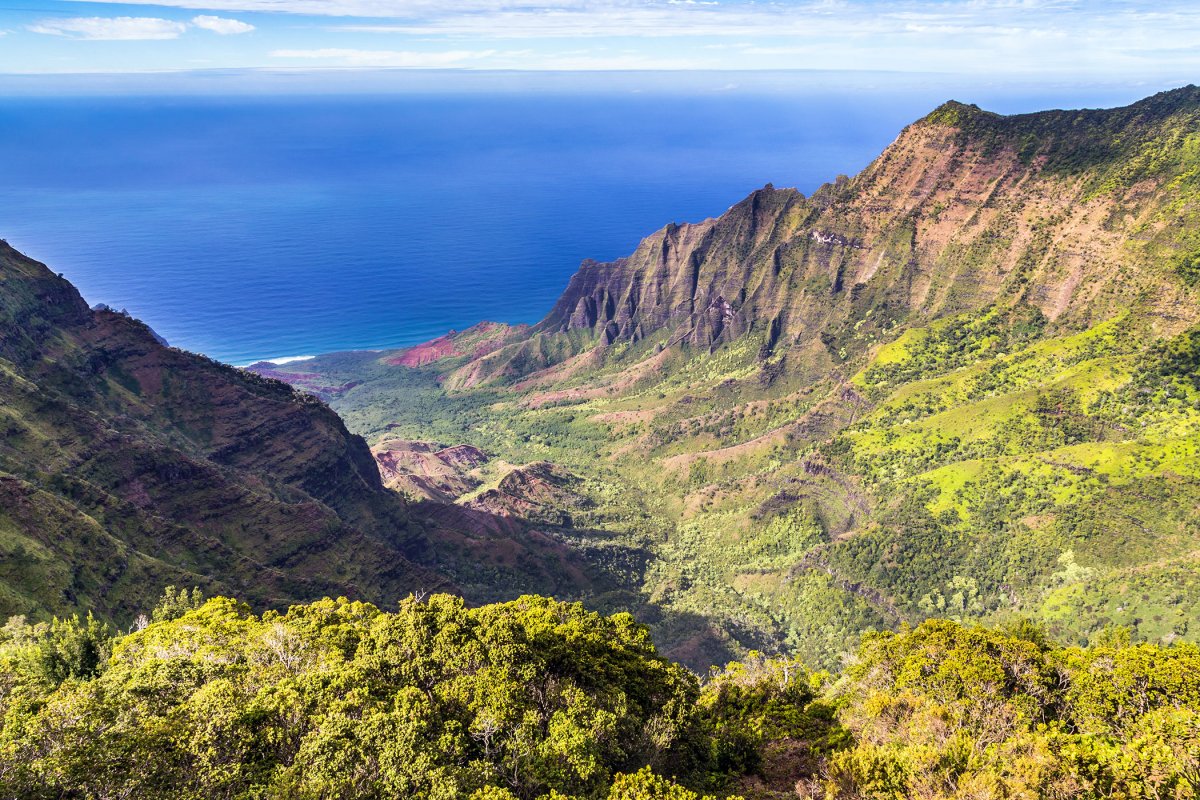
The single most dramatic viewpoint in Hawaii. You’re standing at 4,000 feet looking down into the Kalalau Valley — fluted green cliffs, waterfalls threading through the ridges, and the Pacific far below. The depth and scale don’t translate in photos, which is saying something because the photos are already stunning.
It’s inside Koke’e State Park at the end of Highway 550. No reservations needed. The drive up from Waimea takes about 40 minutes through Waimea Canyon (stop there too — it’s called the Grand Canyon of the Pacific for a reason). Best light is morning before clouds fill the valley, which happens most afternoons.
Waimea Canyon, Kauai
Ten miles long, a mile wide, 3,600 feet deep. Red and green stripes cut by waterfalls. Multiple overlooks line Highway 550 with designated parking. Every single one gives you a different angle.
The canyon changes color throughout the day. Morning light turns the walls deep red. Afternoon clouds create dramatic shadows and light beams. Rain produces instant waterfalls that vanish an hour later. Bring a wide-angle lens or just use your phone’s panorama mode.
Diamond Head Summit, Oahu
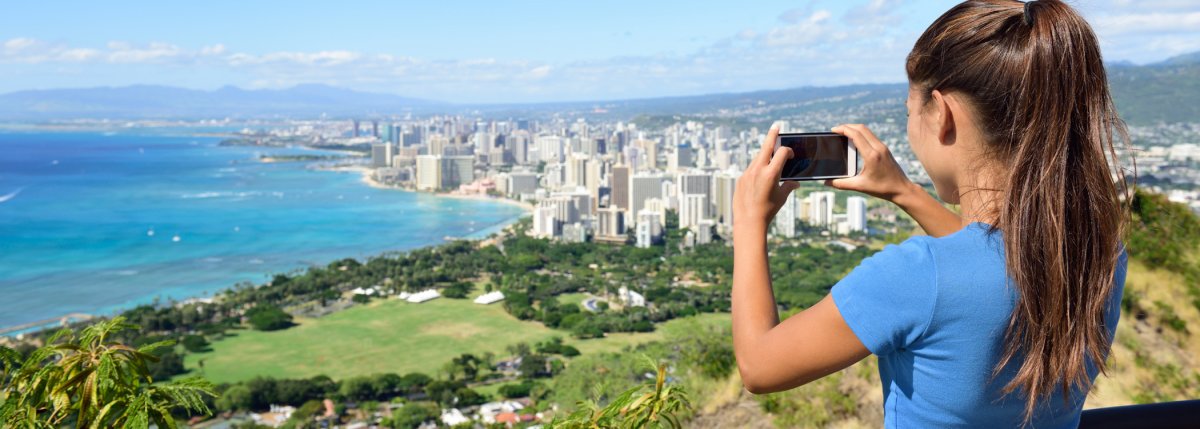
The most iconic silhouette in Hawaii. The summit trail is 1.6 miles round trip with a 560-foot elevation gain — enough to earn the view without destroying your morning. From the top, you get a 360-degree panorama: Waikiki’s skyline, the deep blue channel toward Moloka’i, the Koko Head ridge to the east, and the Ko’olau Mountains behind Honolulu.
Reservations are required and cost $5 per person. Book the earliest time slot for the best light and smallest crowds. The trail has stairs, tunnels, and a spiral staircase near the top. Wear proper shoes — this isn’t a barefoot stroll.
Waianapanapa Black Sand Beach, Maui
Jet-black volcanic sand, bright green naupaka bushes, turquoise water, sea caves. The color contrast makes every photo pop without any editing. This is on the Road to Hana near mile marker 32.
Maui County requires advance reservations for non-residents, which actually makes this a better experience than it used to be. Crowds are controlled. You get breathing room. The parking lot isn’t a war zone anymore. Go early morning for soft light and calmer surf. The sea caves on the left side of the beach photograph well at any time.
Haleakala Crater, Maui
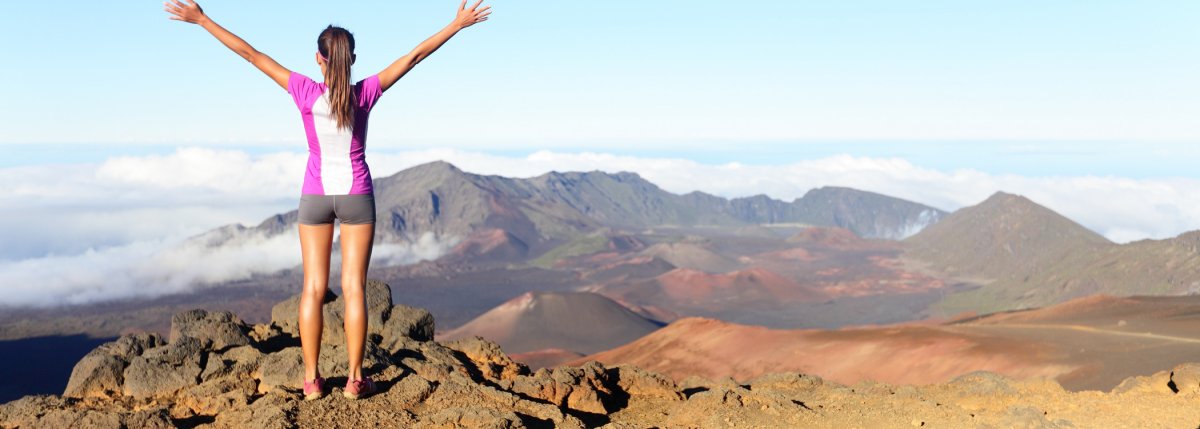
Sunrise at 10,023 feet above a sea of clouds. The crater’s volcanic landscape looks like another planet — rusty reds, grays, and silversword plants dotting the cinder cones. Even without sunrise, the crater views during the day are extraordinary.
Sunrise reservations are required and sell out fast. They open 60 days in advance. Sunset doesn’t require a reservation and has a fraction of the crowd. Either way, the colors are unreal. Temperature drops to 40°F regularly, so bring a real jacket.
Na Pali Coast by Boat, Kauai
Fifteen miles of fluted sea cliffs rising 4,000 feet straight out of the ocean. You can’t drive to the Na Pali Coast. You hike it (the Kalalau Trail, 11 miles one way), kayak it, or take a boat tour. For photography, the boat tour wins because you see the entire coastline from sea level with consistent light.
Morning tours on catamaran or zodiac typically run from Port Allen or Hanalei. The zodiac tours get closer to the cliffs and sea caves. Catamaran tours are smoother and better for gear-heavy photographers. Winter months bring bigger swells, which means more dramatic waves crashing against the cliffs but rougher rides. Summer is calmer and more accessible.
Pololu Valley Lookout, Big Island
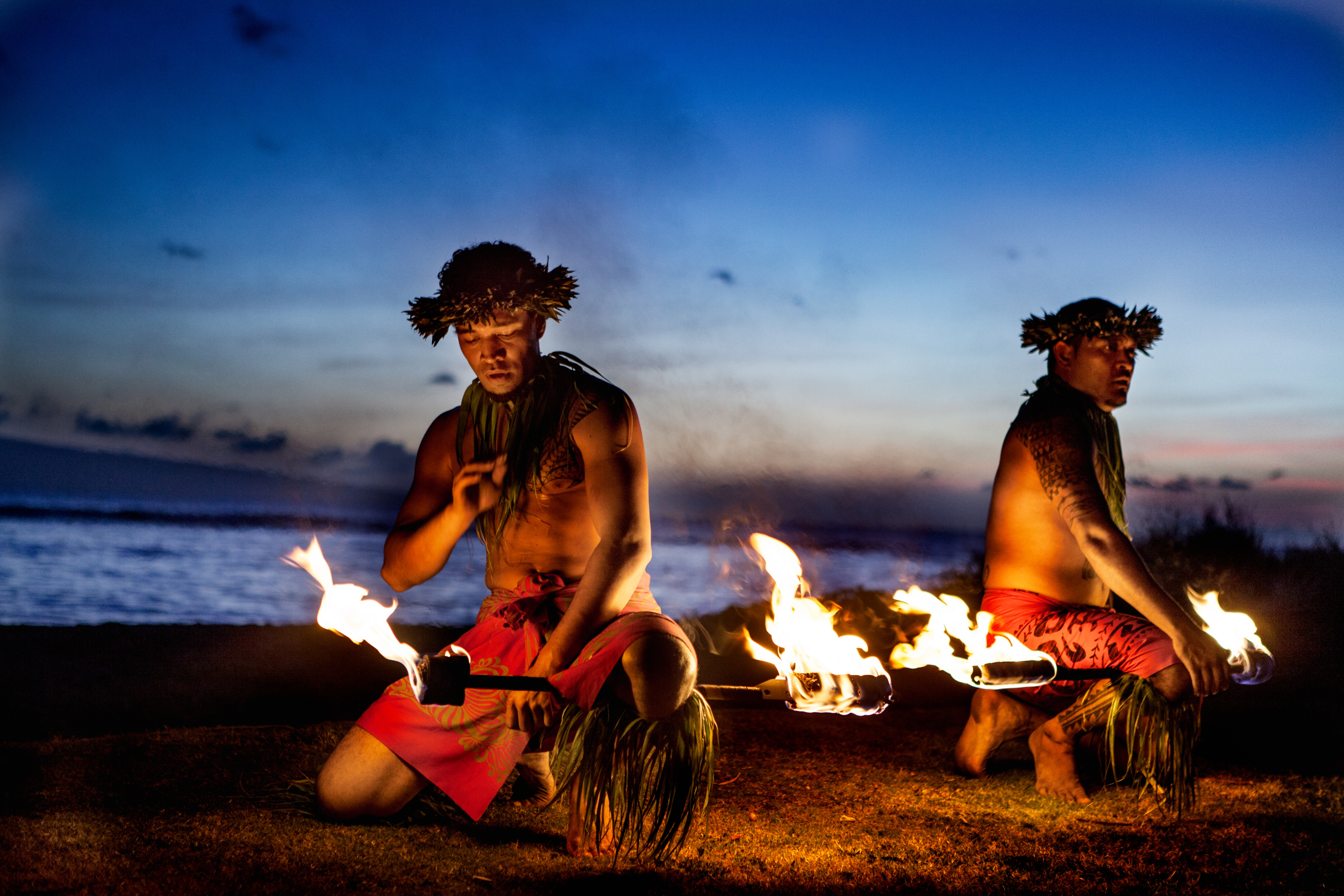
A five-minute walk from the parking area gives you a view down into a deep valley with black sand beach, towering green cliffs, and crashing surf. The Kohala Coast stretches behind you. It’s one of the most photogenic overlooks on the Big Island and rarely crowded.
The hike down to the beach floor takes about 20 minutes and gains you a completely different perspective — looking up at the valley walls from below. The trail is steep and can be muddy. If you go down, plan on getting dirty. But the photos from the valley floor, with the cliffs framing the sky above you, are worth the effort.
Manoa Falls, Oahu
A 150-foot waterfall at the end of a 1.6-mile round-trip trail through a tropical rainforest. The canopy filters the light into green-gold patterns. Bamboo groves, banyan trees, and wild ginger line the path. It’s 15 minutes from downtown Honolulu and feels like a different world.
The trail is well-maintained and appropriate for most fitness levels. It gets muddy — that’s just how rainforest trails work. Wear shoes with grip. The waterfall pool is off-limits for swimming (bacteria risk from runoff), but the view from the designated viewing area is the money shot anyway. Mid-morning light works best when the sun hits the falls through the canopy gap.
Hapuna Beach, Big Island
Half a mile of wide, golden sand on the Kohala Coast. Hapuna is consistently rated among the best beaches in the world, and it earns it. The water is clear turquoise, the sand is fine-grain gold, and the sunsets face due west over open ocean with nothing between you and Japan.
State park with proper parking ($5 per vehicle), restrooms, and lifeguards. No reservation needed. The beach is wide enough that you don’t feel packed in even on busy days. Walk to either end for photos with fewer people in frame. The south end near the rocks has tide pools that add foreground interest.
Hanalei Bay and Pier, Kauai
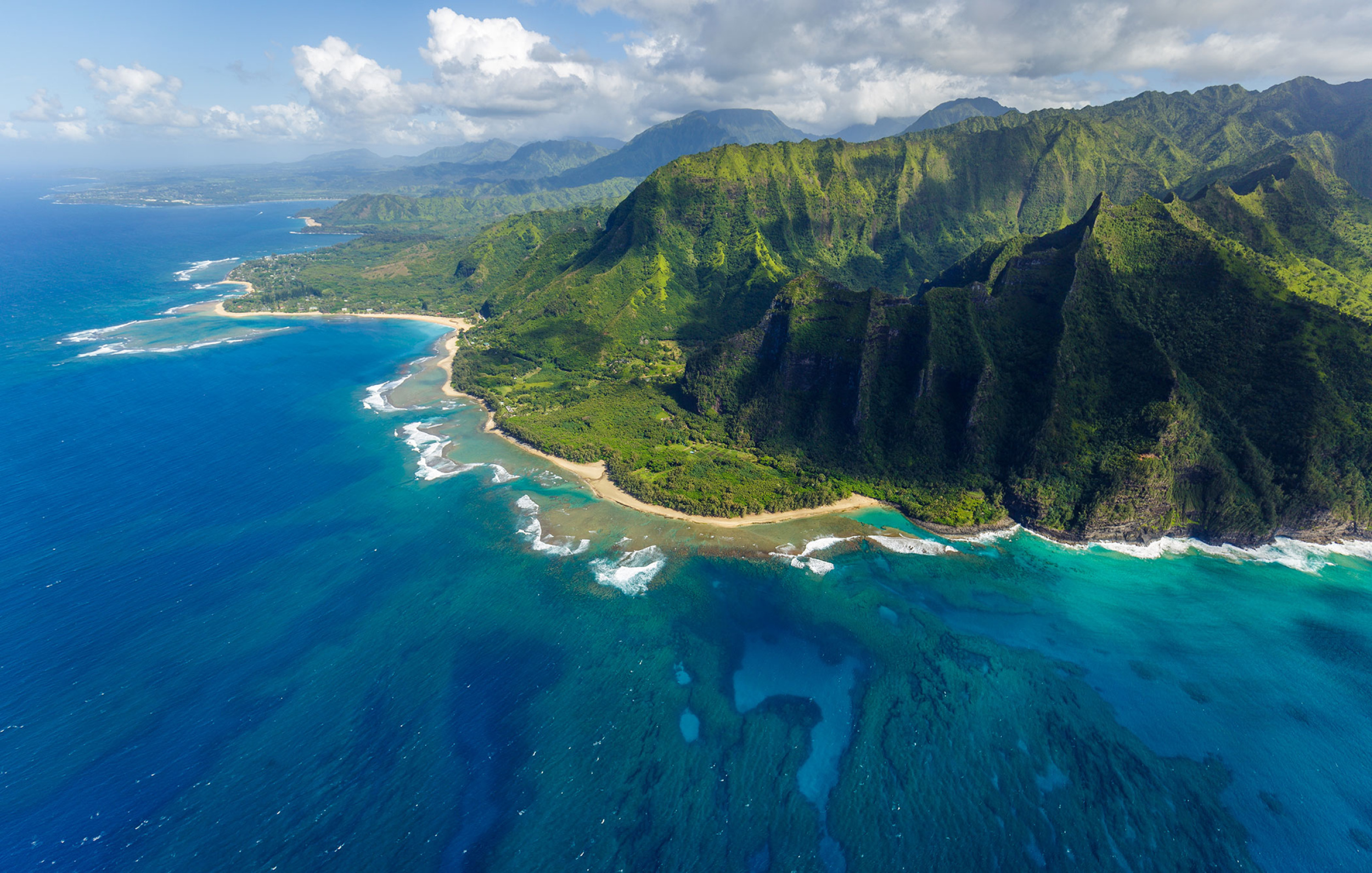
The crescent bay with green mountains rising behind it is the quintessential Kauai image. The Hanalei Pier is the classic composition — a straight line leading your eye into the bay with Namolokama Mountain as the backdrop. Dozens of movies have been filmed here. You’ll recognize it immediately.
The pier itself is a public structure, open to walk on. Best photographed in the late afternoon when the mountains catch warm sidelight. The beach on either side of the pier is public and accessible. Hanalei town has food trucks and shops if you need fuel before or after your session.
Road to Hana Overlooks, Maui
The Road to Hana has 620 curves and 59 bridges. It also has a dozen pull-off overlooks with views of ocean cliffs, waterfalls, and bamboo forests. The trick is knowing which stops are worth your time.
Twin Falls (mile 2) is the easiest waterfall access on the road. Ke’anae Peninsula (mile 17) gives you a lava rock peninsula jutting into blue ocean with taro fields behind. Wailua Falls (mile 21) is visible from the road — a tall cascade framed by tropical foliage. All of these are public access with designated parking. Use them. Don’t pull onto private land or block driveways for a photo. The Hana community deals with enough of that already.
Photography Tips for Hawaii
Golden hour is everything. The first and last hour of sunlight turns ordinary scenes extraordinary. Hawaii’s golden hour runs roughly 45 minutes before and after sunrise/sunset. Mid-day light is harsh and flat — save that time for snorkeling or eating.
Underexpose slightly. The number one mistake in Hawaiian sunset and sunrise photos is blowing out the sky. Drop your exposure a half-stop or tap a bright area on your phone screen to lock the exposure there. You can always brighten shadows later. You can’t recover a white sky.
Waterproof protection matters. Mist from waterfalls, sea spray on boat tours, sudden tropical showers — your gear will get wet. A dry bag or simple Ziploc works for phones. For cameras, a rain cover or at minimum a microfiber cloth you can wipe down with quickly.
Respect the moment. Spend at least half your time at each spot actually looking at what’s in front of you instead of through a screen. The memory of standing at the edge of Kalalau Valley with wind in your face lasts longer than any file on your phone.
Plan Your Hawaii Photo Trip
More guides to help you find the best spots on every island.