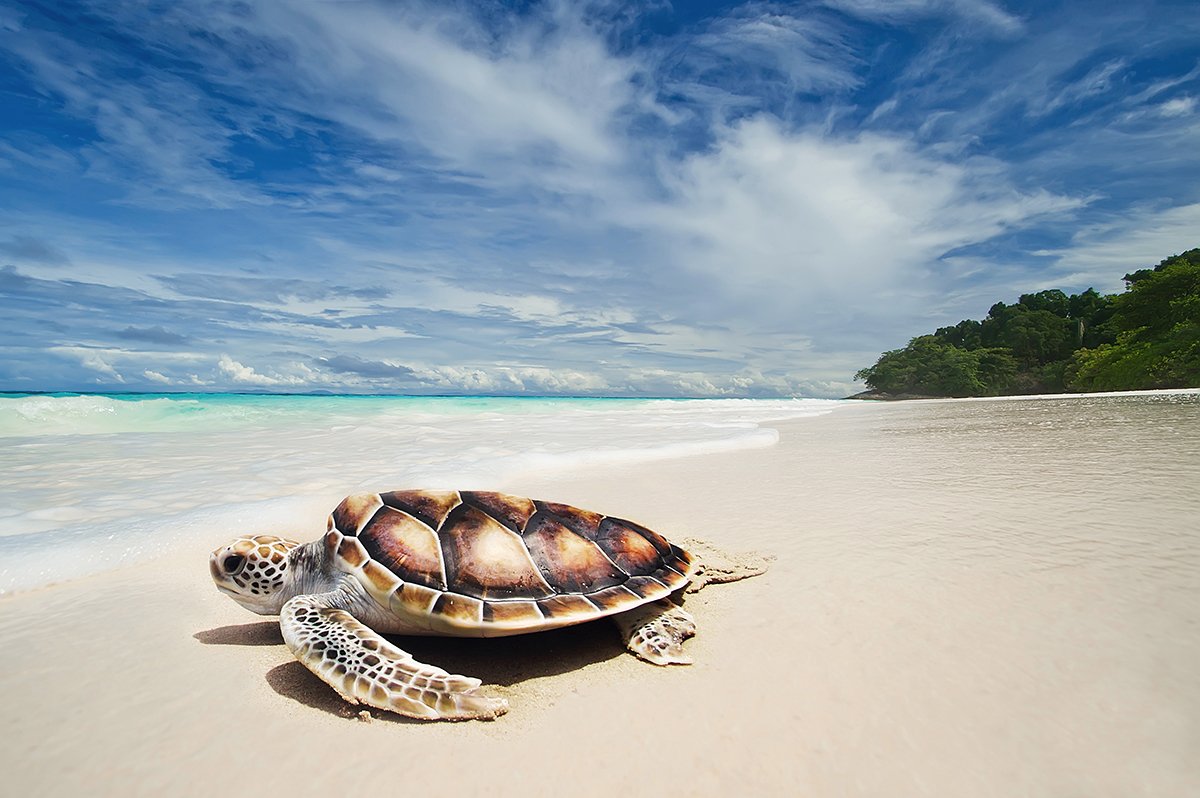

Hawaii has some of the most accessible wildlife viewing in the United States. Green sea turtles haul out on public beaches in broad daylight. Hawaiian monk seals (fewer than 1,600 left alive) nap on resort shorelines. Humpback whales breach close enough to shore that you can see them from your hotel lanai.
All of these animals are federally protected. The fines for harassment start at $500 and go up to $50,000 under the Marine Mammal Protection Act and Endangered Species Act. “Harassment” includes touching, chasing, feeding, and getting close enough to alter the animal’s behavior. Tourists get cited every year.
This guide covers where to see Hawaii’s wildlife, how close you can legally get, and which tour operators do it right.
Green Sea Turtles (Honu)
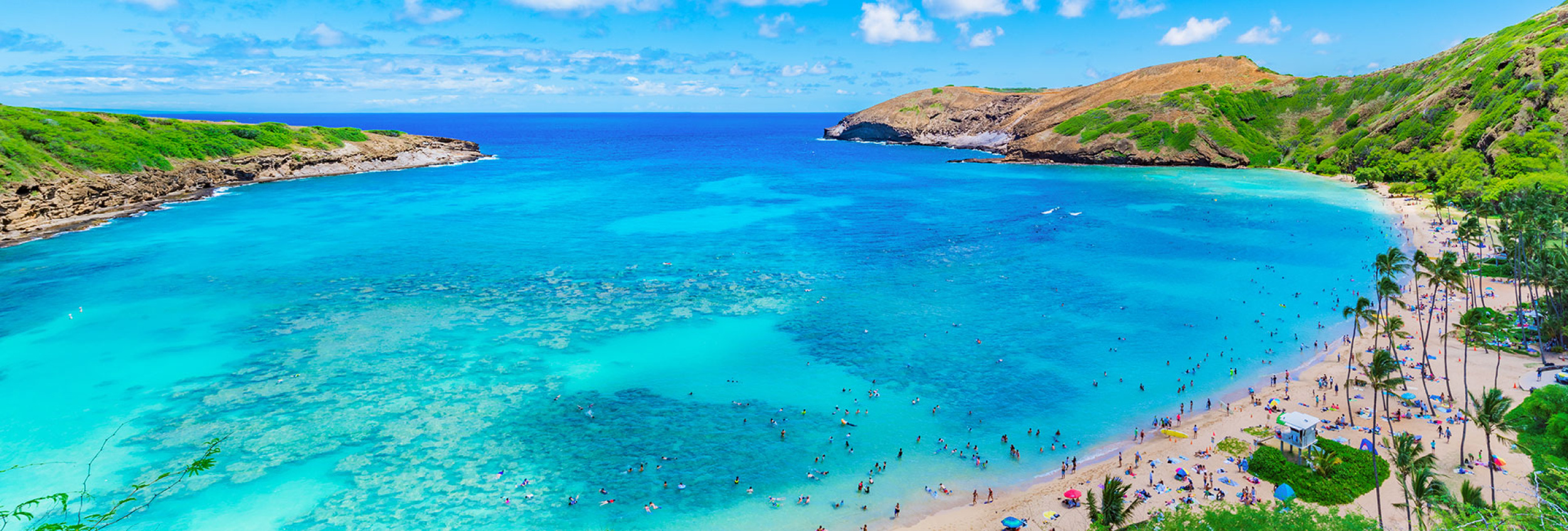
Green sea turtles are the animal you are most likely to encounter in Hawaii. They feed on limu (seaweed) along rocky coastlines, surface regularly while snorkeling, and haul out on beaches to bask. The population has recovered significantly since federal protection began in 1978 — Hawaii now has an estimated 3,000-4,000 breeding females.
Stay at least 10 feet away on land and in the water. Do not touch, ride, feed, or block their path to the ocean. Hawaii state law (HRS §195D) and federal ESA protections both apply. Fines start at $500 for first offenses.
On Oahu, Laniakea Beach on the North Shore is the most reliable turtle-viewing beach in the state. Turtles haul out here almost daily to bask on the sand. Volunteers rope off areas around resting turtles. Electric Beach (Kahe Point) is a top snorkeling spot where turtles feed in the warm-water outflow.
Ho’okipa Beach near Pa’ia on Maui has turtles basking on the rocks every afternoon. The viewing area sits above the beach, so you watch from a safe distance. Snorkeling at Napili Bay and Black Rock (Ka’anapali) frequently puts you within view of feeding turtles.
Punalu’u Black Sand Beach on the Big Island has resident turtles basking on the volcanic sand. Richardson Beach in Hilo is another consistent spot. On Kauai, try Poipu Beach and Anini Beach, especially in the morning hours.
Hawaiian Monk Seals
The Hawaiian monk seal (ilio-holo-i-ka-uaua) is critically endangered. Roughly 1,570 individuals remain, split between the remote Northwestern Hawaiian Islands and the main Hawaiian Islands. The population in the main islands has been growing — a rare conservation success story — which means visitors are increasingly likely to see one.
They show up on any beach, any island, any time. A monk seal might be sleeping on the sand at Waikiki, Poipu, or a remote Big Island cove. They come ashore to rest, thermoregulate, and molt. Mothers with pups are especially common in spring and summer.
Stay at least 50 feet away (150 feet from mothers with pups). The MMPA classifies any approach closer than this as harassment. Do not attempt to return a seal to the water — they are supposed to be on the beach. Do not allow dogs near them.
If you spot one, keep your distance and call the NOAA monk seal hotline (888-256-9840) to report the sighting if no volunteers are present. On most popular beaches, trained volunteers will arrive quickly to set up a perimeter with signs and rope.
Kauai (especially Poipu Beach and the North Shore) has the highest concentration of monk seals in the main islands. Oahu’s Waikiki and North Shore beaches see regular haul-outs. Molokai has a significant population. There is no way to predict exactly where one will show up on any given day.
Humpback Whales
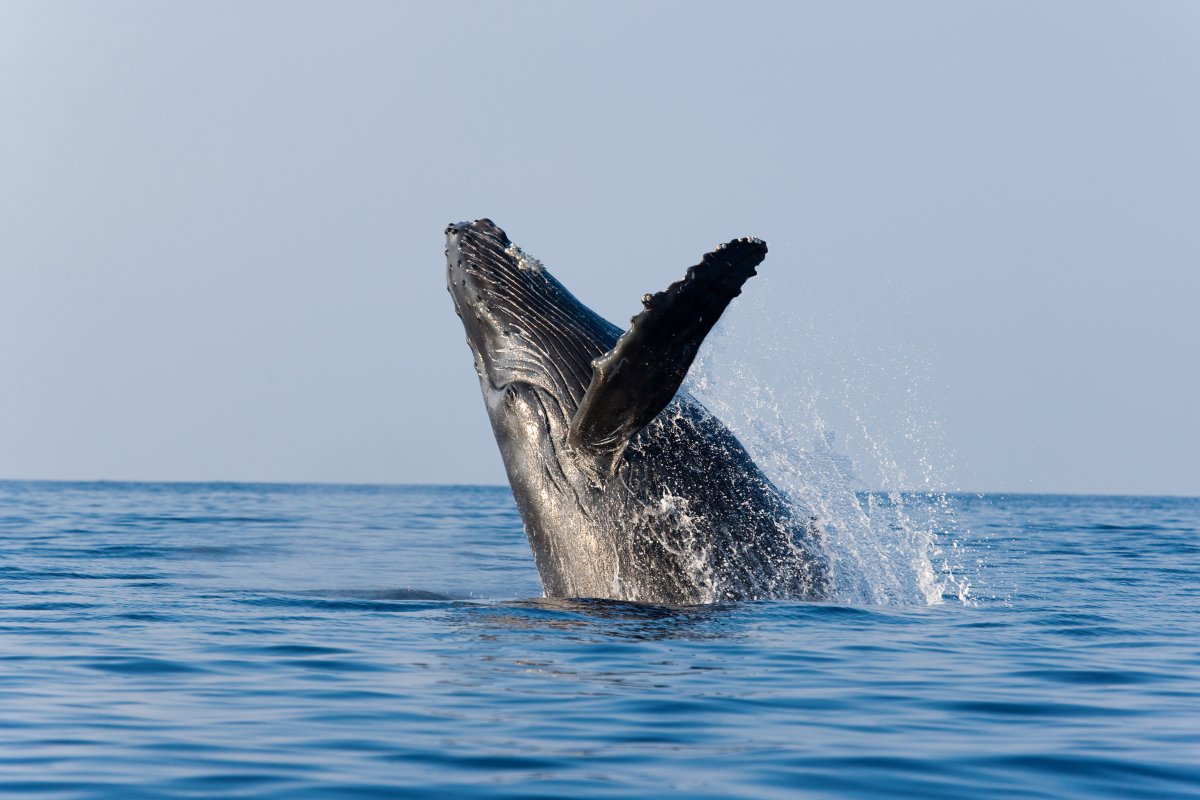
Every winter, roughly 10,000 North Pacific humpback whales migrate from Alaska to Hawaii to breed, calve, and nurse. They arrive in November, peak in February and March, and most depart by May. Some stragglers linger into June.
Hawaii is the only state in the U.S. where you can reliably see humpback whales from shore. No binoculars needed during peak season — breaches, tail slaps, and spouts are visible from any elevated coastal vantage point.
Maui’s west side (Ma’alaea, Lahaina, Ka’anapali) is the epicenter for shore viewing. The shallow, warm water between Maui, Molokai, and Lanai — the Au’au Channel — concentrates whales in a narrow corridor during peak season.
On Oahu, the Makapuu Lighthouse Trail offers an elevated perspective over the windward coast. On Kauai, the Kilauea Lighthouse area and Poipu coastline are prime spots. Any elevated coastal vantage point on any island works during January through March.
Boat tours. Whale watch boats operate from December through April on all four main islands. PacWhale Eco-Adventures on Maui (owned by the nonprofit Pacific Whale Foundation) runs research-focused eco-cruises with certified marine naturalists. Expect to pay $40-80 per person for a 2-hour tour. Federal law prohibits boats from approaching within 100 yards of a whale — but whales approach boats regularly, and there is nothing illegal about a curious whale swimming past.
Note: The whale season is over by summer. If you are visiting June through October, you will not see humpbacks. But other marine life fills the gap — manta rays, spinner dolphins, and pelagic fish are more active in summer months.
Spinner Dolphins
Hawaiian spinner dolphins are nocturnal feeders that return to shallow bays each morning to rest and socialize. They spin — leaping from the water and rotating up to seven times before splashing down. Pods of 50-200 are common.
The law changed in 2021. NOAA’s spinner dolphin rule prohibits swimming within 50 yards of spinner dolphins in Hawaii. This applies to swimmers, snorkelers, kayakers, and boats. The rule exists because “swim with dolphins” tours were disrupting the dolphins’ critical rest period, pushing them into deeper water where they are vulnerable to predators.
You can still see spinner dolphins from shore at many locations. On the Big Island, Kealakekua Bay and Ho’okena Beach are morning resting spots. On Oahu, Makua Beach and Waianae coast bays are frequented by pods. Watching from a cliff or beach as a pod of spinners performs aerial acrobatics in the morning light is one of Hawaii’s great free shows.
Some boat operators offer dolphin watch tours that comply with the 50-yard rule — you observe from a distance rather than jumping in with them. This is the ethical choice. Any operator advertising “swim with wild dolphins” is either violating the rule or operating in a gray area.
Manta Rays
The Big Island’s Kona Coast has a near-nightly manta ray show that draws divers and snorkelers from around the world. Oceanic manta rays — with wingspans reaching 12-16 feet — gather nightly at sites where underwater lights attract plankton. The mantas glide in to feed, swooping within inches of snorkelers and divers floating at the surface.
Where: The two main sites are Keauhou Bay (near the Sheraton) and “Manta Heaven” offshore. Both are accessed by boat. The Keauhou site is closer to shore and sometimes viewable from the Sheraton Kona’s Manta Ray Bar — the hotel points spotlights into the water, and mantas come to feed. Free viewing from the hotel grounds.
Tour operators. Night snorkel and dive tours run nightly from Keauhou and Kailua-Kona harbors. Expect $80-150 per person for a snorkel trip, $150-250 for a dive. Fair Wind Cruises and Sea Quest Hawaii are established operators. Manta sightings are not guaranteed, but success rates run above 90% at established sites.
Ethics. Do not touch the mantas. Stay flat on the surface and let them come to you. Responsible operators brief you on the rules before entering the water. The mantas are not trained or fed — they are wild animals following their natural feeding behavior.
Nene (Hawaiian Goose)
The nene is Hawaii’s state bird and the world’s rarest goose. The population crashed to just 30 individuals in the 1950s. Captive breeding and habitat protection have brought numbers back to over 3,000 birds across the islands. The U.S. Fish and Wildlife Service downlisted the nene from “endangered” to “threatened” in 2019, though Hawaii still classifies them as endangered under state law.
Nene live in grasslands, volcanic slopes, and golf courses from sea level to 8,000 feet. They are ground nesters and are vulnerable to dogs, cats, and mongooses.
Where to see them: Hawaii Volcanoes National Park (Big Island) has a resident population near Kilauea Military Camp and the Devastation Trail parking area. Haleakala National Park (Maui) has nene at the summit and along the crater trails. On Kauai, nene are common at the Kilauea Lighthouse area and along the road to Princeville.
The rules: Do not feed nene. Do not approach nesting birds. Slow down when driving in posted nene crossing areas — road kills are a significant mortality source. If a nene approaches you (they can be bold), enjoy the moment but do not offer food.
Laysan Albatross
Ka’ena Point on Oahu’s northwestern tip hosts the only accessible Laysan albatross nesting colony in the main Hawaiian Islands. These massive seabirds — 6-foot wingspans — nest on the ground from November through July. Chicks hatch in January and fledge by July.
The Ka’ena Point Natural Area Reserve is fenced to keep out predators. Visitors can walk through the colony on a designated trail, observing nesting pairs and chicks from just a few feet away. You will be within arm’s reach of nesting albatross, and it costs nothing.
The catch: the 2.5-mile trail each way is hot, exposed, and rocky. Bring water, sun protection, and proper shoes. Go early morning to avoid the heat.
Most wildlife spots require a car to reach on your own schedule. Book through Discount Hawaii Car Rental for the best island rates.
The Rules That Apply to Everything
Three federal laws protect Hawaii’s wildlife, and they apply to tourists just as much as residents.
Marine Mammal Protection Act (MMPA). Covers monk seals, dolphins, and whales. Prohibits “harassment,” defined as any act that disrupts behavioral patterns including feeding, resting, breeding, and nursing. No minimum distance is specified in the statute, but NOAA’s guidelines are 50 feet for seals (150 feet for mothers and pups), 50 yards for dolphins, and 100 yards for whales.
Endangered Species Act (ESA). Covers green sea turtles, hawksbill turtles, monk seals, nene, and several other species. “Take” — which includes harassing, harming, or pursuing — is a federal offense. Civil penalties up to $25,000 per violation.
Hawaii Revised Statutes 195D. State-level wildlife protection law. Adds additional penalties for harming protected species in Hawaii waters and on state land. This is the law that local authorities use most frequently for citations.
The practical version: do not touch, chase, feed, or crowd any wild animal. If it changes its behavior because of you — moves away, raises its head, stops feeding — you are too close. Back up.
More Hawaii Nature Guides
Plan your wildlife and outdoor experiences.