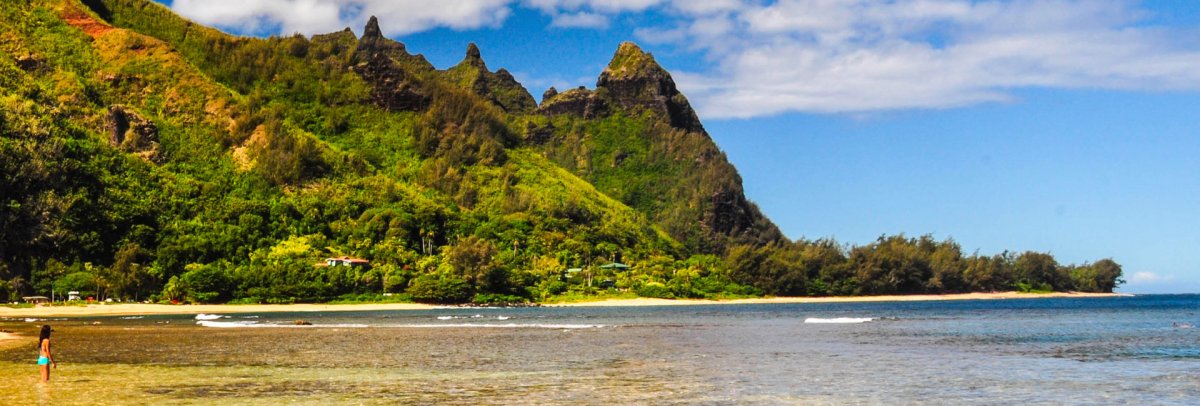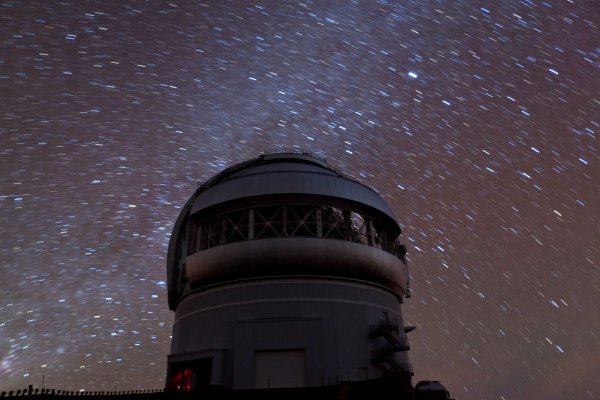

Hawaii sits at 20 degrees north latitude, surrounded by 2,500 miles of open ocean in every direction. No neighboring cities. No continental light domes. The Big Island’s Mauna Kea hosts more professional observatories than anywhere else on Earth: 13 telescopes from 11 countries perched at 13,796 feet, above 40% of the atmosphere and most of the water vapor.
You do not need a telescope or a research grant to see what draws astronomers here. On any clear night, from the right spot, the Milky Way arcs overhead like a river of light. The Southern Cross hangs low on the southern horizon — visible from Hawaii but not from anywhere in the continental United States. And the seeing conditions that make Mauna Kea a $1 billion scientific investment also make a beach blanket at Hapuna Bay a front-row seat to the universe.
Big Island: The Best Stargazing in the Northern Hemisphere
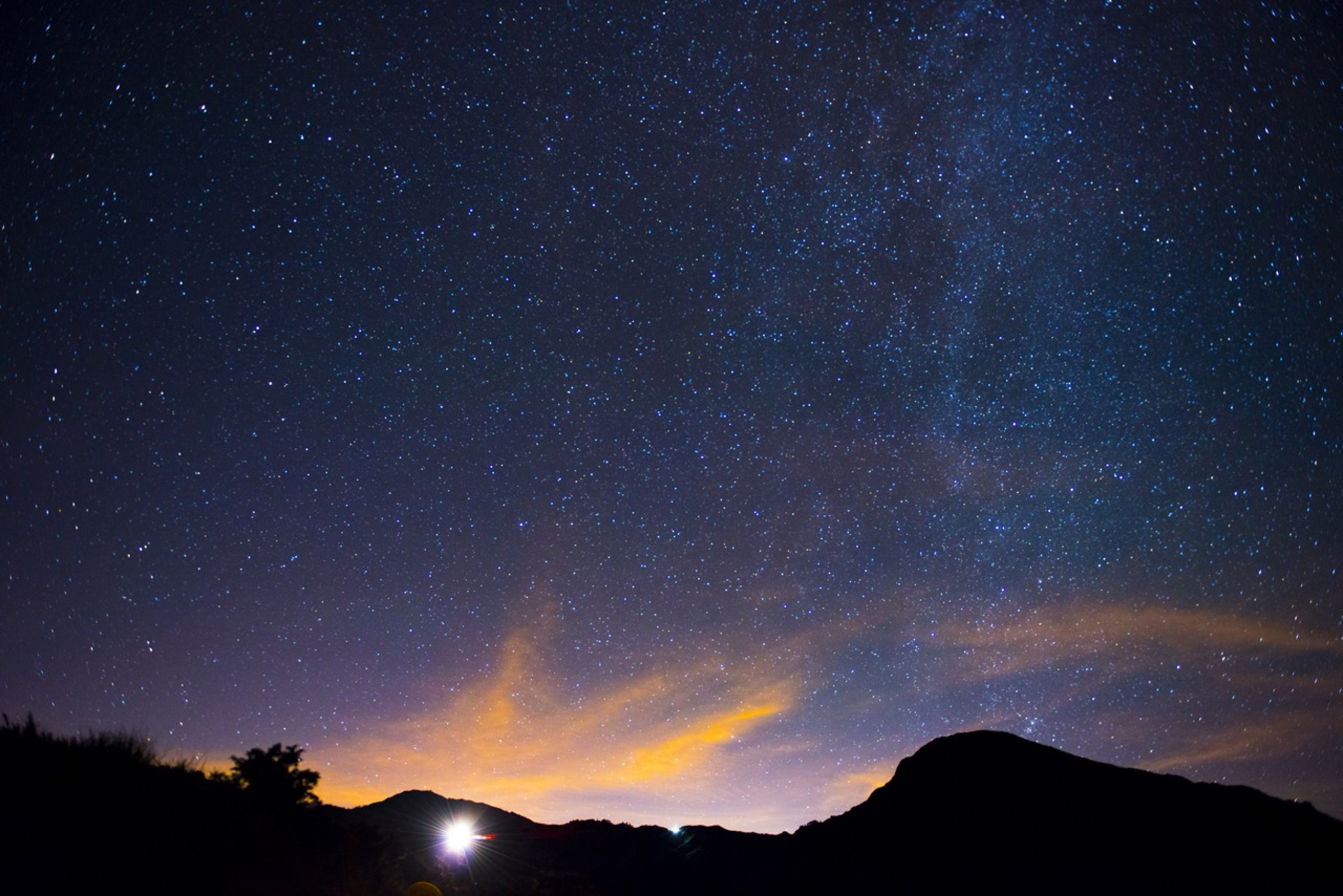
Mauna Kea Visitor Information Station (VIS) — 9,200 feet. The single best stargazing experience available to the public in Hawaii. The Maunakea Visitor Station sits at 9,200 feet elevation, well above the inversion layer that traps clouds and moisture. On clear nights, the sky is Bortle Class 1 or 2 — as dark as it gets on a populated island.
The station hosts free public stargazing programs several nights per week, with volunteers running telescopes pointed at planets, nebulae, star clusters, and galaxies. Arrive before sunset to acclimate to the altitude. Bring warm layers — temperatures drop into the 30s and 40s after dark, even in summer.
Access above the VIS to the summit (13,796 feet) requires a reservation and a 4WD vehicle. The summit road closes to visitor vehicles 30 minutes after sunset, so the VIS is the practical choice for night sky viewing.
Hapuna Beach — Sea Level. Walk south past the resort lights, spread a blanket on the sand, and look up. Hapuna’s Kohala Coast location faces west and south, away from Hilo’s light dome. The Milky Way core is visible overhead from April through October, and the Southern Cross appears above the southern horizon from January through June.
Hawaii Volcanoes National Park — 4,000 feet. The park’s elevation and isolation from coastal towns makes it a strong dark-sky site. The Kilauea Overlook parking area is a popular spot. During eruption pauses, the volcanic glow is minimal. Combine stargazing with the eruption viewing experience for a memorable double feature.
Maui: Haleakala and Beyond
Haleakala Summit — 10,023 feet. The summit of Haleakala is one of the darkest accessible points in the state. The National Park Service requires reservations for sunrise viewing, but no reservation is needed after 7 AM. Drive up in the late afternoon, watch sunset, and stay for the stars.
The summit parking lot and visitor center area offer unobstructed 360-degree views. On moonless nights, the zodiacal light — a faint pyramid of sunlight scattered by interplanetary dust — is visible after twilight fades. Jupiter’s moons are resolvable with decent binoculars.
Dress for 30-40°F temperatures. Wind chill makes it feel colder. A down jacket, hat, and gloves are not optional.
Kapalua/Flemings Beach — Sea Level. The northwest tip of Maui faces away from Lahaina and Kihei’s lights. Walk past the resort zone and you get surprisingly dark skies for a developed island. The Milky Way is visible on clear, moonless nights from spring through fall.
Kauai: The Darkest Skies in the Chain
Kauai has the smallest population and least development of the four main visitor islands. Its western and northern coasts are genuinely remote.
Polihale State Park — Sea Level. At the end of a rough 5-mile dirt road on Kauai’s far west side, Polihale is the most isolated beach you can drive to in Hawaii. The Na Pali cliffs block all light from the north. Barking Sands military base to the south generates minimal light. On moonless nights, the Milky Way casts shadows on the sand.
Getting here requires a high-clearance vehicle (4WD recommended) and planning — there are no facilities, no cell service, and no lights. Bring water, a flashlight with a red filter, and everything you need. Check conditions before going; the access road washes out after heavy rain.
Waimea Canyon Lookout — 3,400 feet. The “Grand Canyon of the Pacific” is spectacular in daylight and nearly as impressive after dark. The elevation puts you above much of Kauai’s coastal humidity, and the west-facing orientation means no light contamination from Lihue or Poipu. The main lookout parking lot is accessible after dark.
Oahu: Finding Dark Skies on a City Island
Oahu has a million residents and Waikiki’s light dome, so expectations need adjusting. You will not see Bortle 1 skies here. But you can still see the Milky Way.
Ka’ena Point — Sea Level. The northwestern tip of Oahu, accessible only by a 2.5-mile coastal trail from either the North Shore or Waianae side. No road access. No lights. The trailhead gates close at 7 PM for vehicles, but foot access is allowed. Walking in at dusk and staying for the stars puts you as far from Honolulu’s lights as you can get on this island.
Be aware: the trail is rocky, uneven, and has no lighting. Bring a headlamp for the walk back.
North Shore Beaches (Sunset Beach, Ehukai). The North Shore faces north and west, away from Honolulu. Winter months bring clearer skies and less humidity. Park at Sunset Beach after dark, walk away from the lifeguard tower, and you will see more stars than you expected for an island with a million people.
What You Can See from Hawaii
Hawaii’s latitude (roughly 20°N) puts celestial objects in view that are invisible from the mainland U.S.
The Southern Cross (Crux). Visible from Hawaii between December and June, sitting low on the southern horizon. It never rises high enough to see from anywhere in the lower 48 states. Look south around 9-10 PM in April and May for the best view.
The Milky Way core. The densest part of our galaxy’s center is visible overhead from Hawaii between April and October. It rises in the southeast after midnight in spring, then shifts to an earlier evening appearance through summer. Peak Milky Way season is June through August, when the galactic center passes nearly overhead.
Planets. Planets are visible year-round and do not require dark skies. Jupiter, Saturn, Mars, and Venus are all visible to the naked eye when above the horizon. Check any stargazing app for current positions.
Meteor showers. The Perseids (August 11-13) and Geminids (December 13-14) are the best annual showers. Hawaii’s low latitude and mid-Pacific position give excellent viewing conditions for both. The Perseids are a prime summer target.
Satellites and the ISS. The International Space Station passes over Hawaii regularly, appearing as a bright moving point of light. Starlink satellite trains are also increasingly visible. Check NASA’s Spot the Station for pass times.
Stargazing Tours Worth Booking
If you want telescopes, expert guides, and guaranteed dark-sky access, a guided tour is the move.
Mauna Kea Summit Adventures (Big Island). The original Mauna Kea stargazing tour operator. Their evening program includes dinner at the VIS, summit sunset, and stargazing with telescopes at 9,200 feet. Runs nightly. Roughly $290-315/person. They provide parkas. Book at least 2 weeks ahead during peak season.
Haleakala Stargazing (Maui). Several operators run sunset-to-stars tours on Haleakala. Expect to pay $150-200 per person. The advantage over self-driving: they handle the logistics, provide warm clothing, and bring telescopes. The disadvantage: tour schedules are fixed, and you leave when they leave.
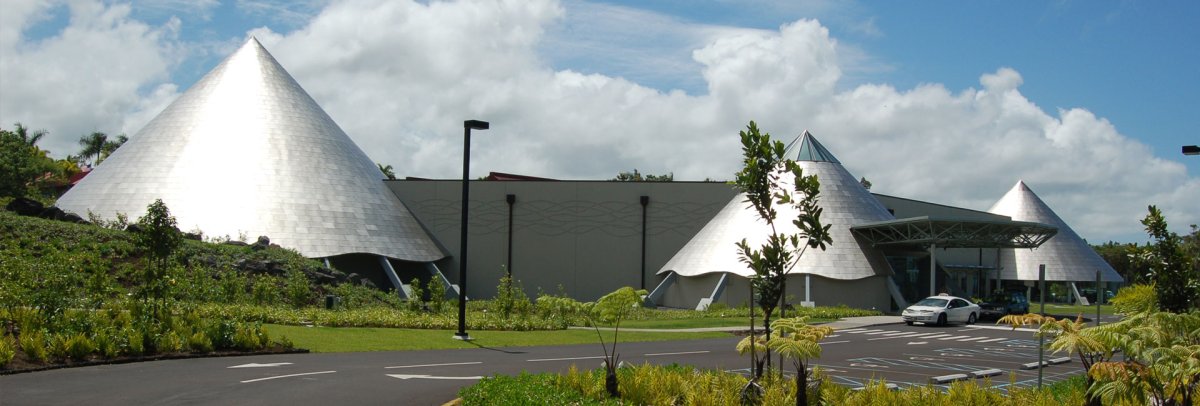
‘Imiloa Astronomy Center (Big Island). Not a stargazing tour, but the best astronomy education experience in the state. Located in Hilo, the center has a planetarium and exhibits on both Hawaiian star navigation (wayfinding) and modern astronomy. The planetarium shows run daily. Admission is $19/adult, $12 for kids 5-12, with planetarium shows included. Worth a rainy-day afternoon.
Rental car tip: You need your own wheels for any of these stargazing spots. Self-driving gives you the flexibility to stay late and leave when you want. Book through Discount Hawaii Car Rental for the best island rates.
Tips for Better Stargazing
A full moon washes out everything but the brightest stars. Plan your stargazing nights around the new moon, when the moon is absent from the sky entirely. A crescent moon sets early and does not interfere much. Moon phase calendars are built into every weather app.
Altitude makes a bigger difference than most people expect. Every 1,000 feet of elevation puts you above more atmosphere, humidity, and haze. The jump from sea level to 4,000 feet is dramatic. Going from 4,000 to 9,000 feet (Mauna Kea VIS) is another leap entirely.
Your pupils need at least 20 minutes in complete darkness to fully dilate. One glance at a phone screen resets the clock. Use a red-filtered flashlight or switch your phone to a red-light mode. Most stargazing apps have a built-in night mode.
Forget the telescope for your first session. Binoculars are more useful for casual stargazing. A decent pair of 10x50s reveals the Orion Nebula, Andromeda Galaxy, Jupiter’s moons, and hundreds of star clusters. They weigh a pound and cost under $100 on Amazon.
The Kona (west) side of each island is drier and clearer than the windward (east) side. Summer months from May through September have the most stable weather and longest clear-sky windows. Winter brings more cloud cover but also earlier nightfall.
Pack warm layers. This surprises visitors. At sea level, nights are 70-75°F and comfortable. At 4,000 feet (Volcanoes NP, Waimea Canyon), expect 50-60°F. At 9,000-10,000 feet (Mauna Kea, Haleakala), temperatures drop to 30-45°F.
Explore More Hawaii Activities
Other guides for planning unique Hawaii experiences.