
Mauna Kea
Big Island's Highest Point
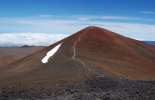
Mauna Kea stands 13,796 feet above sea level. Measure from its base on the ocean floor and the number jumps past 33,000 feet — taller than Everest. This dormant volcano on the Big Island is both the most sacred site in Hawaiian culture and home to the world's most productive astronomical observatories.
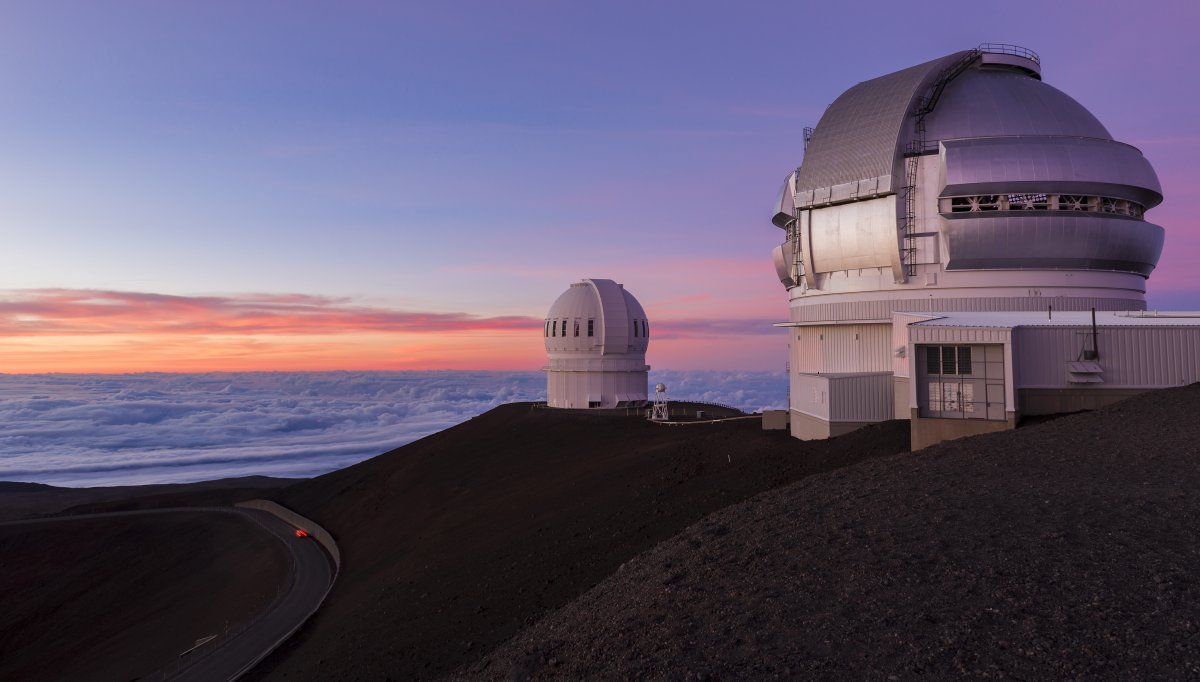
The summit sits above 40% of Earth's atmosphere. Dry air, minimal light pollution, and 300+ clear nights per year drew 13 telescopes from 11 countries to its peak. But for Native Hawaiians, Mauna Kea — Mauna a Wākea — is the firstborn of the sky father Wākea and earth mother Papa. The summit is where the spiritual realm meets the physical world.
Visitors can drive to the Visitor Information Station at 9,200 feet in a regular car, or take a 4WD to the summit for sunset. Guided stargazing tours are the most popular way to experience the mountain, and for good reason — the night sky from this altitude is unlike anything you've seen from sea level.
Getting to Mauna Kea
Access Road & Driving Requirements
Take Daniel K. Inouye Highway (Saddle Road / Hwy 200) between Hilo and Kona. The Maunakea Access Road turnoff is at mile marker 28. From Hilo, the drive takes about 45 minutes. From Kona-side resorts, plan on 90 minutes to 2 hours.
A standard car can handle the paved road up to the Visitor Information Station (VIS) at 9,200 feet — about 6 miles from the highway. The road is paved and well-maintained to this point.
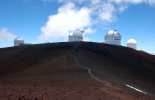
Beyond the VIS, the rules change. The summit road climbs another 8 miles and gains 4,600 feet of elevation. Several miles are unpaved, and grades exceed 15% in places. A 4WD vehicle with low range is mandatory. Rangers at the VIS check vehicles and turn back anything without 4WD. You'll also need at least half a tank of gas.
Rental car warning: Most rental companies explicitly prohibit driving to Mauna Kea's summit, even in their 4WD and SUV models. If you damage the vehicle on the summit road, you're liable for the full repair cost. Check your rental agreement before attempting the drive. Discount Hawaii Car Rental offers competitive Big Island rates if you need a reliable 4WD.
Summit hours: The access road opens 30 minutes before sunrise and closes 30 minutes after sunset. No visitors may remain at the summit after dark.
Maunakea Visitor Information Station
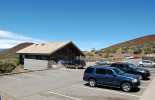
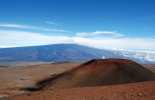
The Visitor Information Station sits at 9,200 feet on a cinder flat with panoramic views of Mauna Loa, Hualālai, and the saddle between them. Even if you skip the summit, the VIS alone is worth the drive.
Hours: Open daily, 9:00 AM – 9:00 PM, 365 days a year
Phone: (808) 934-4550
Facilities: Gift shop, exhibit area on astronomy and Hawaiian culture, restrooms, and outdoor viewing area
The VIS runs two free stargazing programs:
Nightly sky presentations (free, no reservation) — After twilight, staff give laser-guided tours of the night sky covering Greek constellations, Hawaiian starlines, wayfinding navigation, and general astronomy. Topics rotate by staff and season.
Monthly Telescope Experience (free, reservation required) — Held twice per month. One session is open to everyone, one is reserved for kamaʻāina (Hawaiʻi residents with valid state ID). Check-in at sunset, viewing lasts until about 8:30–9:00 PM. Sign up through the Center for Maunakea Stewardship website — sessions fill fast.
Stargazing on Mauna Kea
Three factors make Mauna Kea arguably the best stargazing location on Earth: extreme altitude above the cloud layer, geographic isolation from city lights, and a stable atmosphere with minimal turbulence.
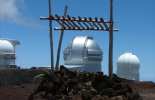
The summit hosts the twin Keck telescopes — each with 33-foot primary mirrors — along with the Gemini North, Subaru, and Canada-France-Hawaii telescopes. Thirteen observatories total from eleven countries.
Visitor stargazing happens at the VIS, not the summit (the summit closes after dark). At 9,200 feet, you're already above the clouds and Hilo's modest light pollution is blocked by the mountain itself.
What you can see with the naked eye: The Milky Way core (spectacular March through October), planets like Jupiter and Saturn, the Andromeda Galaxy, and southern hemisphere objects invisible from the US mainland. Through the VIS telescopes, star clusters, nebulae, and double stars snap into sharp detail.
Guided Stargazing Tours
A guided tour is the best way to experience Mauna Kea. Guides handle the 4WD summit drive, provide warm parkas and gloves (temperatures drop below freezing even in summer), serve dinner, and set up professional telescopes for stargazing after sunset.
Most tours run 7–9 hours, departing in the afternoon from Kona or Hilo hotels. Expect to pay $255–$330 per adult.
Top-rated operators:
Hawaii's GOAT Experience (Hawaii Island Holidays) — Summit sunset plus stargazing, departing from Hilo. Consistently rated among the best experiences on the island. Check availability
Mauna Kea Stargazing Experience (Epic! Tours) — Small-group tours with professional astrophotography included. Check availability
Maunakea Summit & Stars (Hawaii Forest & Trail) — One of the longest-running Big Island tour companies, departing from Kona and Waikoloa. Check availability
Browse more options on Viator or see our full Big Island Stargazing Tours guide.
Health & Safety at Altitude
The summit sits at 13,796 feet — roughly the same elevation as many Rocky Mountain peaks. The air has 40% less oxygen than at sea level. Shortness of breath, headache, and fatigue hit most visitors within minutes of arriving at the top.
Who should not go above the VIS (9,200 ft):
- Children under 13
- Pregnant women
- Anyone with heart conditions, respiratory problems, or severe asthma
- Anyone who has been scuba diving within the past 24 hours (risk of decompression sickness)
For everyone else: Stop at the VIS for at least 30 minutes to acclimate before driving to the summit. Drink plenty of water — dehydration worsens altitude symptoms. Move slowly at the top. If you develop a severe headache, nausea, or confusion, descend immediately.
What to bring:
- Warm layers — summit temperatures drop below freezing year-round, even in July
- Sunscreen and sunglasses — UV intensity at this altitude is extreme
- At least 1 liter of water per person
- Full tank of gas (required to pass the VIS checkpoint)
- Flashlight or headlamp for evening stargazing at the VIS
Cultural Significance
For Native Hawaiians, Mauna Kea — Mauna a Wākea — is the most sacred place in the Hawaiian Islands. In Hawaiian cosmology, the mountain is the firstborn child of the sky father Wākea and the earth mother Papahānaumoku. The summit connects the spiritual realm to the physical world.
Lake Waiau, a small alpine lake at 13,020 feet within the Pu'u Waiau cinder cone, holds particular significance. Fed by permafrost, it gives off a distinctive blue-green tint. Hawaiian families traditionally bring the piko (umbilical cord) of newborn children to the lake, symbolizing the child's connection to the land. Many ali'i (chiefs) are buried nearby, and the waters are considered a place where spirits pass between worlds.
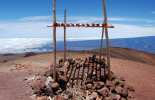
The summit also contains hundreds of archaeological sites — shrines, burial platforms, and quarry sites where Hawaiians mined a dense basalt prized for tool-making across the islands.
The proposed Thirty Meter Telescope (TMT) brought the tension between science and cultural preservation into sharp focus. After years of protests and legal challenges, the National Science Foundation pulled TMT funding in mid-2025, choosing the competing Giant Magellan Telescope in Chile. The project's future on Mauna Kea remains uncertain as of 2026.
When visiting, treat the mountain with respect. Stay on marked trails, do not stack rocks or build new cairns, and do not remove anything from the summit area.
Checking Road Conditions
The summit road closes during severe weather. Snow, ice, high winds, and fog can shut access at any time, particularly between November and March.
Before you drive, check:
- Mauna Kea Weather Center — mkwc.ifa.hawaii.edu — real-time road conditions, temperature, wind speed, and visibility at the summit
- VIS phone: (808) 934-4550 — call during hours (9 AM – 9 PM daily) for current conditions
Conditions change fast at 13,000+ feet. The summit can be clear in the morning and completely socked in by noon, or the reverse. Always have a backup plan for your day.