04-03-2026
POG Juice
Hawaii's passion fruit, orange, and guava drink that started a global game craze

Founder & certified Hawaii travel expert with 20+ years of experience in Hawaii tourism.
Aloha! This article may link to trusted Hawaii resources at no extra cost to you. Mahalo for your support!
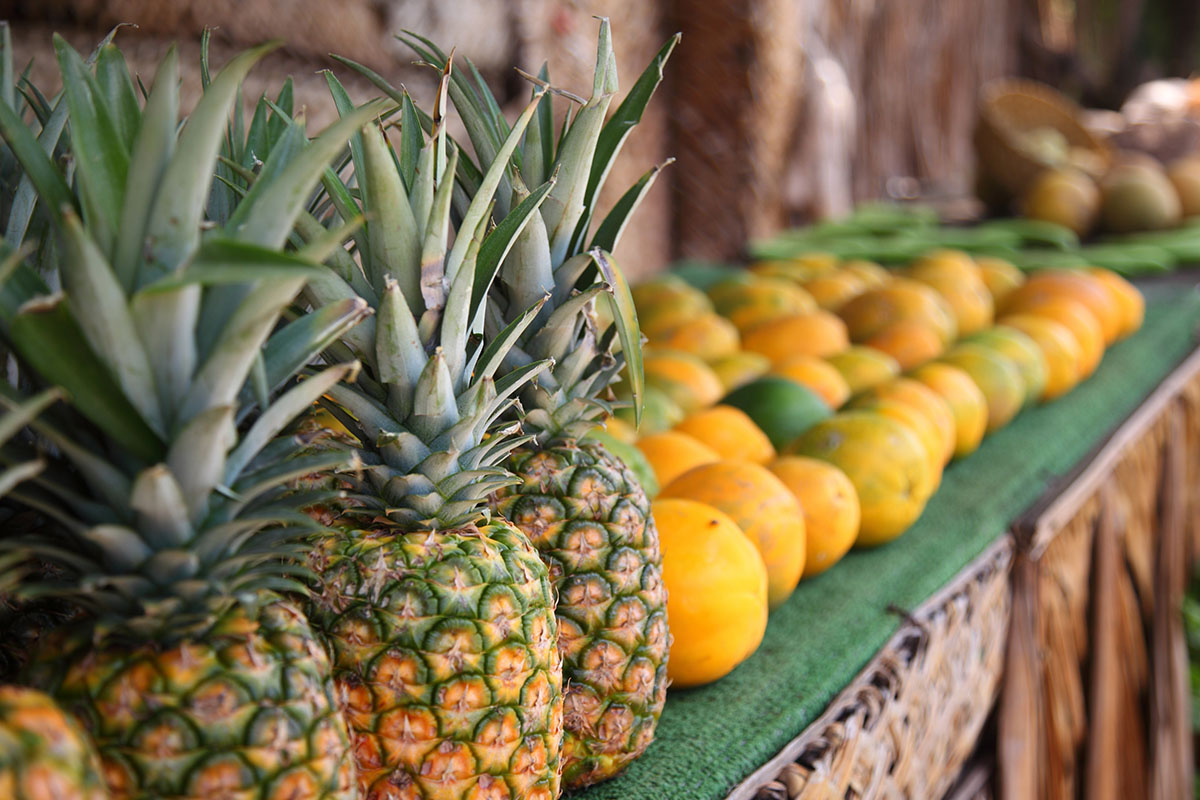
POG juice is a blend of passion fruit (lilikoi), orange, and guava — three tropical fruits that grow across the Hawaiian islands. It was invented on Maui in 1971 and has been a staple of local life ever since. If you have visited Hawaii, you have almost certainly had it at a hotel breakfast buffet, a plate lunch spot, or straight from a carton at an ABC Store. The bright orange-pink juice is sweet, tangy, and unmistakably Hawaiian.
What Is POG Juice?
POG stands for Passion fruit, Orange, and Guava. The three juices are blended together in roughly equal proportions, creating a tropical flavor that is sweeter and more complex than any of the three fruits alone. Passion fruit provides tartness and aroma, orange adds familiar citrus brightness, and guava brings body and sweetness.
The juice is typically sold pasteurized in half-gallon and gallon cartons. The color ranges from light orange to deep pink depending on the brand and the ratio of fruits. Most commercial versions contain added sugar, though the natural fruit sugars alone make it quite sweet.
The History of POG Juice
POG was created in 1971 by Mary Soon, a food product consultant working with Haleakala Dairy on Maui. Soon blended the three fruit juices and the dairy began producing and distributing the drink across the islands. It caught on fast. Within a few years, POG was one of the most popular beverages in Hawaii.
Haleakala Dairy was later acquired by Meadow Gold Dairies, which continues to produce POG juice today. The recipe has stayed essentially the same for over 50 years. Meadow Gold's POG is the version you will find in most Hawaii grocery stores and hotels.
POG and the Pogs Game
If you grew up in the 1990s, you probably remember Pogs — the game where players stacked cardboard discs and slammed them with a heavy "slammer." The game was named after POG juice.
Here is how it happened: POG juice bottle caps (small cardboard discs printed with the POG logo) had been used as game pieces by Hawaiian kids for decades, in a game similar to one played with milk caps in the 1920s and 1930s. In 1991, a teacher named Blossom Galbiso at Waialua Elementary School on Oahu reintroduced the game to her students using POG caps. The kids went crazy for it.
The game spread from Oahu to the other islands, then to the mainland, and within two years it was a global phenomenon. The World POG Federation was established, and by the mid-1990s billions of Pogs were being manufactured. The craze faded by the late 1990s, but the connection between POG juice and one of the decade's biggest toy crazes remains a piece of Hawaiian pop culture history.
Where to Get POG Juice in Hawaii
POG juice is everywhere in Hawaii. You do not need to seek it out — it will find you.
- Grocery stores: Every Foodland, Safeway, Times Supermarket, and Costco in Hawaii stocks Meadow Gold POG in the refrigerated juice section
- ABC Stores: The tourist-friendly chain sells individual POG cartons and bottles at locations across Waikiki, Lahaina, and other resort areas
- Hotel breakfast buffets: POG juice is a standard offering at most Hawaii hotel restaurants and breakfast spreads
- Restaurants and cafes: Many local restaurants serve POG juice alongside meals, particularly plate lunch spots
- Airport shops: Pick up a carton before your flight home — it makes a good last taste of Hawaii
Some local producers make fresh-pressed versions with higher fruit content and no added sugar. Check farmers' markets on any island for artisanal POG blends.
How to Make POG Juice at Home
Making POG juice at home is straightforward. You need three ingredients.
Basic POG Recipe:
- 1 cup passion fruit juice (or frozen lilikoi pulp diluted with water)
- 1 cup orange juice (fresh-squeezed is best)
- 1 cup guava nectar
Combine all three in a pitcher and stir. Serve over ice. Adjust ratios to your taste: more passion fruit for tartness, more guava for sweetness, more orange for brightness.
Finding passion fruit juice on the mainland can be the tricky part. Frozen passion fruit concentrate from specialty grocery stores or online works well. Goya and Ceres both make guava nectar that is widely available.
For a cocktail version, add 2 ounces of light rum or vodka to a glass of POG over ice. POG-tail (or "POG mimosa" with sparkling wine instead of orange juice) is a popular brunch drink at Hawaii restaurants.
The Three Fruits Behind POG
Passion Fruit (Lilikoi)
Passion fruit is called lilikoi in Hawaii. The yellow variety (Passiflora edulis f. flavicarpa) is the most common in the islands. The fruit has a hard shell that wrinkles when ripe, filled with aromatic seeds and pulp. Lilikoi grows wild across Hawaii — you will see vines on fences and trellises throughout the islands. The flavor is intensely tart and fragrant.
Orange
Oranges are not native to Hawaii but have been grown in the islands since the early 1800s. The Kau orange, grown on the slopes of Mauna Loa on the Big Island, is a local variety prized for its sweetness. Most commercial POG uses standard orange juice concentrate, but some artisanal versions use locally grown oranges.
Guava
Strawberry guava and common guava both grow abundantly in Hawaii, particularly in wet lowland areas. The fruit has a sweet, musky flavor and pink flesh. Guava is so prolific in Hawaii that it is actually considered an invasive species. It makes excellent juice, jam, and the guava chiffon cake that shows up at local bakeries.
Affiliate Disclosure: We may earn commissions from some travel partners (like Amazon or Expedia) which helps us maintain this site. These links are at no extra cost to you and don't impact our honest & unbiased recommendations. Remove all the ads →