
Maui has a reputation as the honeymoon island — upscale resorts, $50 entrees, luxury sunset sails. And that version of Maui absolutely exists. But there's another Maui underneath it: the one where locals live, where plate lunches cost $12, where the best beaches and hikes are completely free, and where a vacation rental in Kihei costs less than a mid-range hotel in Waikiki.
The trick to visiting Maui on a budget is knowing which side of the island to stay on, when to fly, where to eat, and what to skip. The sunsets, the snorkeling, and the Road to Hana don't cost extra based on your hotel's star rating. Maui's best experiences are available to everyone.
This guide lays out exactly how to do it — specific places, real prices, honest assessments of what you need a car for and where you can save. Whether you're stretching a $100/day budget or a more comfortable $200, Maui is within reach.
Start with our Hawaii Trip Cost Calculator for a personalized estimate, or explore the Hawaii Cost Explorer for an interactive cost breakdown. Then use this guide to cut that number down.
When to Visit Maui for the Best Deals
Maui's peak season mirrors Oahu's — mid-December through March (whale season and mainland winter escapes) and June through mid-August (summer family travel). During these windows, hotel rates on the west side (Ka'anapali, Wailea) can exceed $400/night and rental cars hit $80–$120/day.
Best value months: mid-April through May, and September through mid-November. Shoulder season on Maui means hotel rates drop 25–35%, airfare from the West Coast falls below $350 round trip regularly, and rental car prices come back to earth ($40–$65/day). The weather in these months is excellent — mostly dry on the leeward (west and south) sides, warm but not humid, and the trade winds keep things comfortable.
September and October are the hidden gems. Maui sees its lowest visitor counts of the year. Vacation rentals in Kihei that list at $200/night in peak season drop to $120–$150. Flights from LAX to Kahului (OGG) regularly hit $280–$320 round trip.
Late April through May offers another advantage: whale season has just ended so the whale-watching markup disappears, but the ocean is still calm enough for great snorkeling. Water visibility in Maui peaks March through September.
Avoid spring break (mid-March to mid-April) — prices spike even though it's technically shoulder season on the calendar. And Christmas through New Year's is the most expensive week on Maui, period. Some properties require 5–7 night minimums.
Finding Cheap Flights to Maui
Kahului Airport (OGG) is Maui's main airport and receives direct flights from most major West Coast cities. It's not quite as heavily served as Honolulu, so fares tend to run $30–$60 higher on average — but deals exist.
Best routes and airlines
The cheapest consistent fares come from Los Angeles (LAX), San Francisco (SFO), and Seattle (SEA). Southwest, Hawaiian Airlines, Alaska Airlines, and Delta all fly direct. Southwest's Maui routes see frequent sales — sign up for their email alerts specifically. From the East Coast, connecting through LAX or SFO is almost always cheaper than booking a direct red-eye.
One overlooked strategy: fly into Honolulu (HNL) on a cheap mainland fare, then catch an interisland flight to Maui on Southwest or Hawaiian. Interisland fares run $60–$100 one way. If the mainland-to-Honolulu fare is $150+ cheaper than the direct-to-Maui fare, the extra stop pays for itself.
Booking timing
The 6–8 week window before departure is your sweet spot for Maui flights. Set Google Flights alerts and wait for a price drop. Mid-week departures (Tuesday/Wednesday) save $40–$80 over weekend flights. If you're flexible on dates, the Google Flights "explore" feature shows the cheapest dates to fly to Maui across a two-month window — use it.
One thing to watch: Maui rental car prices spike independently of airfare. Even if you find a cheap flight, check car rental prices for those dates before booking. There's no point saving $100 on airfare if rental cars are $50/day more that week.
Where to Stay on Maui Without Overspending
Maui's accommodation divide is geographic. The west side (Ka'anapali, Kapalua, Lahaina) and south coast luxury zone (Wailea, Makena) are where the resorts live. Budget travelers head to Kihei — and that's the right call.
Kihei: the budget base
Kihei is the most affordable area on Maui with real beach access. This six-mile stretch of South Maui coastline has hundreds of vacation rental condos, many with kitchens, running $100–$170/night for a one-bedroom. The Maui Banyan, Kamaole Sands, and Kihei Kai Nani are condo complexes with units that regularly list below $130/night in shoulder season. You're across the street from Kamaole Beach Parks I, II, and III — some of the best swimming and snorkeling beaches on Maui.
Kihei also has its own restaurant scene, grocery stores (Safeway and Foodland), and easy access to both Wailea (10 minutes south) and Kahului (20 minutes north). It's the practical choice.
Kahului/Wailuku: the local option
These central towns aren't beachfront destinations, but they're where locals live — which means lower prices and better food. The Maui Seaside Hotel in Kahului runs $120–$160/night. Vacation rentals in Wailuku start around $90–$130/night. You're 15 minutes from the airport, close to Costco and Walmart, and positioned for easy access to both the Road to Hana and the west side. The trade-off: no beach walking distance. You'll drive to the coast daily.
West Maui on a budget
Lahaina and Ka'anapali are the pricier side, but deals exist. Older condo properties like the Lahaina Shores Beach Resort and Ka'anapali Beach Hotel are the "budget" options on the west side, running $160–$220/night — expensive by budget standards but affordable for the location. Last-minute bookings (2–3 weeks out) in shoulder season sometimes drop these below $150.
Camping on Maui
Maui's camping options are limited but worthwhile. Hosmer Grove in Haleakala National Park is free (first-come, first-served) with stunning upcountry views at 6,800 feet — bring cold-weather gear, temperatures drop into the 40s at night. Kipahulu Campground (also in Haleakala NP, on the Hana coast) is $5/night by reservation and puts you next to the Pools of Oheo. Papalaua Wayside on the west side is a basic county campground near the ocean ($12/night, permit from Maui County). Camp Olowalu offers a more structured "glamping" experience starting around $75/night.
Getting Around Maui: You Need a Car (Mostly)
Here's the honest truth: you need a rental car on Maui for most of your trip. The island's bus system (Maui Bus) exists but runs limited routes with infrequent service — it can get you between Kahului, Kihei, and Lahaina, but not to Haleakala, the Road to Hana, or most trailheads.
Rental cars
Book through Discount Hawaii Car Rental for the best Maui rates. Expect $40–$65/day in shoulder season for a compact, $65–$100/day in peak. The key savings move: book early. Maui's rental fleet is smaller than Oahu's and runs out faster. Booking 6–8 weeks ahead versus last-minute can save $20–$30/day.
Pick up at Kahului Airport to avoid shuttle fees. Return with a full tank — gas stations near OGG are cheaper than the ones in resort areas. Speaking of gas: expect $4.50–$5.50/gallon on Maui. Fill up in Kahului or Kihei before heading to Hana or Haleakala where stations are sparse.
Where you can skip the car
If you're staying in Kihei for a few beach days, you can walk to Kamaole beaches, nearby restaurants, and shops without driving. Lahaina's Front Street is walkable once you're parked. For day trips to Hana, Haleakala, or the west side beaches, the car is non-negotiable.
Alternative: partial rental
A smart budget play is renting a car for only part of your trip. Spend 2–3 days car-free in Kihei (beach, snorkel, walk to meals) and rent for the days you're driving to Hana, Haleakala, or remote beaches. Rental agencies in Kahului allow mid-trip pickups.
Eating Well on Maui Without the Resort Prices
Maui's food scene splits cleanly: resort-area restaurants with $30–$50 entrees, and everywhere else where you can eat well for $10–$16. Stick to the second category and your food budget stays manageable.
Plate lunches and local spots
Da Kitchen in Kahului is the gold standard — massive plate lunches (kalua pork, laulau, chicken katsu) for $13–$17 that will carry you through most of the day. Tin Roof (also Kahului, Chef Sheldon Simeon's casual spot) does pork belly bowls and garlic noodles for $12–$15 — arrive before noon or expect a line. Aloha Mixed Plate near Lahaina serves plate lunches with oceanfront seating from $13–$16.
808 Grindz Cafe in Lahaina does massive breakfast plates for under $15 — this is a locals' spot that feeds you enough to skip lunch. In Kihei, Kihei Caffe opens at 6 AM with breakfast plates and burritos for $10–$14. Coconut's Fish Cafe (also Kihei) serves excellent fish tacos for $14–$17.
Grocery stores and self-catering
Costco Kahului is your first stop after picking up the rental car. Stock up on water, snacks, breakfast supplies, and deli items — a Costco haul of $60–$80 covers breakfasts and snacks for a week. Foodland Farms in Kihei has a great poke counter ($14–$18/lb) and prepared foods section. Times Supermarket in Kahului is another solid local option with good bento boxes ($7–$9).
For the Road to Hana, pack a cooler with Costco supplies. There's very little food along the route until Hana town, and what exists is priced for captive tourists.
Farmers markets
The Upcountry Farmers Market in Pukalani (Saturday mornings) has Maui-grown produce, baked goods, and prepared food at reasonable prices. The Maui Swap Meet at the University of Hawaii Maui College (Saturday mornings, $1 entry) combines cheap local food with a flea market atmosphere. Napili Farmers Market (Wednesday and Saturday mornings) is smaller but has excellent west side produce and smoothies.
Daily food budget
Cook breakfast ($4–$6 from groceries), grab a plate lunch ($12–$15), and alternate between cooking dinner and eating out at casual spots ($12–$18). That keeps your daily food spending at $28–$40 per person.
Free and Cheap Things to Do on Maui
Maui's most memorable experiences don't charge admission. The island's beaches, hikes, and scenic drives are free to access — the expensive stuff (helicopter tours, luaus, boat trips) is optional.
Beaches
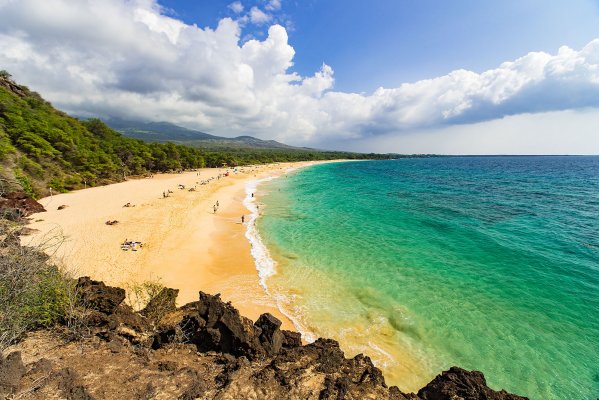
Big Beach (Makena) is Maui's most dramatic strand — a wide crescent of golden sand with bodysurfing waves and no development in sight. Free, with a small parking lot (arrive by 9 AM on weekends). Kapalua Bay on the west side offers the calmest snorkeling water on Maui — protected, clear, and loaded with sea turtles. Free to access, limited paid parking ($10) or park along the road above.
Ka'anapali Beach is a three-mile stretch of resort sand that's entirely public. Walk right past the hotels, lay your towel down, and snorkel Black Rock (Pu'u Keka'a) — one of the best shore snorkel spots in Hawaii. The nightly cliff diving ceremony at Black Rock at sunset is free to watch. Kamaole Beach Parks (I, II, III) in Kihei have lifeguards, facilities, and good snorkeling — all free, all walkable from most Kihei accommodations.
Baldwin Beach Park on the north shore is a locals' beach with body surfing and a baby beach lagoon for small kids. Ho'okipa Beach Park is where you watch world-class windsurfers and sea turtles haul out on the sand in the afternoon — free, and you'll stay longer than you planned.
Hikes
Pipiwai Trail in the Kipahulu district of Haleakala National Park is a 4-mile round trip through a bamboo forest to 400-foot Waimoku Falls. It's one of the best hikes in Hawaii. Park entrance fee is $30/vehicle (good for 3 days, covers the summit too). Waihe'e Ridge Trail on the north side is a 5-mile round trip with jaw-dropping ridgeline views of the West Maui Mountains and the valley below. Free, parking lot can fill by 8 AM.
Sliding Sands Trail inside Haleakala Crater takes you into an alien volcanic landscape — red cinder, silverword plants, and total silence. Even a 2-mile out-and-back from the visitor center is worth the drive. Kapalua Coastal Trail (1.76 miles) hugs the northwest shoreline between D.T. Fleming Beach and Kapalua Bay — flat, scenic, whale watching in season, completely free.
Scenic drives (free)
The Road to Hana is Maui's iconic drive — 64 miles of winding road, one-lane bridges, waterfalls, black sand beaches, and rainforest. The drive itself is free (gas and snacks are your only costs). Key free stops: Twin Falls (easy waterfall access at mile marker 2), Wai'anapanapa State Park's black sand beach (reservation required, free entry), and the Pools of Oheo/Seven Sacred Pools at Kipahulu (covered by the Haleakala park pass).
Haleakala sunrise is free with a park pass ($30/vehicle). Sunrise reservations are required and released 60 days in advance at recreation.gov — they sell out within minutes of release. Set an alarm for the exact release time. The drive from Kihei to the summit takes about 90 minutes.
Free snorkeling
Buy your own gear (Costco or Walmart, $15–$30) and hit Kapalua Bay, Black Rock at Ka'anapali, Ulua Beach in Wailea, or Ahihi-Kinau Natural Area Reserve south of Makena (free entry, limited parking). You'll see sea turtles, reef fish, and occasionally spinner dolphins — all without paying for a boat tour.
Worth the Splurge: Two Experiences That Justify the Cost
A Molokini Crater snorkel tour ($75–$130). Molokini is a partially submerged volcanic crater 3 miles offshore with 150-foot visibility and hundreds of fish species. You can't get there without a boat. Morning departures from Ma'alaea Harbor are calmer and clearer — afternoon trips are cheaper but the wind picks up. Most tours include breakfast, lunch, and gear. This is the one paid activity on Maui that delivers something you genuinely can't experience for free. Compare Molokini snorkel tours on Viator for the best price.
A sunrise bike ride down Haleakala ($80–$150). Several operators van you to near the summit before dawn, you watch the sunrise above the clouds, then coast 23 miles downhill on a bicycle through upcountry Maui. It's a bucket-list experience that combines two of Maui's best free activities (the sunrise and the scenery) into one guided adventure. Book directly with operators for the best price rather than through hotel concierges.
Sample Daily Budgets: What Maui Actually Costs
Per-person, per-day estimates based on 2026 Maui prices. Accommodation assumes double occupancy.
Shoestring Budget: $90–$120/day per person
- Sleep: Budget condo in Kihei ($110–$140/night = $55–$70/person)
- Food: Grocery breakfast + plate lunch + cook dinner ($28–$35)
- Transport: Rental car split with travel partner ($25–$35/person incl. gas)
- Activities: Free beaches, hikes, scenic drives ($0–$10)
- Misc: Sunscreen, snacks, parking ($5–$10)
Comfortable Budget: $170–$220/day per person
- Sleep: Nice Kihei condo or budget west side hotel ($150–$200/night = $75–$100/person)
- Food: Mix of cooking and eating out ($40–$55)
- Transport: Rental car ($30–$40/person incl. gas)
- Activities: Haleakala entry + one snorkel spot ($20–$35)
- Misc: Coffee, shave ice, incidentals ($10–$15)
Moderate Budget: $280–$370/day per person
- Sleep: West side condo or mid-range hotel ($220–$300/night = $110–$150/person)
- Food: Eat out most meals, casual to mid-range ($60–$85)
- Transport: Rental car ($35–$50/person incl. gas and parking)
- Activities: Molokini tour + Haleakala + hikes ($60–$80)
- Misc: Souvenirs, drinks, incidentals ($15–$25)
Build your own custom estimate with the Hawaii Trip Cost Calculator or the Hawaii Cost Explorer.
Budget Mistakes to Avoid on Maui
Staying on the west side when your budget says Kihei. Ka'anapali and Wailea are beautiful, but if you're watching your spending, the $50–$100/night premium over Kihei adds up fast. Kihei's beaches are just as good for swimming and snorkeling, and the restaurants are half the price.
Not booking a rental car early enough. Maui has fewer rental cars than Oahu, and prices spike when supply runs low. Last-minute bookings can cost double what you'd pay booking 6–8 weeks out. This is the single biggest avoidable expense on Maui.
Eating in Wailea. Unless someone else is paying, Wailea's restaurants are not worth the budget hit. A dinner that costs $35 in Kihei will cost $65 in Wailea for comparable quality. Drive 10 minutes north and eat the same fish for half the price.
Paying for a guided Road to Hana tour. Guided van tours run $150–$250/person. The road is well-marked, self-guided audio tours are $10 on your phone, and half the fun is stopping wherever you want. Rent a car and drive it yourself.
Buying snorkel gear rentals daily. Snorkel rental shops in Kihei and Ka'anapali charge $8–$15/day. Buy a decent set at Costco or Walmart for $20–$30 and use it every day. You'll break even by day three and have gear to take home.
Skipping the Costco stop. Costco Kahului is directly between the airport and Kihei. Fifteen minutes there on arrival day saves you $100+ over a week of buying water, snacks, breakfast food, and sunscreen from convenience stores and resort shops.
Plan Your Budget Maui Trip
Maui costs more than Oahu or the Big Island — that's the honest baseline. But the gap between "budget Maui" and "luxury Maui" is enormous. A couple staying in a Kihei condo, cooking breakfast, driving to free beaches, and eating plate lunches for dinner can spend $180–$240/day total and have a trip full of world-class snorkeling, a Haleakala sunrise, the Road to Hana, and some of the most beautiful beaches on earth.
The expensive version of those same experiences (Wailea resort, restaurant meals, guided tours) runs $600–$900/day. The sunsets are identical from either side of the budget.
Ready to plan? Use the Hawaii Trip Cost Calculator or the Hawaii Cost Explorer to build your custom estimate. Or compare other islands:
Get Your Free Maui Guide
Instant access — opens immediately
- Beaches, activities & top spots
- Restaurant & dining recommendations
- Maps, itineraries & insider tips
Want the full offline version? Get the Complete Maui Guidebook →