
Hawaii rolled out a stack of new laws and regulations on January 1, 2026. Some are already hitting visitors’ wallets. Others are lurking in the background, waiting for the first rental car ticket or unexpected park fee to ruin someone’s afternoon.
Most of these changes flew under the radar. They passed in the 2025 legislative session, got signed quietly, and took effect with the new year. If you’re planning a summer trip, here’s what you need to know before you go.
1. The Green Fee: Your Hotel Bill Just Got Higher
Hawaii’s Transient Accommodations Tax (TAT) rose from 10.25% to 11% on January 1, 2026. Governor Josh Green signed Act 96 in May 2025, branding it the “Green Fee” — Hawaii’s first-in-the-nation climate-focused accommodation tax.
Combined with county surcharges and the General Excise Tax, the total tax on your hotel room looks like this:
Oahu: 11% TAT + 3% County TAT + 4.5% GET = roughly 18.5%
Maui, Kauai, Big Island: 11% TAT + 3% County TAT + 4% GET = roughly 18%
On a $300/night hotel room, that’s about $55 per night in taxes alone. On a week-long stay, you’re looking at $385 in taxes on top of the room rate.
The revenue — expected to generate about $100 million annually — is earmarked for wildfire mitigation, shoreline protection, and environmental programs. It’s a direct response to the Maui wildfire recommendations.
What to do: Budget 18-18.5% in taxes on top of any quoted room rate. If a booking site shows “taxes and fees included,” verify that it reflects the 2026 rate. Some third-party sites still show the old 10.25% TAT.
2. The 20-Foot Parking Rule (Act 171)
This one is catching people. Act 171 made it illegal statewide to park within 20 feet of any crosswalk or intersection — “regardless of the presence or absence of official signs or curb markings.”
That last part is the problem. Hawaii law recognizes crosswalks at intersections even when they’re not painted on the road. An unmarked intersection still counts. If you parked near a corner in Lahaina, Haleiwa, or Kailua last year and nothing happened, that same spot is now a $50 ticket. Towing fees run $300+ on top of that.
Fine revenue goes to the Safe Routes to School Program. The law was motivated by a 26% increase in pedestrian fatalities between 2009-2013 and 2014-2018.
What to do: Stay 20+ feet from any intersection or crosswalk when parking on the street. When in doubt, don’t park near a corner. Your rental car company won’t cover the ticket.
3. Four More State Parks Now Charge Entry Fees
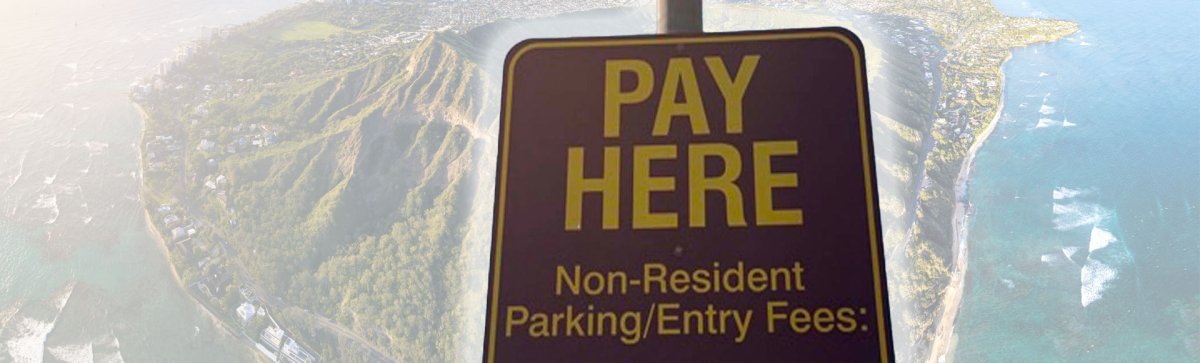
Hawaii has been steadily adding fees to state parks over the past few years. In 2026, four more parks joined the list:
Wailuku River State Park (Rainbow Falls) on the Big Island — $5/person, $10/vehicle.
Kekaha Kai State Park (Kua Bay) on the Big Island — $5/person, $10/vehicle.
Wailua River State Park (Opaeka’a Falls) on Kauai — $5/person, $10/vehicle.
Pu’u Ualaka’a State Wayside (Tantalus Lookout) on Oahu — $7/vehicle parking fee.
All fees are for non-residents only. Hawaii residents with a valid state ID enter free. Children under 3 are free.
A family of four hitting Rainbow Falls, Kua Bay, and Waimea Canyon in the same trip is looking at $90+ in park fees alone. It adds up.
What to do: Budget for park fees, especially on multi-island trips. Carry cash. Check the DLNR State Parks website for current fee schedules and payment methods. For fee-free alternatives, most county beach parks remain free across all islands.
4. Maui's Vacation Rental Phaseout Is Signed Into Law
Maui County’s Bill 9, signed by Mayor Richard Bissen in late 2025, phases out short-term vacation rentals in apartment-zoned areas across Maui and Molokai.
The numbers: roughly 7,069 properties on the “Minatoya List” — 6,823 on Maui, 246 on Molokai. About 94% are owned by non-residents. Most are concentrated in South Maui (60%) and West Maui (36%).
The timeline: West Maui properties must transition out by January 1, 2029. South Maui by January 1, 2031. No units are being forcibly removed in 2026, but some owners are already pulling listings off the market.
There’s a wrinkle. The Maui County Council approved Resolution 25-230 (8-1 vote, January 7, 2026) to begin reviewing a rezoning process that could allow up to 4,500 of the affected condos to keep operating as short-term rentals. At least two lawsuits have been filed challenging the law.
What to do: Maui vacation rentals still operate in 2026. But verify any rental’s permit or registration status before booking. Watch for reduced inventory and higher prices, especially in West Maui. Hotels and resort condos are unaffected. For a deeper breakdown, see our Maui vacation rental rules guide.
5. Big Island Vacation Rental Registration Deadline: July 1
Hawaii County passed Ordinance 25-50 (Bill 47) requiring every short-term rental on the Big Island to register with the county. The original deadline was December 2025, but it was extended to July 1, 2026 — the county hasn’t finished building the registration portal.
Registration fees: $250 for hosted rentals, $500 for unhosted. Platforms like Airbnb and VRBO must also register ($1,000) and submit monthly activity reports. Fines for non-compliance range from $1,000 to $10,000 per violation per day.
The practical effect: some unregistered listings will disappear from booking platforms after July 1. If you’re booking a Big Island vacation rental for later this summer, confirm that the property is registered or plans to be.
What to do: Book directly with established property managers who are likely to comply. Ask about registration status before paying a deposit. Hotels and resorts aren’t affected.
6. Sunscreen Rules (Not New, but Still Catching Visitors)
This isn’t a 2026 change — Hawaii banned the sale of sunscreens containing oxybenzone and octinoxate statewide back in 2021. But it’s still the rule visitors are most surprised by, so it earns a spot on this list.
Statewide: Sunscreens with oxybenzone or octinoxate cannot be sold without a prescription (SB 2571).
Maui County goes further: Since October 2022, only mineral-based sunscreens (zinc oxide or titanium dioxide active ingredients) can be sold or used. Fines up to $1,000.
What to do: Buy reef-safe mineral sunscreen before you fly, or pick it up at any Hawaii drugstore or ABC Store. Look for zinc oxide or titanium dioxide as the active ingredient. Brands like Sun Bum Mineral, Blue Lizard, and Raw Elements are widely available on the islands. You can also find reef-safe options on Amazon before your trip.
The Bottom Line
None of these changes should scare anyone away from a Hawaii trip. But they do change the math.
A week on Maui in 2024 cost X. The same week in 2026 costs X plus higher accommodation taxes, plus park entry fees, plus a narrower vacation rental market pushing prices up. A rental car ticket for parking too close to an unmarked crosswalk is an annoying $350+ surprise that didn’t exist last year.
Know the rules before you go. Budget for the fees. And rent a car through Discount Hawaii Car Rental to keep at least one part of your budget under control.
More Hawaii Planning Guides
Stay up to date on fees, regulations, and trip planning.