
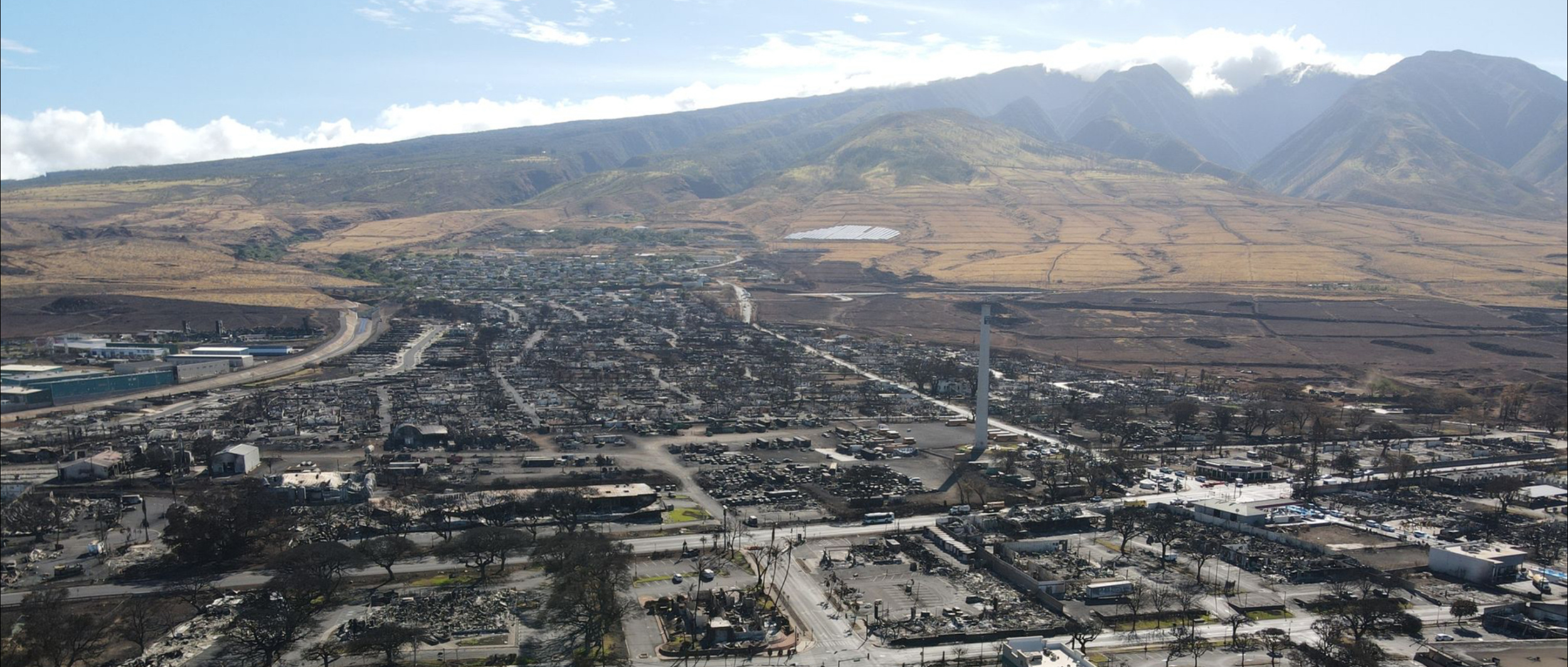
The August 2023 Lahaina wildfire killed 102 people, destroyed 2,200 structures, and became the deadliest U.S. wildfire in over a century. In the two and a half years since, Hawaiʻi has overhauled its wildfire prevention infrastructure at a scale the state has never attempted. The price tag: roughly $450 million for a three-year strategy that includes AI-powered fire cameras, dozens of new weather stations, and a program that can shut off your power before a fire starts.
If you are visiting Hawaiʻi this summer — the heart of fire season — here is what has changed, and what it means for your trip.
The Power Shutoff Program Is Live
The biggest change visitors will notice: Hawaiian Electric’s Public Safety Power Shutoff (PSPS) program. When weather conditions create elevated wildfire risk — high winds, low humidity, dry vegetation — the utility can now preemptively cut power to specific areas before a fire ignites.
This already happened. In February 2026, Hawaiian Electric issued a PSPS watch for parts of Maui County and Hawaiʻi Island, monitoring conditions that could trigger a shutoff. The watches will become more frequent as Hawaiʻi enters its dry season from May through October.
For visitors, a PSPS event means your hotel or vacation rental could lose power for hours. Resort properties with backup generators will keep essential systems running. Smaller condos and vacation rentals may not. If you are booking accommodations in leeward (dry side) areas of any island — West Maui, South Kohala on the Big Island, Leeward Oahu — ask your host whether the property has backup power.
44 AI Cameras and 53 Weather Stations
Hawaiian Electric has installed 53 weather stations in wildfire-prone areas across four islands. Mounted on utility poles, these stations feed real-time wind speed, temperature, and humidity data to operators who decide whether to activate a power shutoff.
Alongside those stations: 44 AI-assisted high-definition wildfire detection cameras. The cameras scan for smoke plumes and heat signatures around the clock, sending automated alerts when they detect anomalies. The goal is to catch fires in the first minutes — before they grow beyond control.
The utility has also replaced and tested thousands of utility poles across the state, deployed covered conductor (heavy-duty insulating material on power lines) in the highest-risk corridors, and cleared vegetation near electrical equipment. The covered conductor prevents bare wires from sparking — one of the ignition sources in the 2023 Lahaina fire.
The State's New Fire Infrastructure
Hawaiian Electric’s $450 million plan is the largest piece, but it is not the only one.
State fire marshal. In June 2025, Governor Green appointed Hawaiʻi’s first state fire marshal in 46 years — the position had been abolished in 1979, leaving the state without a centralized fire authority for decades. The new Office of the Fire Marshal coordinates prevention and response across all counties, backed by a $2.2 million annual budget for staff and equipment.
$1.5 million in wildfire mitigation grants. On March 31, 2026, DLNR announced the latest round of the Hawaiʻi Urban Interface (HUI) Wildfire Grant Program, providing $1.5 million for projects including hazardous fuels reduction, firebreaks, native species restoration, and defensible space improvements around neighborhoods.
Community preparedness programs. The Hawaiʻi Wildfire Management Organization (HWMO) runs the Firewise USA Hawaiʻi program and the Wildfire & Drought LOOKOUT! campaign, helping communities in high-risk areas develop evacuation plans and reduce fuel loads around homes.
May is Wildfire Awareness Month. DLNR’s Division of Forestry and Wildlife hosts public education events throughout May, and the timing is deliberate — it marks the transition into dry season.
Why Summer Is Fire Season in Hawaiʻi
Hawaiʻi’s fire risk peaks between May and October. Trade winds blow consistently from the northeast, driving moisture to windward slopes and leaving leeward areas parched. Non-native grasses — introduced for cattle ranching over a century ago — cover vast stretches of leeward land and dry to tinder by midsummer.
The combination is predictable: dry vegetation, consistent wind, and occasional Kona wind events (southwesterly winds that bring hot, dry conditions to typically wet areas) create the same setup that produced the Lahaina fire. The difference now is that the state has detection and shutoff systems that did not exist in August 2023.
Climate patterns add another variable. NOAA’s latest ENSO forecast projects El Niño conditions emerging by mid-summer 2026. In Hawaiʻi, El Niño summers tend to bring less rainfall and higher temperatures — conditions that extend fire risk deeper into the season.
What Visitors Should Do

Wildfire risk in Hawaiʻi is real but manageable. The state has invested heavily in prevention, and the areas most visitors spend time — resort zones, beaches, national parks — are not the highest-risk locations. That said, preparation takes five minutes and costs nothing.
Sign up for alerts. The Hawaiʻi Emergency Management Agency sends alerts via the Wireless Emergency Alert system to any phone with a U.S. carrier. Make sure your phone’s emergency alerts are enabled before you land.
Know your evacuation routes. If you are staying in West Maui, leeward Big Island, or leeward Oahu, look at a map before you arrive. Know which direction leads to the highway and where the nearest shelter would be. Your hotel or rental host can point you to the local plan.
Ask about backup power. If a PSPS event concerns you, choose accommodations at resort properties with generators. Most major hotels on all four islands have them. Budget properties and vacation rentals may not.
Carry a charged portable battery. If power goes out, your phone is your lifeline for alerts and navigation. A portable charger weighs almost nothing and keeps your phone running for 24+ hours.
Rent a car with at least half a tank. Gas stations need electricity to pump fuel. During a PSPS event, stations in affected areas will be offline. Keep your rental car topped up, especially on the Big Island and Maui where distances between towns are longer. Book through Discount Hawaii Car Rental for the best rates.
The Bigger Picture
Hawaiʻi’s fire prevention overhaul is the most aggressive in the state’s history. The PUC approved Hawaiian Electric’s three-year strategy in January 2026, and the utility is spending roughly $137 million in the first year alone. AI cameras, weather stations, covered conductors, pole replacements, vegetation management — the infrastructure is going in fast.
None of it guarantees zero fires. What it does is shorten response time, eliminate some ignition sources, and give communities advance warning. The PSPS program will be inconvenient when it activates. A few hours without air conditioning is a small price compared to what Lahaina experienced.
The state learned the hard way. The investment reflects that. For visitors, the practical impact is minor — a possible power outage, some awareness of fire conditions, a charged battery in your daypack. The islands themselves remain the same place they have always been. You just need to know what season you are walking into.
Plan Your Summer Trip
More guides for planning a safe Hawaii vacation.