
Hawaii’s food is one of the best reasons to visit. It’s also a minefield if you’re managing food allergies.
Soy sauce is the backbone of local cooking — it’s in poke, plate lunch gravies, teriyaki, and marinades you’d never guess contain soy. Macadamia nuts show up crusted on fish, tossed into salads, and folded into sauces. Coconut appears in haupia, kulolo, and curries. Shellfish lurks in saimin broth and shares display cases with poke.
The good news: Hawaii’s dining culture is casual and accommodating, rice is the default starch instead of bread, and every island has natural food stores and farmers markets where you can buy single-ingredient whole foods directly from growers. You can eat extremely well here with allergies. You just need to know where to look and what to ask.
The Allergens Hiding in Local Food
Before you eat anything, know where the common allergens hide in Hawaiian food. Some of these are obvious. Others aren’t.
Soy is the single most pervasive allergen in local cuisine. “Shoyu” means soy sauce in local parlance — if you see it on a menu, that’s soy. It’s in shoyu chicken, teriyaki everything, most poke marinades, Spam musubi glaze, and virtually every plate lunch gravy. Standard soy sauce also contains wheat.
Shellfish risk comes from unexpected sources. Saimin — Hawaii’s local noodle soup — frequently uses a shrimp-based dashi broth. Poke display cases often sit next to shrimp and crab preparations, creating cross-contact risk. Luau buffets serve shellfish dishes adjacent to everything else.
Tree nuts and coconut are everywhere. Macadamia-crusted mahi mahi is a restaurant staple. Haupia (coconut milk pudding) shows up at every luau and most local dessert menus. Kulolo is taro-coconut pudding. The FDA classifies coconut as a tree nut for labeling purposes. Kukui nut (candlenut) appears in inamona, a traditional condiment served with poke.
Gluten hides in saimin noodles, malasadas (Portuguese donuts), manapua (steamed buns), loco moco gravy (thickened with flour), katsu breading (panko), and soy sauce itself. The flip side: rice is the default base for most local meals, which makes gluten-free eating easier than on the mainland.
Sesame — now the 9th major FDA allergen under the FASTER Act — is standard in poke (sesame oil and seeds), seaweed salads, and many plate lunch sides.
How to Communicate at Restaurants
Be direct and specific. “I’m allergic to shellfish” or “no soy sauce — allergy” works. Hawaii’s restaurant culture is informal, and servers are used to dietary questions from visitors.
Know the local vocabulary. “Shoyu” means soy sauce. “Limu” means seaweed. “Pupu” means appetizer. If a server says “dat one get shoyu” — that dish has soy sauce in it.
For luaus, call the kitchen directly — not the booking agent — at least 48 hours ahead. Most commercial luaus (Old Lahaina Luau on Maui, Paradise Cove on Oahu, Smith’s on Kauai) handle allergy requests regularly, but they need advance notice. Luaus are buffet-style with high cross-contamination risk at serving stations. Request a plated meal if your allergy is severe.
Carry tamari packets. Real tamari is brewed without wheat, making it safe for most gluten-free diets (check labels — some brands add wheat). It’s the easiest swap you can make for soy sauce at any restaurant.
Allergy-Friendly Restaurants by Island
Oahu
Peace Cafe (Honolulu, University area) is one of Oahu’s longest-running all-vegan restaurants. Tofu katsu plates, tempeh bowls, and plant-based plate lunches with clearly identified ingredients. Good for soy-aware diners too — they’ll tell you exactly what’s in each dish.
Ai Love Nalo (Waimanalo) is fully plant-based, sourcing from Waimanalo farms. Jackfruit tacos, acai bowls, smoothies. Small operation with direct ingredient knowledge.
Mud Hen Water (Kaimuki) isn’t fully vegan, but Chef Ed Kenney’s vegetable-forward menu is built around local sourcing and dietary flexibility. Staff can walk you through allergen content.
For upscale dining, Roy’s (Hawaii Kai, Waikiki) has allergen menus available on request.
Maui
Fork & Salad (Kahului and Kihei) labels vegan and gluten-free options directly on the menu board. Build-your-own salads and grain bowls using local Maui produce. Simple and transparent.
Alive & Well (Kahului) is a fully plant-based cafe with smoothie bowls, wraps, and cold-pressed juices. Simple menu with transparent ingredients.
Tin Roof (Kahului), Chef Sheldon Simeon’s spot, isn’t an allergy-specific restaurant, but the staff knows every ingredient in every dish and can guide you. Rice-based plates are naturally adaptable for gluten-free diners.
Merriman’s (multiple locations including Kapalua) is upscale Hawaii Regional Cuisine with staff trained on allergen protocols. They can accommodate most dietary restrictions with advance notice.
Big Island
Herbivores (downtown Hilo) is fully plant-based — burgers, wraps, smoothies. Good for multiple-allergen management since the kitchen doesn’t handle meat, dairy, or shellfish.
Under the Bodhi Tree (Hawi, North Kohala) serves vegetarian and vegan dishes with local ingredients. Small town, small restaurant, and the kind of place where you can talk directly to whoever’s cooking.
Merriman’s (Waimea) brings the same allergen-aware approach as its Maui location. One of the Big Island’s best restaurants, with a kitchen that takes restrictions seriously.
Kauai
Eat Healthy Kauai (Kapaa) caters explicitly to vegan and gluten-free diners. Acai bowls, wraps, smoothies — everything labeled.
Kauai Juice Co. (locations in Kapaa, Kilauea, and Poipu) lists all ingredients on every item. Cold-pressed juices, smoothie bowls, plant-based grab-and-go. Simple enough that you know exactly what you’re eating.
Grocery Stores for Allergy-Friendly Shopping
If you’re staying in a vacation rental or condo, cooking from known-safe ingredients is the most reliable option.
Down to Earth is Hawaii’s homegrown all-vegetarian grocery chain. Locations on Oahu (Honolulu, Kailua, Kapolei, Pearlridge), Maui (Kahului), and the Big Island (Hilo, Kailua-Kona). Extensive organic, gluten-free, and allergen-free sections plus a hot deli bar with labeled items.
Whole Foods has two Oahu locations (Kahala and Kailua) — no neighbor island stores. Standard allergen-friendly selection.
Island Naturals on the Big Island (Hilo, Kailua-Kona, Pahoa) carries a strong gluten-free and allergen-free selection with a local and organic focus.
Mana Foods in Paia, Maui is a worker-owned natural foods store with bulk bins, organic produce, and gluten-free baked goods. A Maui institution.
Costco has locations on all four major islands and carries a decent gluten-free section — useful for stocking a condo kitchen with known-safe snacks at mainland prices.
Foodland is Hawaii’s largest local grocery chain. Every store has an organic and natural section with allergen labeling. More locations than any specialty store, including spots in smaller towns.
Farmers Markets: The Safest Eating Option
Farmers markets are the cleanest eating option for anyone managing multiple allergies. You’re buying single-ingredient whole foods directly from growers. No hidden additives. No shared processing facilities. No ambiguous labels.
Oahu: The KCC Saturday Farmers Market at Kapiolani Community College is the island’s largest — 50+ vendors, 7:30 AM to 11 AM every Saturday.
Maui: The Upcountry Farmers Market at Kulamalu Town Center in Pukalani runs Saturday mornings. Maui-grown produce, local coffee, pastries. Vendors often label gluten-free items.
Big Island: The Hilo Farmers Market is one of the best in the state — 200+ vendors on Wednesdays and Saturdays. Massive tropical fruit selection. The Keauhou Farmers Market on the Kona side runs Saturday mornings.
Kauai: The Kauai Community Market at Kauai Community College in Lihue runs Saturday mornings. On the North Shore, the Hanalei Farmers Market at Waipa runs Saturday mornings — taro, tropical fruits, local greens. Cash only.
Quick Tips for Allergy Travelers
Carry tamari. Wheat-free soy sauce alternative. Small bottles travel fine in checked luggage.
Rice is your friend. The default starch in Hawaii is rice, not bread. Most plate lunch spots serve everything over rice, making naturally gluten-free eating simpler than anywhere on the mainland.
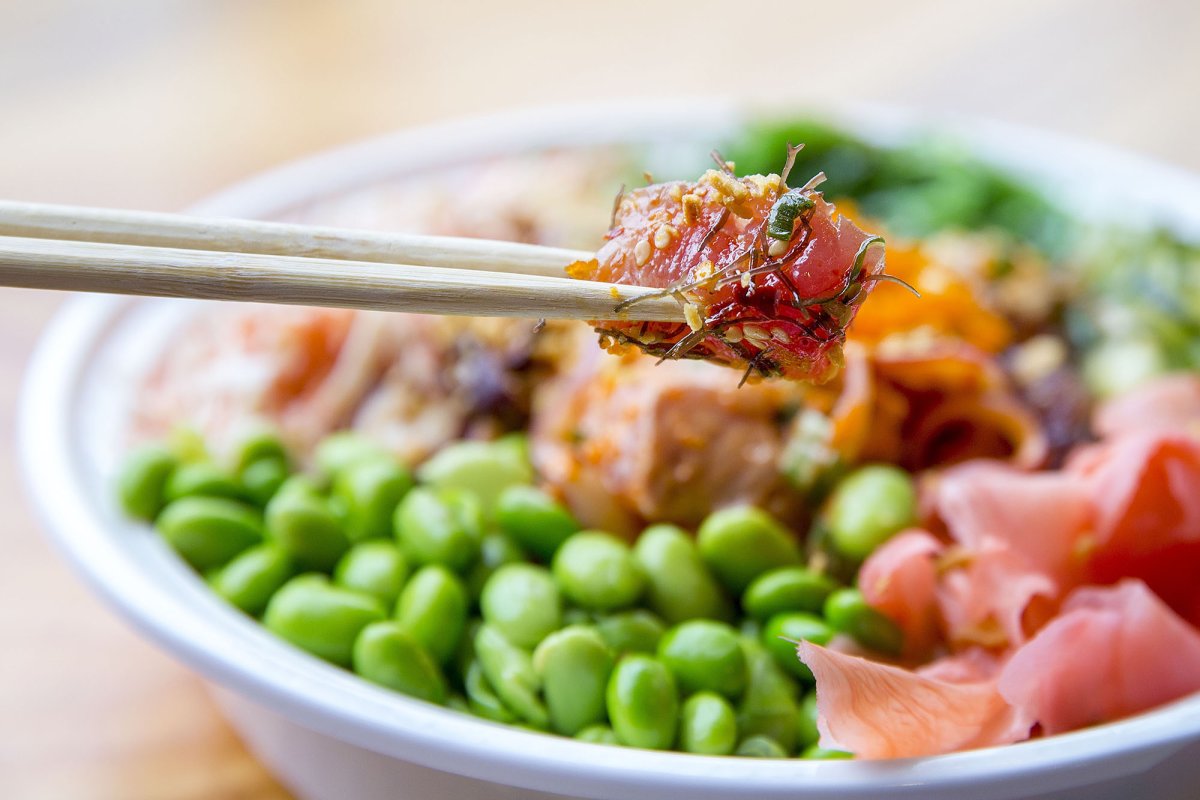
Poke shops need direct questions. Cross-contamination is common — different varieties share scoops, sit in the same display case, and use the same cutting boards. Ask about sesame, soy, shellfish cross-contact. Some shops will make a fresh bowl from the back if you explain your allergy.
Stock your condo from a farmers market. Best approach for severe or multiple allergies. Tropical fruit, fresh fish bought whole (before any marinades), local greens — cook your own meals with ingredients you can see and verify.
Book a rental car. Getting to the best allergen-friendly restaurants and natural food stores means driving. Most aren’t in tourist zones. Book through Discount Hawaii Car Rental for the best island rates.
More Hawaii Food & Planning Guides
Eat well and plan smart.