
The Honolulu Side of the Night Sky
Let's be straight about this up front: if the only thing you care about is perfect dark skies, you want Big Island stargazing on Mauna Kea, not Oahu. Honolulu throws up enough light pollution to wash out everything below magnitude 4 across half the island. That's the trade-off for having 70% of the state's population.
But Oahu still has genuinely dark corners — the west coast past Ko Olina, the windward side at Kualoa, Ka'ena Point, and the North Shore pineapple fields — plus a working planetarium and a handful of sunset-to-stars guided experiences that are worth booking. Here's how to actually see stars on Oahu.
Need a rental car for the drive west?
The best dark-sky spots on Oahu are a 45–90 minute drive from Waikiki — no Uber is going to make that trip at midnight at a reasonable price. We use Discount Hawaii Car Rental for no-deposit, free-cancellation bookings that consistently beat airport counter prices.
Guided Stargazing Tours
Kualoa Ranch — Sunset & Stars Experience
Kualoa Ranch runs the only consistent, year-round guided stargazing experience on the island. The property sits on the windward coast against the Ko'olau mountains — it's shielded from Honolulu's light dome by the ridge itself, which makes it one of the darkest legally-accessible spots on the island without a long drive west. The tour typically includes a sunset viewpoint, light dinner or pupu, and a short guided sky-tour segment with a naturalist.
Typical price: $125–$180/person · Runs: select evenings, weather-dependent
Compare Kualoa Ranch evening tours on Viator »
Bishop Museum Planetarium
When it's cloudy — which on Oahu is often enough — the Bishop Museum Planetarium in Kalihi is the backup plan that's actually worth its own afternoon. They run a Polynesian wayfinding show called Wayfinders: Waves, Winds, and Stars that explains how Hawaiians navigated the Pacific using the night sky — the same knowledge that built the modern voyaging canoe Hokule'a. It's the best cultural-science crossover on the island.
Typical price: $28 adults, $20 kids (includes museum admission) · Open: Wed–Mon, shows daily
Honolulu Astronomical Society Public Nights
The local astronomy club runs free public star parties at Dillingham Airfield (North Shore) roughly once a month on new-moon weekends, with member telescopes on hand. It's free, it's not a tour per se, and it's run by people who know what they're pointing at. Check their event calendar and show up before sunset to claim a parking spot.
Best Dark-Sky Spots (DIY)
If you'd rather drive yourself, here are the spots that actually deliver. All of them need a rental car.
- Ka'ena Point (western tip) — the single darkest accessible point on Oahu. A 2.5-mile hike each way from the Mokuleia side, so you need to either camp legally at Mokuleia Beach Park or come back before you're too tired to drive. Safest done on a night with a hiking group.
- Ko Olina Lagoons (west side) — not actually dark, but the artificial lagoons face due west over the ocean, so the western horizon is clean. Good for planet-watching (Venus, Jupiter, Saturn) and meteor showers.
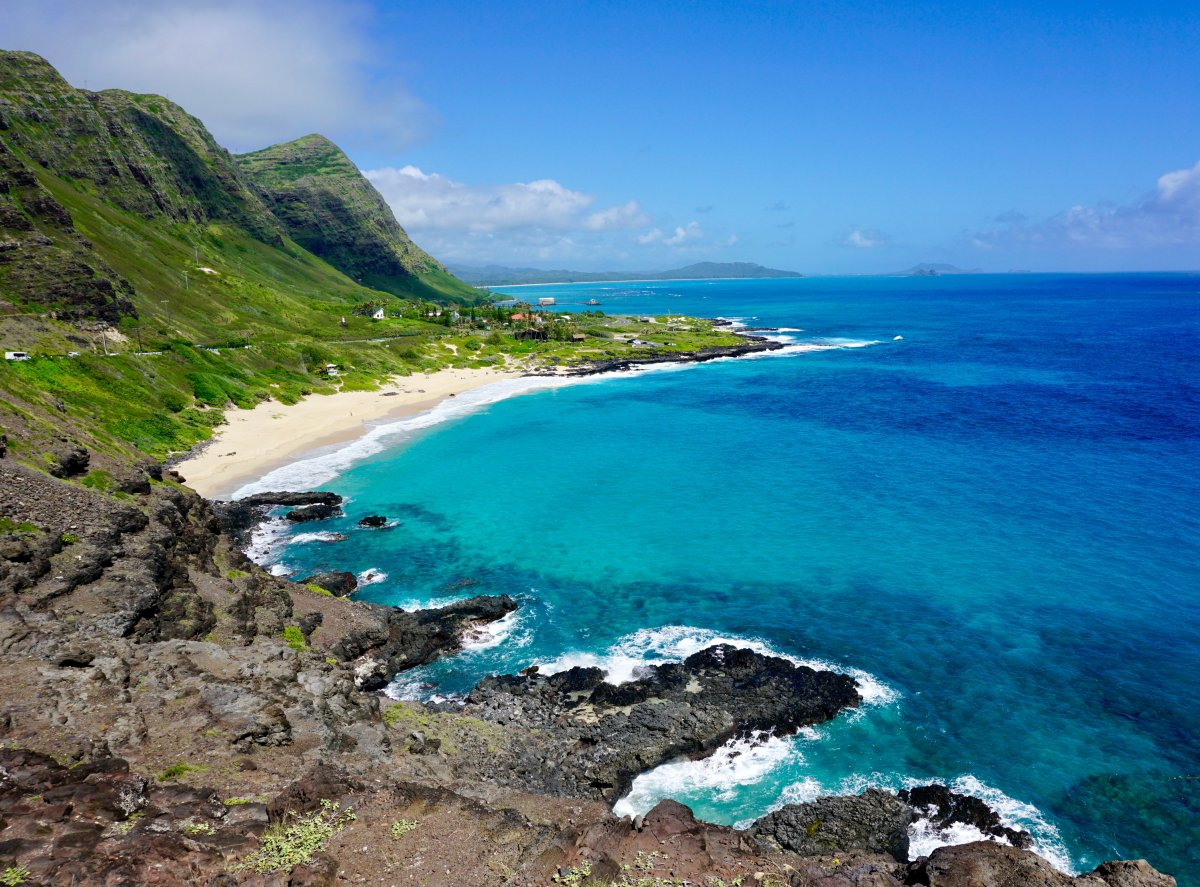
- Makapu'u Lookout (east side) — east-facing, excellent moonrise spot, modest darkness. 35 minutes from Waikiki and open 24 hours.
- Kahuku Point / Turtle Bay area (North Shore) — the resort itself has some light, but the adjacent coastal trails are quiet after 10 PM.
- Dillingham Airfield (North Shore) — flat, rural, and the site of the Astronomical Society's public nights. A solid pick on new-moon weekends.
When to Go
Two things matter: moon phase and trade winds. Aim for a new moon (check any lunar calendar) and check the ocean/weather report for cloud cover. Oahu's trade-wind clouds stack up on the windward side overnight, which is exactly where Kualoa is — so a "clear" Honolulu forecast doesn't always mean clear Ko'olau skies. Ka'ena and the west side tend to be drier and more reliable.
Best meteor shower nights on Oahu:
- Perseids — peaks around August 12–13. Warm, clear, low humidity. The best shower of the year for Hawaii.
- Geminids — peaks around December 13–14. Cooler nights, sometimes wet. Bring a jacket.
- Orionids — peaks around October 21–22. Overlooked, but reliable and low-key.
What to Bring
White light kills your night vision for 20+ minutes. A red-light headlamp is the first thing to pack.
7x50 or 10x50 astronomy binoculars will show you more than most travel-sized scopes.
Oahu nights can drop into the low 60s on the west side in winter. Layers matter even in the tropics.
Related reading: Kualoa Ranch complete guide · Ka'ena Point State Park · Sunrise & sunset tool · Big Island stargazing (the world-class version)