Hawaiʻi Guide · Audio Driving Tour
Saddle Road & Mauna Kea Drive BETA
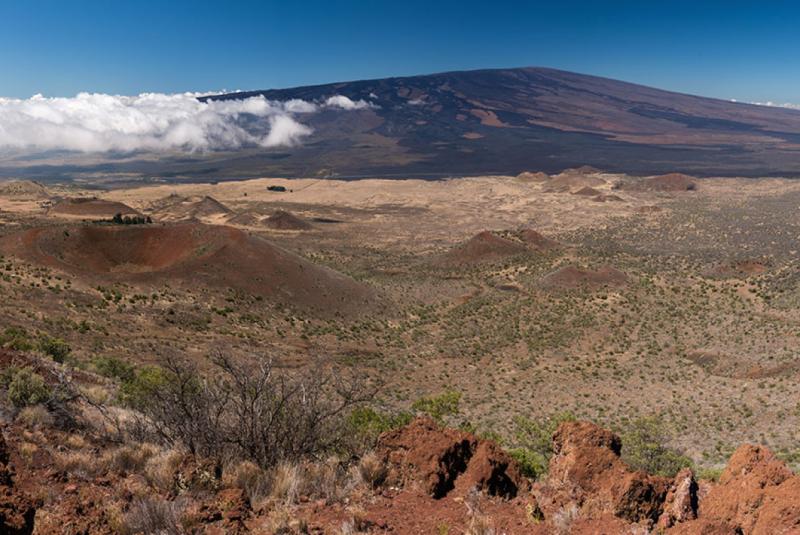
A 55-mile drive across the saddle between Mauna Kea and Mauna Loa on the Daniel K. Inouye Highway (Hwy 200) — recent lava fields, the Mauna Kea Visitor Information Station at 9,200 feet, panoramic views of Hawaii's two biggest volcanoes, and ranchland descent into Waimea (Kamuela). ~6 curated stops.
55 miles
1h 4min driving
4 curated stops
Free AI-narrated tour
1h 4min
driving time
55 mi
total distance
4 stops
curated stops
~3h
suggested day
We may link to trusted Hawaiʻi resources at no extra cost to you.
Route Map
4 stops
·
active stop
Loading map…
Build your own route
Pick a preset or tap the ✓ Include chip on any stop below to customize.
4
of 4 stops selected
-
Intro
Intro
Show transcript
Saddle Road runs across the Big Island between Mauna Kea and Mauna Loa, connecting Hilo on the east coast with Waimea on the west. The official name is the Daniel K. Inouye Highway, Hawaii Route 200, and the road has been completely rebuilt since 2013 — most of the "Saddle Road is dangerous" warnings you might have read are about the OLD alignment, which is no longer in use. The new road is fully paved, well graded, and most rental car contracts now allow it. Plan an hour and 45 minutes Hilo to Waimea, more if you take the Mauna Kea Access Road detour up to the Visitor Information Station at 9,200 feet. Critical practical notes. First — there is NO gas between Hilo and Waimea, a 55-mile stretch with elevation gain to 6,600 feet. Fill up before you start. Second — most rental agreements explicitly prohibit driving above the Mauna Kea Visitor Information Station. The road past the VIS to the summit is unpaved in sections and requires 4WD low-range. Stop at the VIS regardless of your vehicle. Third — bring a fleece and warm clothes if you're planning to go to the VIS. The temperature drops 25 degrees from sea level to 9,200 feet. The guide will announce each landmark as it comes up. -
 200MILE0Stop · mile 0 makai
Hilo Start
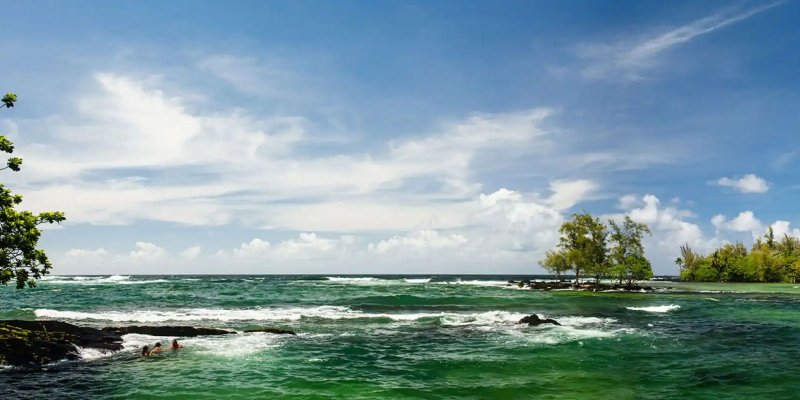
Hilo. Wettest city in the US (~127 in/yr). Last gas before Waimea on Hwy 200. The Hwy 200 turn-off is at the intersection with Hwy 11 / Kanoelehua Ave on the west side of town.
Approach Cue (~12-15 sec)Show transcript
Hilo is your launch point. Last gas before Waimea, 55 miles ahead with no station in between. Top off at any of the stations on Kanoelehua Avenue. Bring a 7AM coffee and a snack — Big Island Candies is on the way out of town if you want gifts; the Hilo Farmers Market on Mamo Street is the local stop for tropical fruit if it's a Saturday or Wednesday morning. The Hwy 200 turn-off is signed.Arrival Narration (~45-60 sec)Show transcript
Hilo is the rainy side of the Big Island. About 127 inches of rain a year on average — one of the wettest cities in the United States — which is exactly why everything you've been seeing on the way in is so green. The town itself is a working historic Pacific port with a downtown of restored 1920s storefronts. Hilo Farmers Market runs Wednesdays and Saturdays at Mamo and Kamehameha — the best collection of locally-grown tropical fruit on the island, plus flowers and crafts. Big Island Candies, a chocolate-covered- shortbread maker, ships nationally and is a popular gift stop. For coffee, Hilo Coffee Mill on Kalaniana`ole Avenue (closer to the airport) and Lava Java in town are reliable. Once you're on Hwy 200 heading west, the road climbs steadily through 'ohi'a forest for the first 20 miles. The Mauna Kea Access Road junction is about 28 miles ahead. Saddle landscape — open lava fields with Mauna Kea on your right and Mauna Loa on your left — starts about a third of the way through the drive. -
Connector · 200 40 min drive · 28 mi
Hilo Side Saddle Climb Connector
Show transcript
You're climbing now. The first 20 miles out of Hilo go through wet 'ohi'a forest, then transition into open lava fields as the road crosses 4,000 feet. The lava you're driving through here was mostly produced by Mauna Loa eruptions — the 1881 flow that came within a mile of downtown Hilo, and the 1855 flow that came even closer. You can see the boundary between the older flows (vegetated, ʻōhiʻa-covered) and the younger flows (raw black pāhoehoe with little vegetation) as you climb. About halfway across the saddle you'll cross the 1935 Mauna Loa flow, which the Air Force famously bombed in an attempt to divert it from Hilo. It didn't work — the lava stopped on its own — but the bomb craters are still visible on the surface from the air. The Mauna Kea Access Road junction is at mile 28. That's the next stop. -
 40 min from previous stop · 28 mi200MILE28
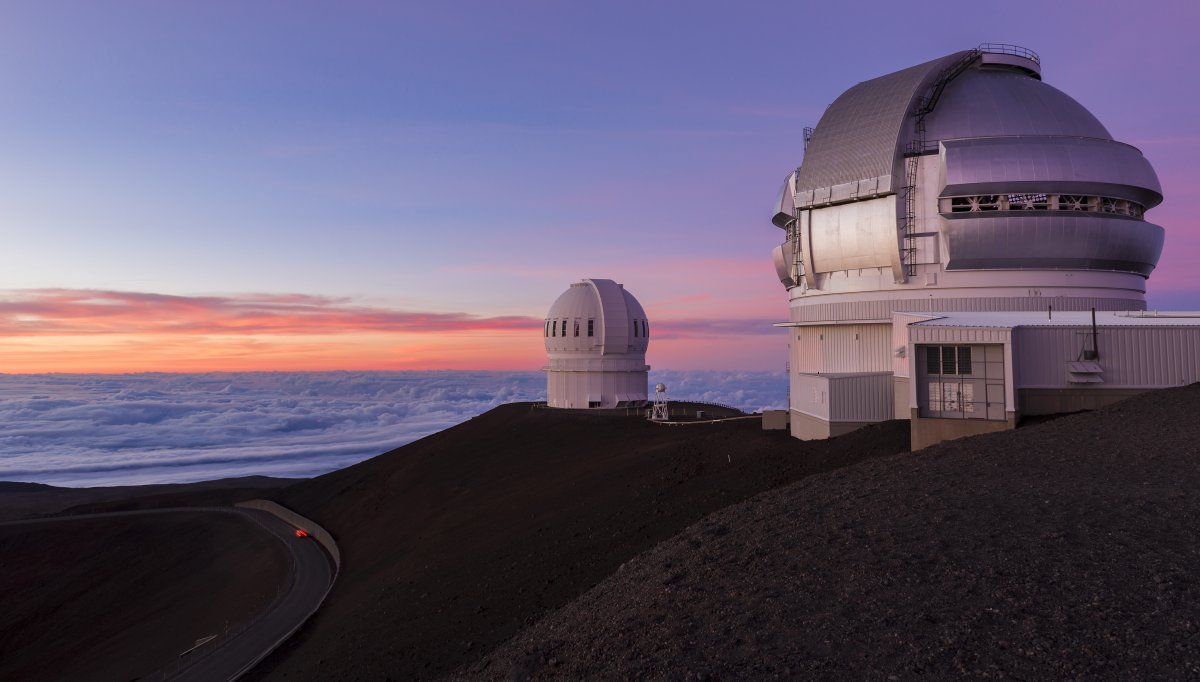
Mauna Kea Access Road junction (Hwy 200 at MM 28). Junction signed "Mauna Kea Access Rd" / "Onizuka Center for International Astronomy." Drive 6 paved miles up to the VIS at 9,200 ft. Past the VIS = 4WD only, rental cars prohibited. Stargazing program at VIS most evenings, free.
Approach Cue (~12-15 sec)Show transcript
Mauna Kea Access Road junction coming up on the mauka side. Turn right (north). The road is paved for the next 6 miles up to the Visitor Information Station at 9,200 feet — that's the stop. Past the VIS, the road becomes unpaved in sections and requires 4WD low range. Rental car contracts almost universally prohibit driving past the VIS. If you have a 4WD vehicle and know what you're doing, the summit is another 8 miles up. Most readers should turn around at the VIS and come back to Saddle Road afterward.Arrival Narration (~45-60 sec)Show transcript
You're at the Mauna Kea Visitor Information Station, 9,200 feet, formally the Onizuka Center for International Astronomy. The center is named for Ellison Onizuka, a Big Island-born astronaut who died in the Challenger disaster in 1986. The center has a small museum, a gift shop, public restrooms, and — most usefully — the best free stargazing program in the state. Most evenings, weather permitting, volunteers set up portable telescopes outside the visitor center starting around 6 PM and run an open-to-anyone program until 10 PM. Free, no reservation, just show up. They have an 11-inch reflector on a stable mount and several smaller scopes, and on a clear night you'll see Saturn, Jupiter, the Andromeda galaxy, the Pleiades — whatever's up. Even without the formal program, the VIS itself sits above most of the Pacific's cloud layer most nights, and the parking lot has views of the Milky Way that rival anywhere else in the world. Bring a fleece, a windbreaker, and a warm hat — the temperature here regularly drops below 40 degrees at night, and the wind makes it feel colder. The summit observatory complex you can see uphill — the cluster of white domes — is operated by 13 different countries and houses the largest collection of optical telescopes on Earth. The summit is closed to non-4WD vehicles and the road past the VIS requires high-clearance 4WD with low-range. Don't try it in a regular rental. Back to Saddle Road, the descent into Waimea starts the next stretch — open ranchland, kohala mountain views, a slow drop from 6,600 feet down to about 2,700 feet at Waimea town. -
 6 min from previous stop · 3 mi200MILE31
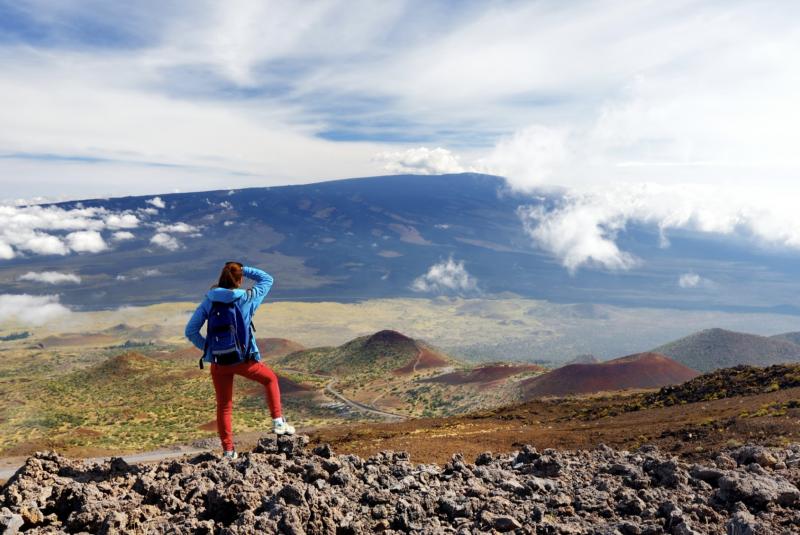
Mauna Loa Observatory Road junction is roughly mid-saddle. Road is paved but rental agreements vary. NOAA atmospheric observatory at 11,135 ft. Most travelers just enjoy the view of Mauna Loa from the highway pull-offs.
Approach Cue (~12-15 sec)Show transcript
Mauna Loa side of the saddle coming up — the volcano on the makai (south) side of the road. The Mauna Loa Observatory Road junction is about a half-mile ahead — you can drive partway up it for a closer view of the volcano if your rental allows it, but most travelers just use one of the highway pull-offs to take in the scale.Arrival Narration (~45-60 sec)Show transcript
Mauna Loa is the largest active volcano on Earth by volume — 19,000 cubic miles of basalt, rising from a base on the seafloor 30,000 feet down to its 13,679-foot summit. Most of that volume is underwater. What you can see from this pull-off is the western flank — a broad shield-shaped slope that rises gradually for 20 miles before reaching the summit caldera. The gentle profile is deceptive. Mauna Loa has erupted 33 times since record-keeping began in the 1840s, most recently in November and December 2022, when a flank eruption sent lava down toward Saddle Road. The 2022 flow stopped about 1.7 miles short of the highway. The Mauna Loa Observatory Road, the narrow paved track you can see ascending the volcano flank from this point, leads to the NOAA atmospheric observatory at 11,135 feet — the site of the famous Keeling Curve, the continuous CO₂ measurement that has tracked global atmospheric carbon dioxide since 1958. The road is paved and rental cars are sometimes permitted, but check your contract first. From here, Saddle Road continues west and starts to descend toward Waimea — about 24 more miles of open country. -
Connector · 200 18 min drive · 8 mi
Waimea Side Descent Connector
Show transcript
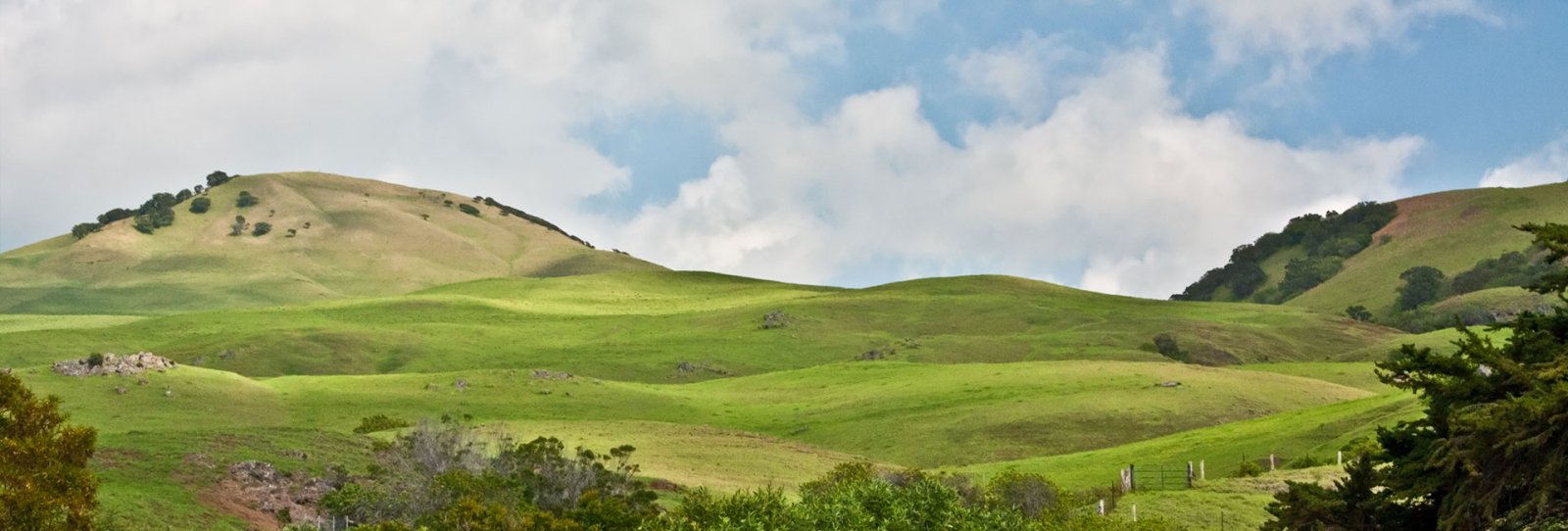
You're descending now. The lava fields end, the landscape opens into rolling pastureland, and you cross from the wet windward side of the island into the dry leeward side. By the time you've dropped to 4,000 feet, you're in Parker Ranch country — the largest ranch in the United States by some measures, founded in 1847 by John Palmer Parker, a New England sailor who married into the Hawaiian royal family. The cattle herds you can see grazing are descended from longhorns gifted to King Kamehameha I in 1793. The cowboys here — the paniolo — are the original American cowboys, predating the Texas cowboys by about 30 years. Mauna Kea is now to your right (north) and the Kohala Mountains to your far right. Waimea (Kamuela) is about 8 miles ahead. -
 18 min from previous stop · 8 mi200MILE55
Waimea, also called Kamuela. Parker Ranch headquarters. Big Island's paniolo (cowboy) town. Merriman's flagship restaurant. Cool elevation (~2,700 ft), often misty mornings. Hwy 19 to Kona / Kohala coast, Hwy 250 to Hāwī.
Approach Cue (~12-15 sec)Show transcript
Waimea coming up — the destination. Two names confuse travelers here: the town is called both Waimea AND Kamuela, the second being the Hawaiian transliteration of "Samuel" Parker, an early ranch owner. Same town, both names valid. Cool elevation around 2,700 feet means it's often 15-20 degrees cooler than the coast, and morning mist is common. Two roads out of town: Hwy 19 south to Kona and the Kohala Coast resorts, Hwy 250 north over the Kohala mountains to Hāwī.Arrival Narration (~45-60 sec)Show transcript
You're in Waimea, also called Kamuela, the heart of Big Island ranch country. Parker Ranch, headquartered here, was founded in 1847 by John Palmer Parker, a New Englander who jumped ship in Hawaii in 1809, married a granddaughter of King Kamehameha I, and was given the right to round up the wild cattle (descended from a 1793 royal gift of longhorns from Vancouver) that had been multiplying on the slopes of Mauna Kea. The paniolo — Hawaiian cowboys — predate the American mainland cowboy tradition by 30 years. The word "paniolo" itself comes from "español," because Kamehameha III brought Mexican vaqueros to Hawaii in 1832 to teach Hawaiians how to handle the cattle. Today Parker Ranch is one of the largest privately-owned ranches in the United States, though its scale has been reduced from historical peaks. The Parker Ranch Center (a small shopping plaza on the highway) has the Parker Ranch Store and a small historical exhibit. Merriman's, on Opelo Plaza on the south side of town, is one of Hawaii's most acclaimed restaurants — Peter Merriman's flagship. The Hawaiian Style Cafe across the street is the local plate-lunch counter. Big Island Brewhaus makes craft beer. Waimea is also where the Imiloa Astronomy Center's outreach intersects with daily life — the headquarters of two of the major Mauna Kea observatories sit on the edge of town. From here, you have two ways out. Hwy 19 south takes you 30 minutes to the Kohala Coast resort area (the Mauna Lani, Westin Hapuna, Mauna Kea Beach Hotel) or 50 minutes to Kona. Hwy 250 north takes you over the Kohala Mountains to Hāwī and Pololū Valley — the northernmost point on the island, and a worthwhile half-day drive of its own. -
Outro
Outro
Show transcript
That's the drive across the saddle. From rainforest Hilo through lava fields, past the Mauna Kea VIS at 9,200 feet, alongside Mauna Loa's western flank, into Parker Ranch country at Waimea — five different climate zones in 55 miles, on what's one of the more underappreciated drives in Hawaii. From Waimea you have multiple onward options. Hwy 19 south goes to the Kohala Coast resort beaches and onward to Kona — the warmer, drier, sunnier side of the island. Hwy 250 north over the Kohala Mountains to Hāwī and the Pololū Valley overlook is a worthwhile half-day round trip. To return to Hilo, the fast way is back across Saddle Road (1.5 hours), the scenic way is south through Kona, around to South Point, and back up the east side via Pāhala (5+ hours, full day). Tomorrow, if you have one more day on the Big Island, the Chain of Craters Road inside Hawai'i Volcanoes National Park is the other iconic drive — completely different volcano, completely different mood.
AI-narrated audio synthesized by ElevenLabs, voiced by Hoku (feminine) and Honu (masculine). Hoku and Honu are Voice Library donors, not native Hawaiian speakers. Some pronunciations may land slightly off — mahalo for your patience as we refine.

Try out our AI Powered
Search & Chatbot →

Get Your Free Hawaii Visitor Guide
Enter your email and we'll send you instant access to our free 2026 Hawaii Starter Guide + Summary Guidesheets.