
Why Kauai Is the Birding Island
Kauai is the oldest of the main Hawaiian islands and the only one where a handful of native forest birds still hold on in any real numbers. The combination of a high, wet, mosquito-limited plateau in the middle of the island (the Alakai Swamp sits above 4,000 feet) and a seabird-nesting coastline on the north shore means you can see things here — a Laysan albatross gliding overhead, an iiwi feeding in an ohia tree — that you'll struggle to find anywhere else in the state.
You don't need a guided tour to bird Kauai well. You need to be at the right place at the right time of year, and you need to know where to stand. Here's how to plan it.
Rental car is non-negotiable
The three main birding sites are at opposite ends of the island — Kilauea Point on the north shore, Kokee in the west, Hanalei on the north. No single base puts you close to all of them, and there's no shuttle bus to any of them. We use Discount Hawaii Car Rental — no deposit, free cancellation, works well with last-minute weather audibles.
1. Kilauea Point National Wildlife Refuge (North Shore)
Best for: seabirds, Laysan albatross, nene, a guaranteed sighting of something.
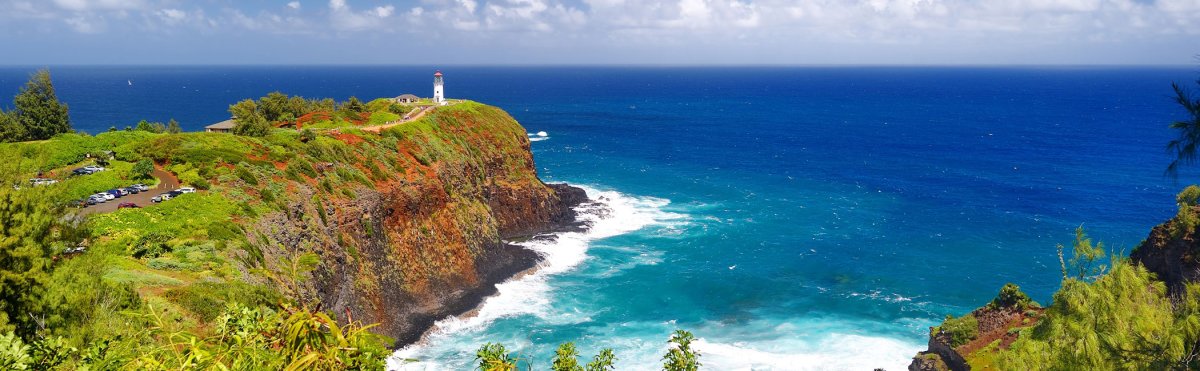
Kilauea Point is the single highest-probability birding stop on Kauai. You pull into a small lot on a 200-foot headland that juts into the Pacific, walk about 300 yards out to a restored 1913 lighthouse, and within ten minutes you'll have seen red-footed boobies on the cliff face, great frigatebirds circling overhead, and wedge-tailed shearwaters dropping into their ground burrows. In season (November through July) a Laysan albatross with a six-foot wingspan will glide past you at eye level. Bring binoculars. Not everyone does; it's a very different visit if you have them.
The refuge is open Wednesday through Saturday, 10am to 4pm (gate closes at 3:30pm). Entry is $10 per adult 16 and over, free for under 16, with a small reservation fee per vehicle. Timed-entry reservations are mandatory and book through Recreation.gov up to two months in advance. Weekends in winter sell out. Reserve before you fly.
Birds you can reasonably expect: molī (Laysan albatross, Nov–Jul), ʻā (red-footed booby, year-round), ʻiwa (great frigatebird), koaʻe kea and koaʻe ʻula (white-tailed and red-tailed tropicbirds), ʻuaʻu kani (wedge-tailed shearwater, summer nesting), brown booby, brown noddy. On the grass near the parking area you'll often see nēnē (Hawaiian goose, the state bird) grazing. Full site info: Kilauea Point Lighthouse & NWR page.
Ground rules: stay on the paved paths, keep at least 15 feet from any albatross on the ground (federal law), and never try to photograph a bird with flash. The refuge staff will ask you to leave if you ignore either.
2. Kokee State Park & the Pihea / Alakai Swamp Trail (West Side)
Best for: endemic forest birds. ʻIʻiwi, ʻapapane, ʻanianiau, and if you're lucky, the critically endangered puaiohi.
Kokee sits at about 4,000 feet on the rim of Waimea Canyon, and the drive alone (a climb from sea level through dry mesic forest into montane cloud forest) is worth the morning. The birds live in the ohia forest above the lodge, and the two trails that take you into their territory are Pihea Trail (a 4-mile round trip along the Kalalau Valley rim, the most accessible good birding trail on Kauai) and the Alakai Swamp Trail (mostly boardwalk over bog, a harder and wetter but far more rewarding walk that drops you into the actual swamp above 4,000 feet).
The trailhead for both is at the end of Kokee Road at Puu o Kila Lookout, past the lodge and the museum. Plan to be on the trail at first light. Birdsong peaks in the first two hours after sunrise, and Kokee's clouds roll in by late morning almost every day. Bring a rain jacket. You will get rained on.
Fees: $5 per non-resident visitor entry + $10 parking (pay at the kiosk near the museum). Residents with HI ID enter free. See the Kokee State Park page for the full rundown on the park and Kokee Museum. The museum has a small nature-store checklist of forest birds that's worth $3 before you hike.
Birds you can reasonably expect in the Kokee / Alakai zone: ʻiʻiwi (scarlet honeycreeper, the big prize; listen for the rusty-hinge call), ʻapapane (common, red, loud), ʻanianiau (yellow, Kauai endemic), ʻelepaio (Kauai subspecies), ʻamakihi, and, for the very patient or the very lucky, puaiohi (small Kauai thrush, critically endangered, mostly in the deep swamp).
3. Hanalei National Wildlife Refuge (North Shore)
Best for: endangered Hawaiian waterbirds. Koloa, alae ula, alae keokeo, aeʻo.
Hanalei NWR is a 917-acre working taro-farm valley in the flats below the Princeville bluff. The refuge interior is closed to the public to protect nesting waterbirds, but there's an excellent overlook on Ohiki Road (just past the Hanalei Bridge on the mauka/inland side) where you can scope the wetlands from a pullout. In morning or late-afternoon light, expect koloa maoli (Hawaiian duck), ʻalae ʻula (Hawaiian moorhen), ʻalae keʻokeʻo (Hawaiian coot), and aeʻo (Hawaiian stilt). All four are endangered endemic waterbirds, all reasonably visible from the overlook. Cattle egrets and black-crowned night herons fill in the rest of the sightings.
There's no admission fee for the overlook, and no reservation. Bring a spotting scope if you have one; binoculars work, but the birds are often out in the middle of the flooded fields. Combine this with a Kilauea Point morning. They're 20 minutes apart and both peak in the first half of the day.
4. Private Guided Birding Trips
A handful of independent guides on Kauai offer custom half-day and full-day trips into the Alakai Swamp and the Kokee back-country, where having someone who knows the call of an ʻiʻiwi versus an ʻapapane makes the difference between "heard something" and "saw three." These operators come and go — rates and availability shift year to year — so the cleanest way to see what's currently bookable is to check the current Viator Kauai tours list and search the keyword "birding" or "nature," and to cross-check with the Hawaii Birding Trail site for current state-endorsed guides.
For self-guided birders: a good pair of 8×42 binoculars, the Hawaiian field guide from Amazon, and a phone loaded with the Merlin Bird ID app (free, Cornell Lab) before you land will cover you on every site above. Don't play recorded bird calls to attract birds — it stresses breeding populations and is explicitly banned in all wildlife refuges.
Which Site Should You Start With?
Want seabirds & the easiest win
Kilauea Point. Book a Recreation.gov slot the day you land, go in the morning, combine with Hanalei NWR overlook same day.
Want forest endemics
Kokee + Pihea / Alakai. Sunrise start from the lodge. Expect weather. Go before the clouds.
Want the full list in one trip
Two mornings: Day 1 Kilauea + Hanalei, Day 2 Kokee sunrise. That's the 90%-of-species plan.
What to Know Before You Go
- Best season for Laysan albatross: mid-November through early July. Peak for juveniles fledging is June. Outside that window, Kilauea Point is still excellent for boobies, frigatebirds, and tropicbirds — it's just missing the signature bird.
- Best time of day everywhere: first light to mid-morning. Birds are active, clouds haven't rolled into Kokee yet, wind on the coast is light, and the sun angle at Kilauea Point lights up white bird plumage against blue sea. Plan around this.
- Weather rules the mountain: Kokee sits inside a cloud zone almost every afternoon. If you're going to hike Pihea or Alakai Swamp, be there by 7am or accept that you're birding in fog.
- Mosquitoes: in the low-elevation areas (Hanalei, coastal), wear repellent. In Kokee above 4,000 feet mosquitoes are nearly absent — which is the whole reason the native birds can still live there.
- Gear: 8×42 binoculars (rule of thumb for daylight birding), a rain shell for Kokee, sturdy shoes for the Pihea boardwalk (slippery when wet, which is most days), and a printed or phone-loaded checklist so you know what you're looking at.
- Ethics: native Hawaiian birds are at the absolute edge of survival on every other main island — Kauai is the last strong-hold for a reason. Don't play calls, don't approach nests, don't feed. Watch from the trail.
Related Reading
Paired sites for a full Kauai outdoors itinerary: the Kokee State Park page, the Kilauea Point Lighthouse page, the Waimea Canyon overview (the Pihea trailhead is at the end of the same road), and the statewide native Hawaiian birds guide if you want the full species list before you fly.
Book Kauai Nature & Wildlife Tours
For guided nature tours and wildlife-focused hikes beyond birding (Kauai zodiac Na Pali coast, river kayak + hike combos, backcountry 4x4 wildlife trips), browse current operators: